Best Attentive Competitors for Sales and Marketing Teams (2027)



Most "Attentive competitors" articles are written for ecommerce brands. They compare cart recovery tools, Shopify plugins, and subscriber popup builders. That is fine if you sell sneakers on Shopify. But if your team runs on HubSpot or Salesforce and uses texting to book appointments, follow up on leads, and close deals, those articles are not for you.
Attentive is a strong platform for what it does: SMS and RCS marketing for DTC and retail brands. But its pricing is not published, its contracts start in the thousands per quarter, and its integrations are built around ecommerce, not CRM-driven sales workflows. If that does not fit your business, you need a different kind of tool.
This guide compares 15 Attentive competitors and alternatives on pricing, CRM integration, calling features, and compliance handling. Whether you need SMS marketing software for a B2B sales team or a budget-friendly option for a growing ecommerce brand, you will find the right fit here.
Quick comparison: all 15 Attentive competitors at a glance
Key takeaway: If your team uses a CRM (HubSpot or Salesforce) and needs calling alongside SMS, only Salesmsg and Twilio cover both. Every other tool on this list is SMS-only or ecommerce-first.
What Attentive does well (and who it is built for)
Before comparing alternatives, it is worth being honest about where Attentive actually wins. Attentive built its name on two things: subscriber acquisition and ecommerce SMS automation.
Their two-tap mobile signup units convert well. If you run a Shopify or BigCommerce store and need to grow an SMS subscriber list fast, Attentive's popup and landing page tools are among the best in the market. Their triggered flows for abandoned carts, browse abandonment, and post-purchase sequences are polished and well-tested across thousands of DTC brands.
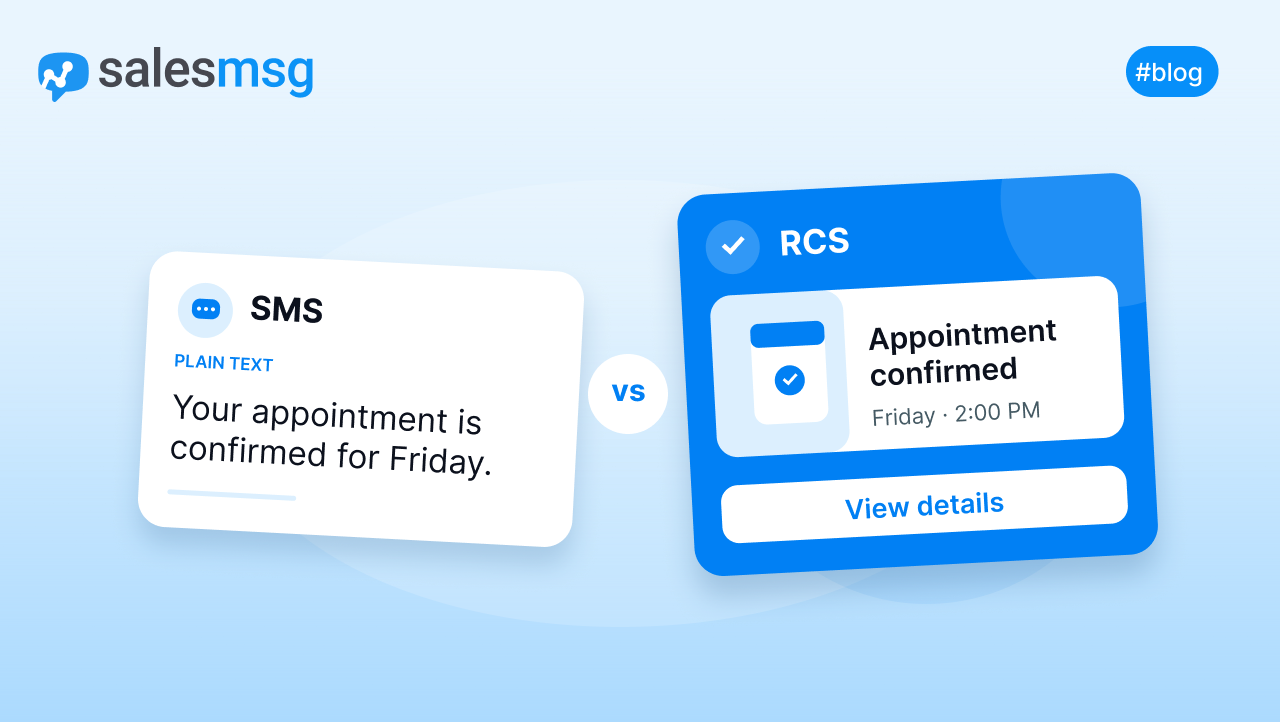
Attentive also added RCS (Rich Communication Services) early, which gives their messages interactive buttons, images, and carousels on supported devices. For ecommerce brands where visual product marketing matters, that is a real advantage.
On Capterra, Attentive holds a 4.8/5 rating across 108 reviews. One marketing director wrote: "Attentive is an integral part of our marketing strategy." Another reviewer called it "easily one of the best SMS services I've used," specifically citing the feature set for list building. The platform works well when you are a mid-to-large DTC brand spending enough on SMS to justify an enterprise contract. If that describes you, Attentive is a legitimate choice.
The rest of this article is for everyone else.
Why teams switch from Attentive
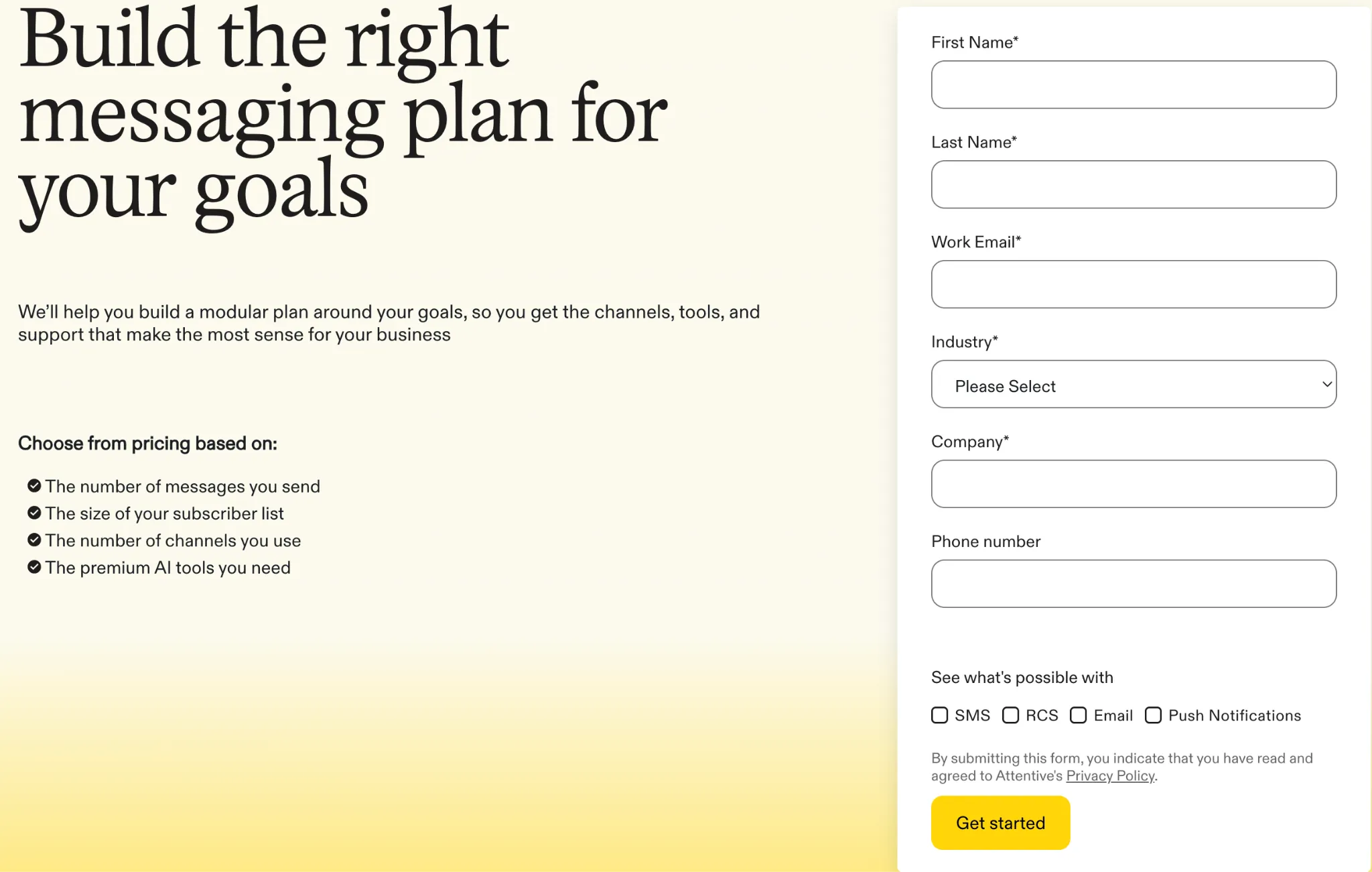
Pricing is not published. You have to book a demo and negotiate a custom quote. Based on Vendr's buyer data, the median annual Attentive contract is $40,000, with a range from $1,800 to $72,000. For teams under $1 million in revenue, that is a steep commitment before you have even proven SMS works for your business. One Capterra reviewer noted: "I didn't like the pricing, and their landing page to sign up for texts was awful."
It is built for ecommerce, not CRM-driven teams. If your sales motion runs through HubSpot or Salesforce and your team needs to text leads, book appointments, and follow up on deals, Attentive's Shopify-centric workflows do not map to that use case. You end up paying for features you do not use.
Contract lock-in is aggressive. On the Shopify App Store, one merchant wrote in January 2026: "The agreement includes strict SMS exclusivity with long-term lock-in, limited flexibility, and significant financial penalties if you need to adapt your tech stack." Another said: "They deal terribly when you decide to go."
No calling. B2B and service teams need to call and text from the same number. Attentive is SMS and email only. That means adding a separate calling tool, managing two numbers, and losing the unified conversation history your reps need.
Onboarding gaps. One Shopify reviewer wrote: "I was promised white glove service when I signed up. That never happened."

Revenue attribution gaps. Multiple reviewers flag unclear revenue reporting, especially when Attentive is not fully connected to your internal sales system. If your leadership asks "did that SMS campaign actually close deals," you need a clear answer.
If you want to see how SMS marketing pricing really breaks down across platforms, we published a separate deep dive on that.
How much does Attentive cost?
Attentive does not publish pricing. Here is what we know from public data, Vendr, and reviews:
- You must book a demo to get a quote. There is no self-serve signup. One Shopify reviewer noted Attentive "will ONLY work with you if your traffic is at 2,500K or higher."
- Contracts typically run annually with quarterly payment minimums.
- The median annual contract is $40,000, with a range from $1,800 to $72,000 (Vendr buyer data).
- Per-message rates apply on top of the platform fee.
- CostBench estimates the typical monthly cost at $500 to $5,000, depending on volume and add-ons.
For comparison, Salesmsg starts at $25/month with published pricing. Postscript starts at $0/month with a $49 minimum spend and ~$0.009 per SMS. Omnisend and Klaviyo both offer free tiers for small lists. If budget transparency matters to your team, keep that in mind.
The 15 best Attentive competitors in 2027
1. Salesmsg
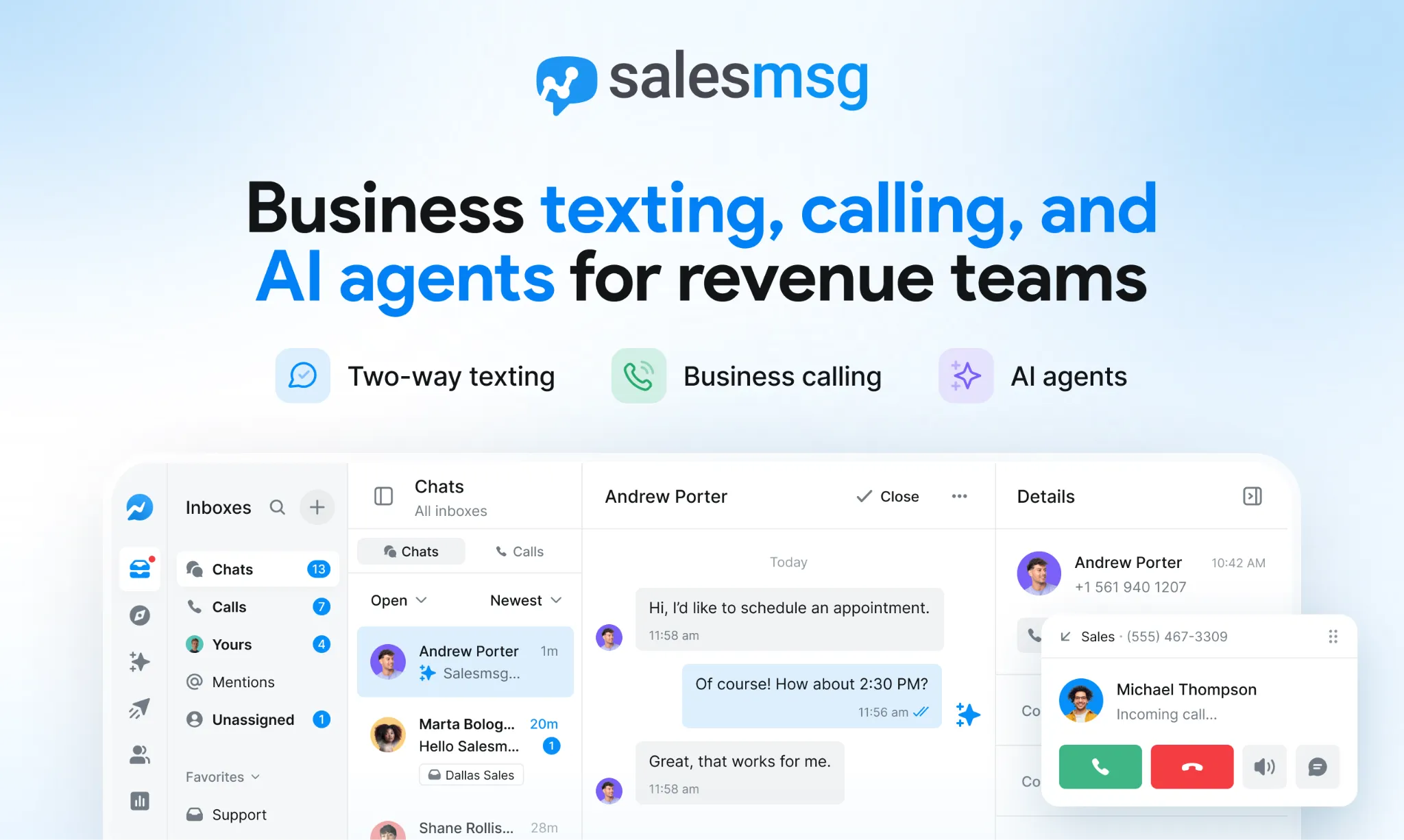
Best for: B2B and service teams running SMS marketing, sales follow-up, and customer support through HubSpot or Salesforce.
Salesmsg is a conversation platform for revenue teams. It combines broadcast campaigns, two-way texting, calling, and AI agents in one platform, with every conversation logged to the CRM contact record. Drip sequences trigger automatically when a lead hits a CRM stage. Replies land in a shared inbox so your team can respond in real time.
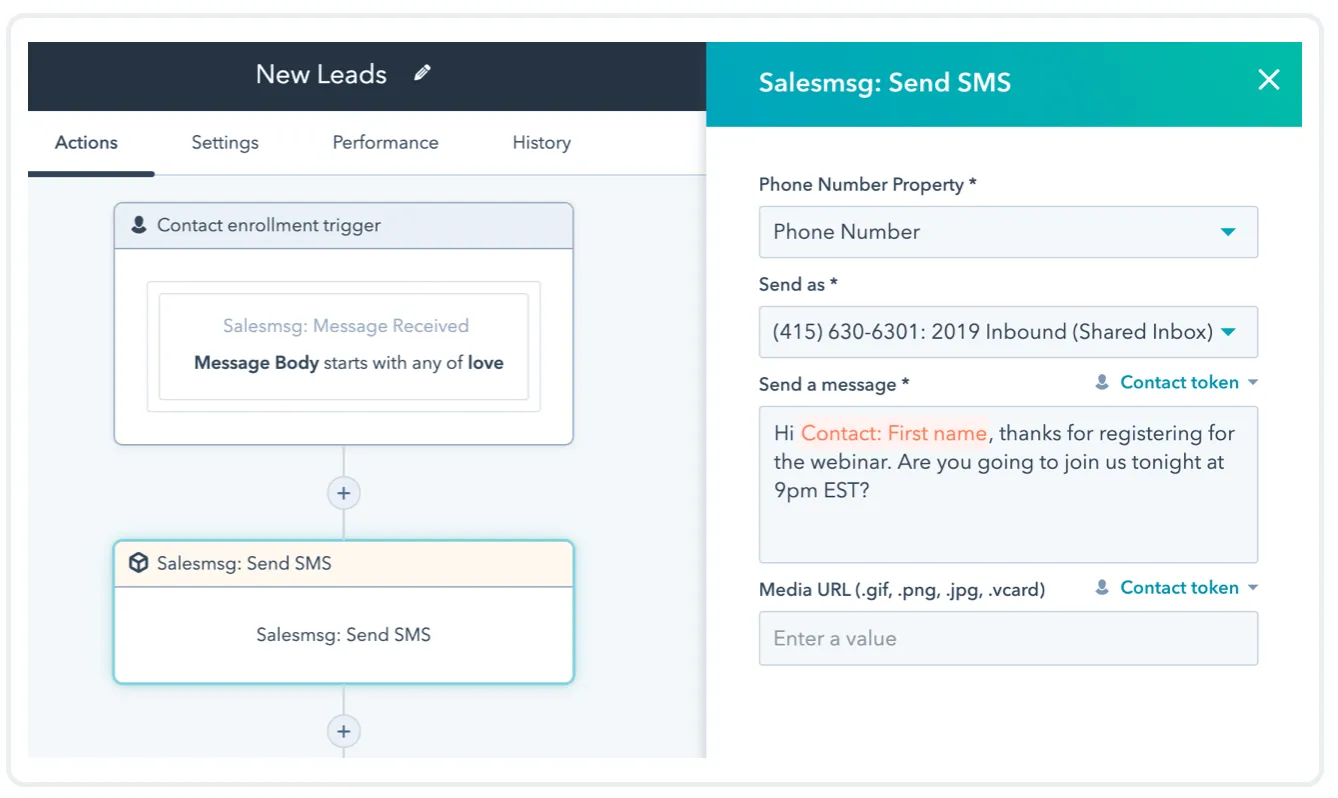
Where Attentive tracks cart abandonment and subscriber popups, Salesmsg tracks pipeline. Click and conversion data ties back to the contact record in HubSpot or Salesforce, so your marketing and sales teams see the full picture without switching tools.
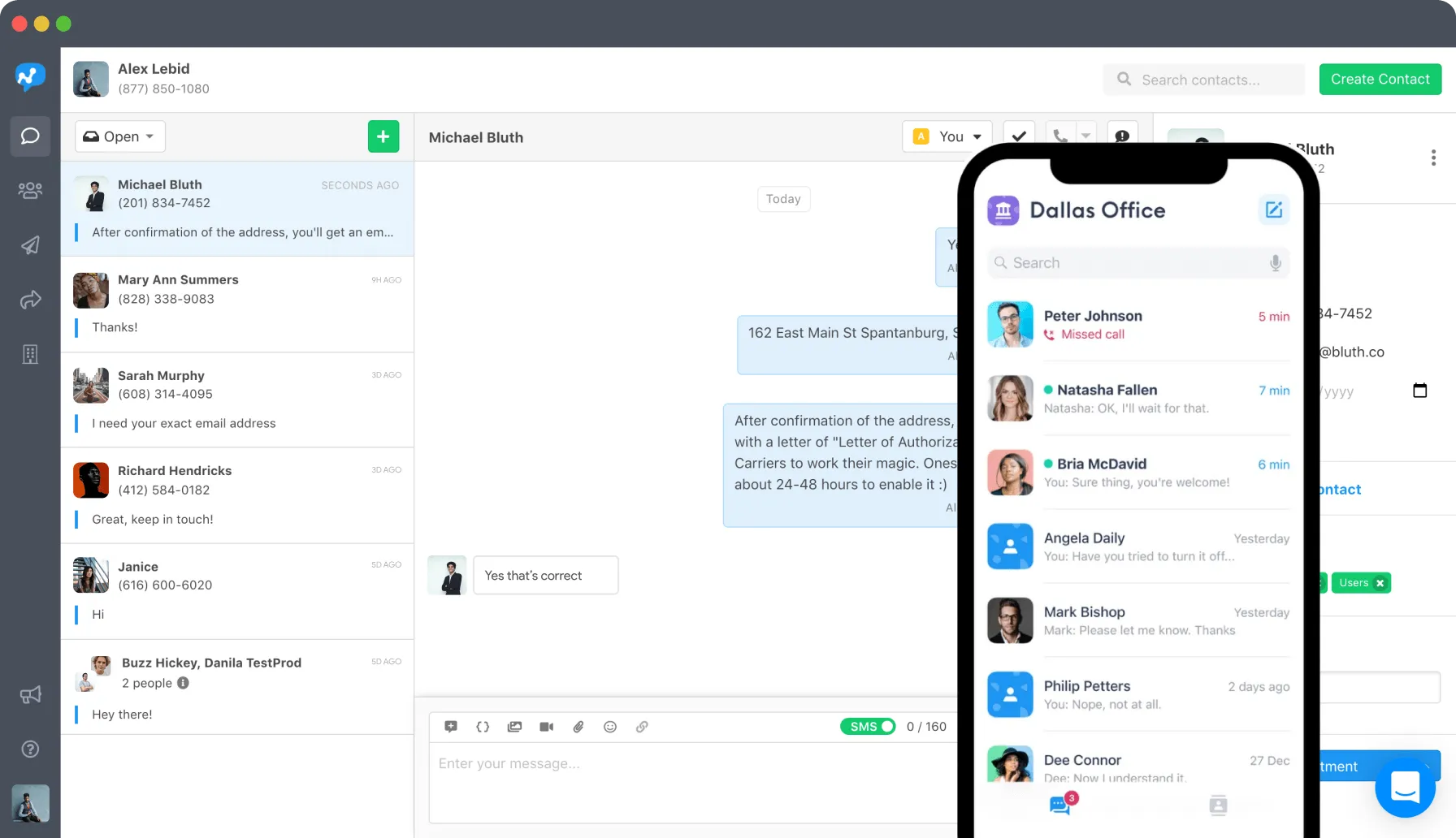
Key features:
- Segmented broadcast campaigns with merge fields and dedicated short codes
- CRM-triggered drip sequences inside HubSpot or Salesforce workflows
- Two-way replies in a shared inbox with full conversation history
- Calling and AI agents on the same number as texting
- Click and conversion tracking tied to the contact record
Pros:
- Only platform on this list combining SMS, calling, and AI agents with native CRM integration
- Transparent pricing starting at $25/month
- Built for B2B sales workflows, not ecommerce cart recovery
Cons:
- No native Shopify or BigCommerce integration
- No on-site signup popup tools
Pricing: Plans start at $25/month. Try Salesmsg free for 14 days, no credit card required.
2. Klaviyo
Best for: Ecommerce brands that want email and SMS unified under one customer profile.
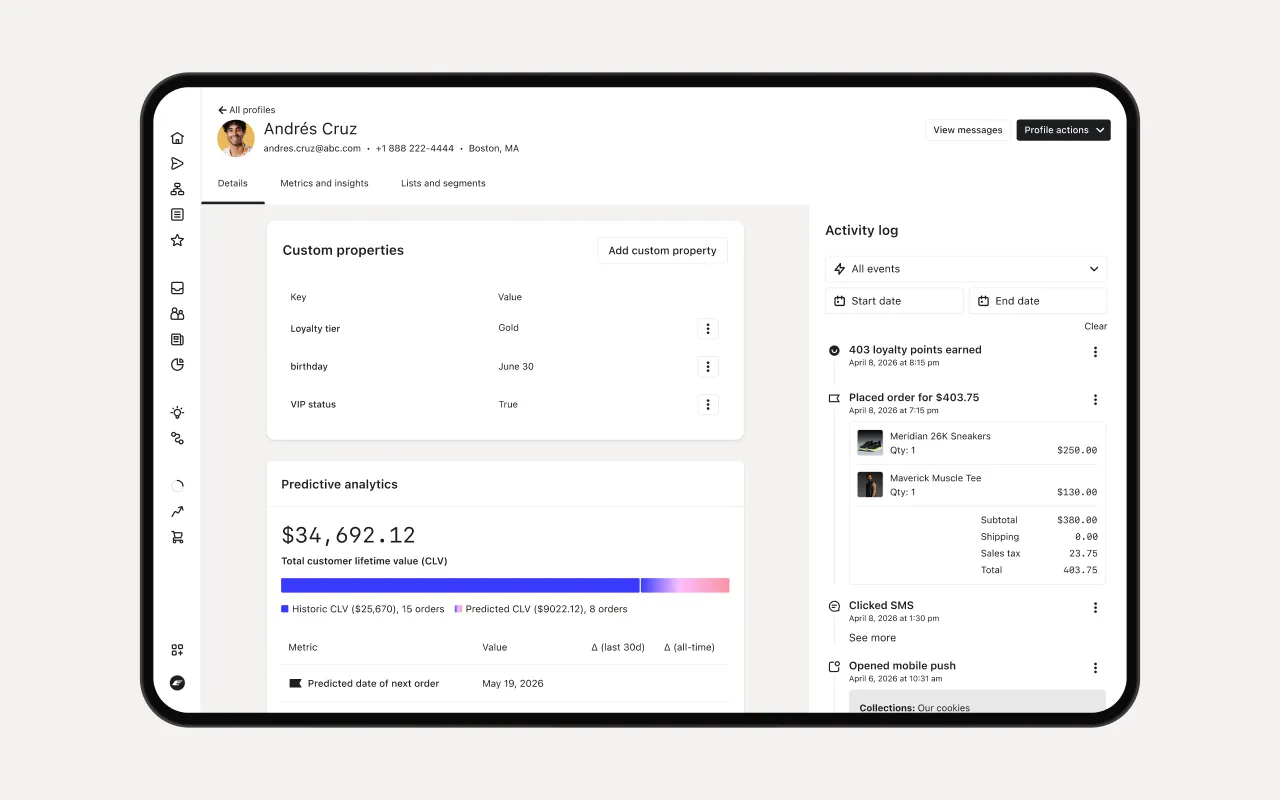
Klaviyo is an email-first platform that also handles SMS, RCS, and mobile push, all built around a single customer profile. Segments update in real time based on behavior, and reporting spans every channel from one dashboard. Multiple Capterra reviewers who switched from Attentive cited Klaviyo's unified data layer as the deciding factor.
Pros:
- Unified email and SMS data in one customer profile
- Deep behavioral segmentation and reporting
- Strong deliverability insights and benchmarking
Cons:
- Pricing scales fast as your contact list grows
- Mostly self-serve with less hands-on support
- Not built for B2B sales follow-up or calling
Pricing: Tiered by contacts and messages sent. Free tier available for small lists.
3. Postscript
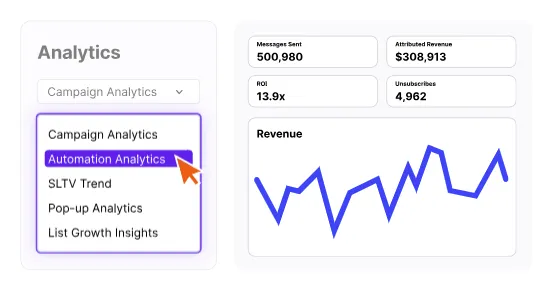
Best for: Shopify stores that want SMS-first marketing with transparent, published pricing.
Postscript is Shopify-native. Pricing is published openly with per-message rates visible before you talk to anyone. AI tools generate and test message variants, and their compliance support team handles TCPA questions in-house. One Shopify reviewer compared Attentive, Emotive, and Postscript directly: "I'd rate Attentive as the worst" of the three, citing the contract experience.
Pros:
- Transparent, published pricing (rare in this category)
- Deep Shopify integration
- AI-assisted message generation and A/B testing
Cons:
- Shopify-only. Does not work with other platforms.
- No native email marketing
- No CRM integration for B2B workflows
Pricing: $0/month with a $49 minimum spend, plus ~$0.009 per SMS.
4. Omnisend
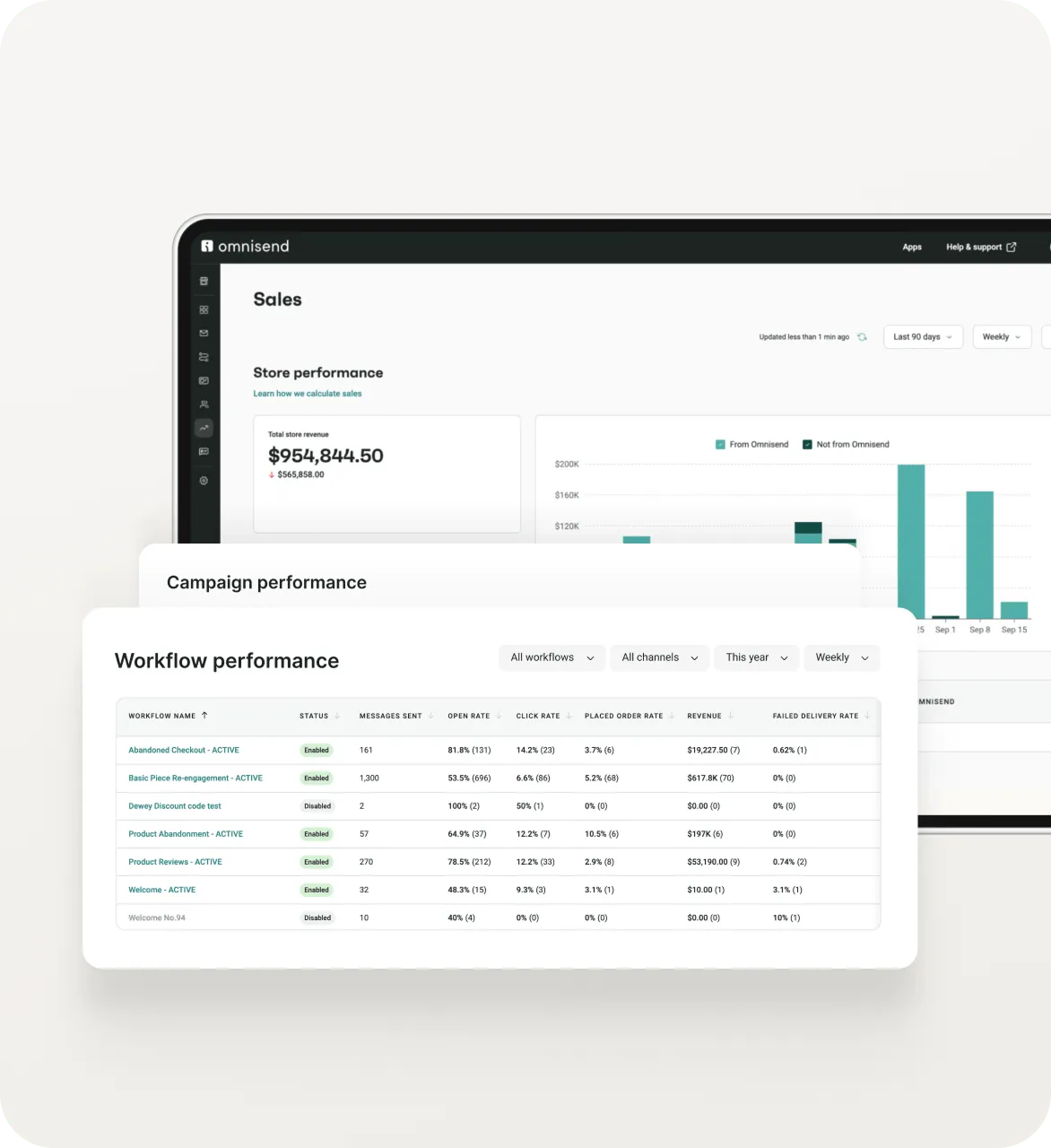
Best for: Small and mid-sized ecommerce brands that want email, SMS, and push in one tool without enterprise pricing.
Omnisend bundles email, SMS, and push notifications into one platform. Pre-built automations cover abandoned cart, browse abandonment, and win-back sequences.
Pros:
- Free tier available
- Multichannel: email, SMS, and push in one tool
- Pre-built automation flows ready to go
Cons:
- Less advanced segmentation than Klaviyo
- Not built for B2B or CRM-driven teams
Pricing: Free tier available. Paid plans scale with contacts and sends.
5. Twilio
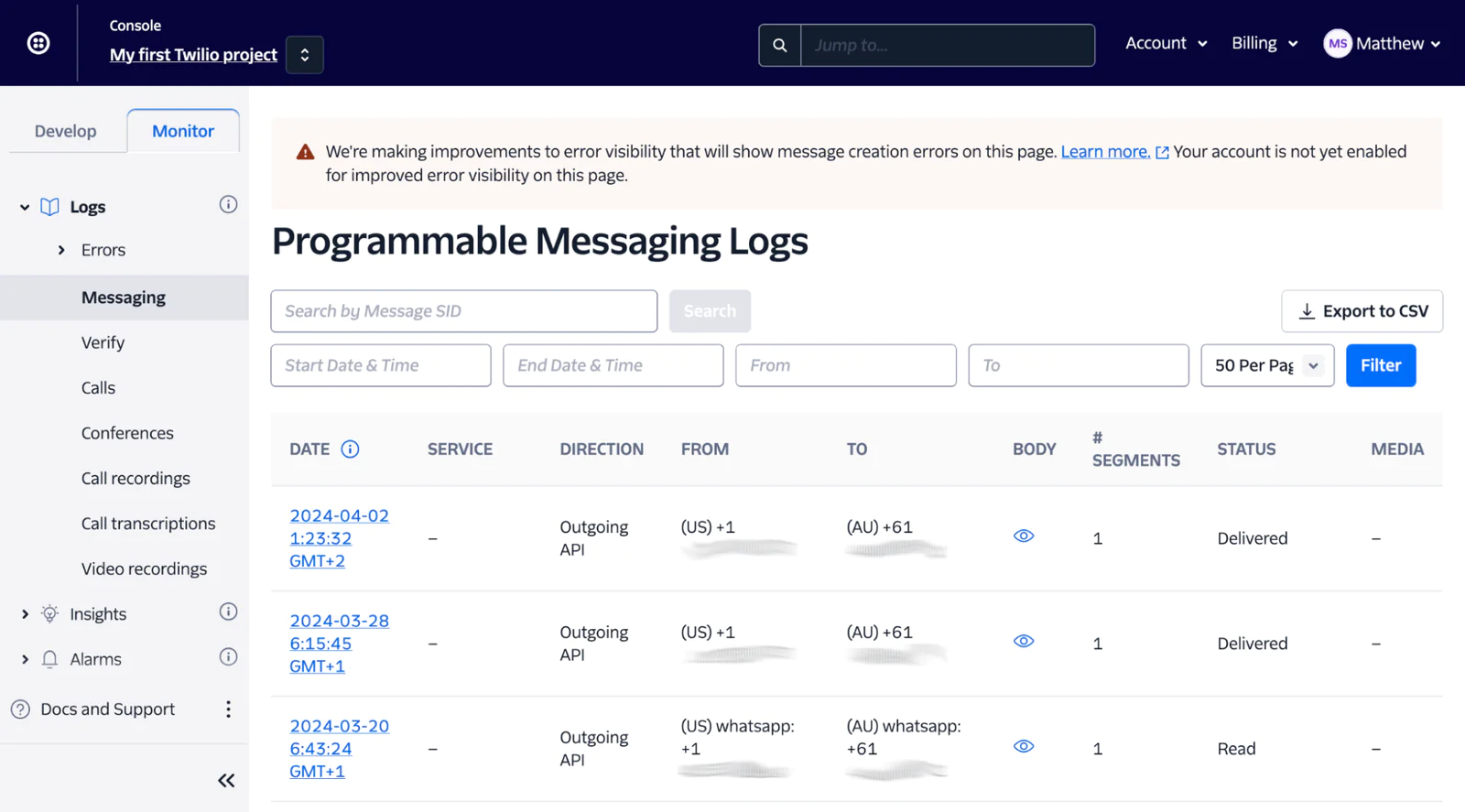
Best for: Engineering teams building a custom messaging stack from scratch.
Twilio is not a marketing platform. It is an API. You get SMS, MMS, voice, and WhatsApp as building blocks, and your engineering team builds the marketing layer on top. That gives you full control over everything, but it also means you are building and maintaining everything yourself.
Pros:
- Total control: you build exactly what you need
- Pay only for what you send (~$0.0079 per SMS, no platform fee)
- Supports 150+ countries, more than any tool on this list
Cons:
- You need developers to build and maintain everything
- No built-in campaign builder, inbox, or reporting dashboard
- Compliance and deliverability management are your responsibility
Pricing: ~$0.0079 per SMS segment. No platform fee. Usage-based billing.
6. SlickText
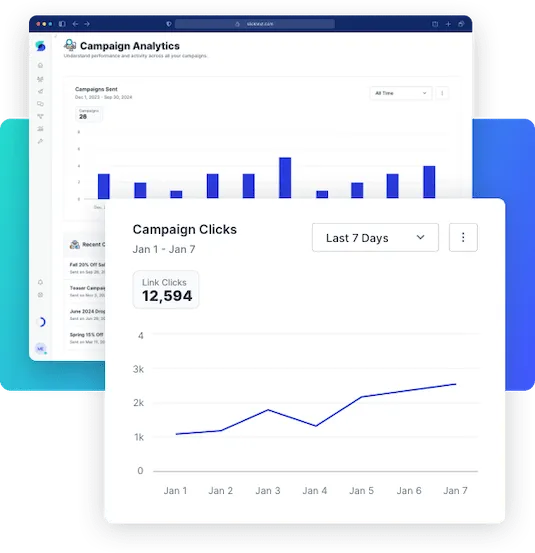
Best for: Mid-to-large teams running enterprise SMS campaigns who need a dedicated SMS tool with strong compliance features.
SlickText focuses on mass texting campaigns with features like text-to-join keywords, drip campaigns, and detailed analytics. It offers both HubSpot and Salesforce integrations, which sets it apart from many ecommerce-only competitors.
Pros:
- HubSpot and Salesforce integrations available
- Strong mass texting and keyword opt-in features
- Dedicated compliance support
Cons:
- No calling features
- Pricing increases sharply at higher tiers
- No shared team inbox for two-way conversations
Pricing: Starts at $29/month for 500 texts. Scales by volume.
7. SimpleTexting
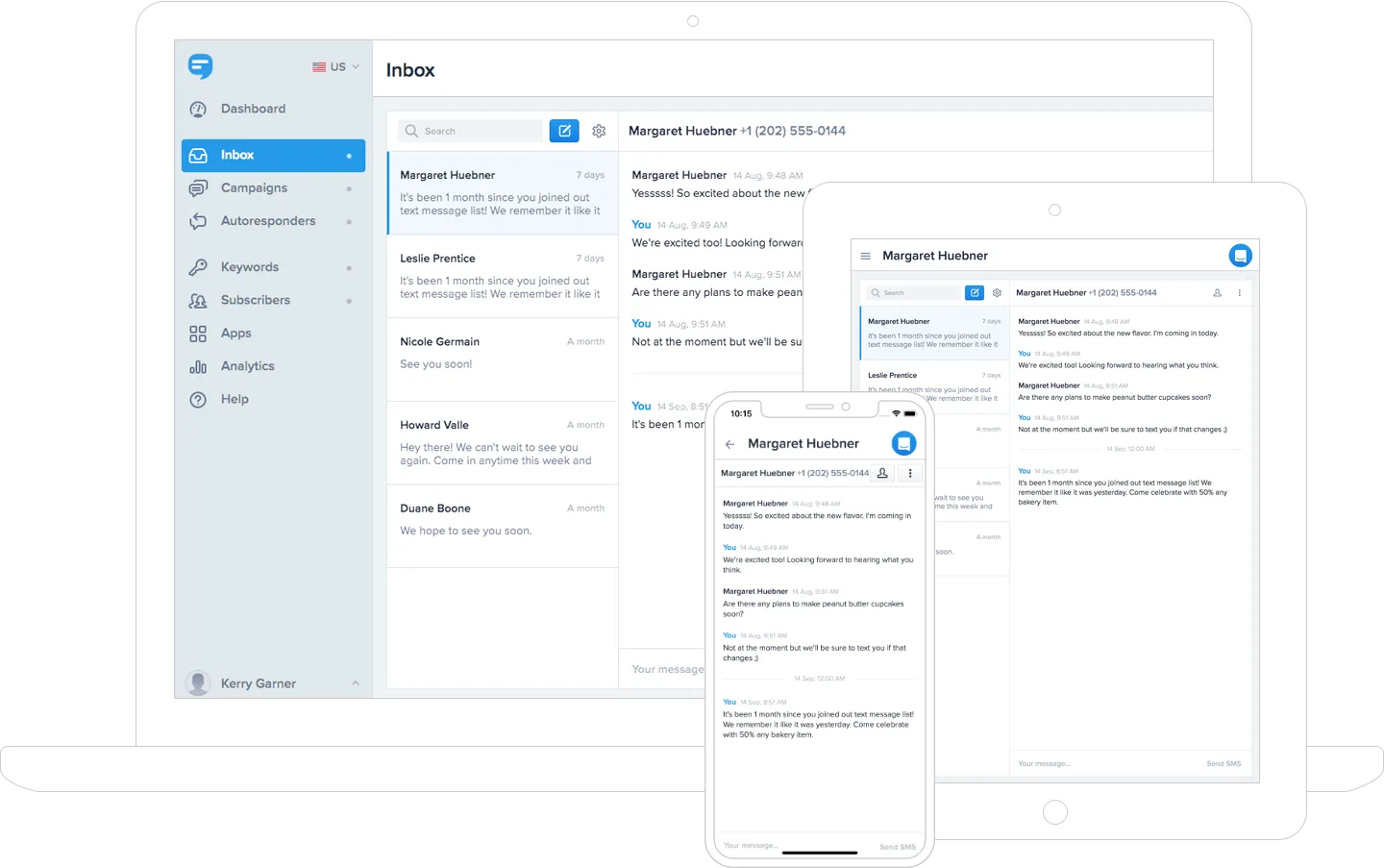
Best for: Small teams or smaller lists that need simple, affordable two-way SMS.
SimpleTexting is straightforward. Two-way texting, keyword opt-ins, and basic automation at a low price point.
Pros:
- Low cost of entry
- Easy to set up and use
- Two-way texting and keyword opt-ins
Cons:
- No native CRM integration (requires Zapier)
- Limited automation compared to full-featured platforms
Pricing: Starts around $29/month.
8. EZ Texting
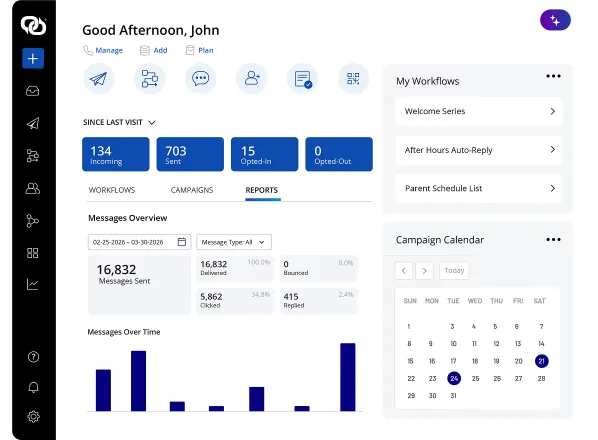
Best for: Local businesses running basic text campaigns, appointment reminders, and promotions.
EZ Texting has been around since 2004. It focuses on simplicity: group texting, text-to-join, and scheduled sends.
Pros:
- Very easy to learn and use
- Good for appointment reminders and basic promotions
- Long track record and reliable delivery
Cons:
- Limited CRM integration (Zapier only for HubSpot)
- No calling features
Pricing: Starts at $25/month. See our EZ Texting pricing breakdown for details.
9. Podium
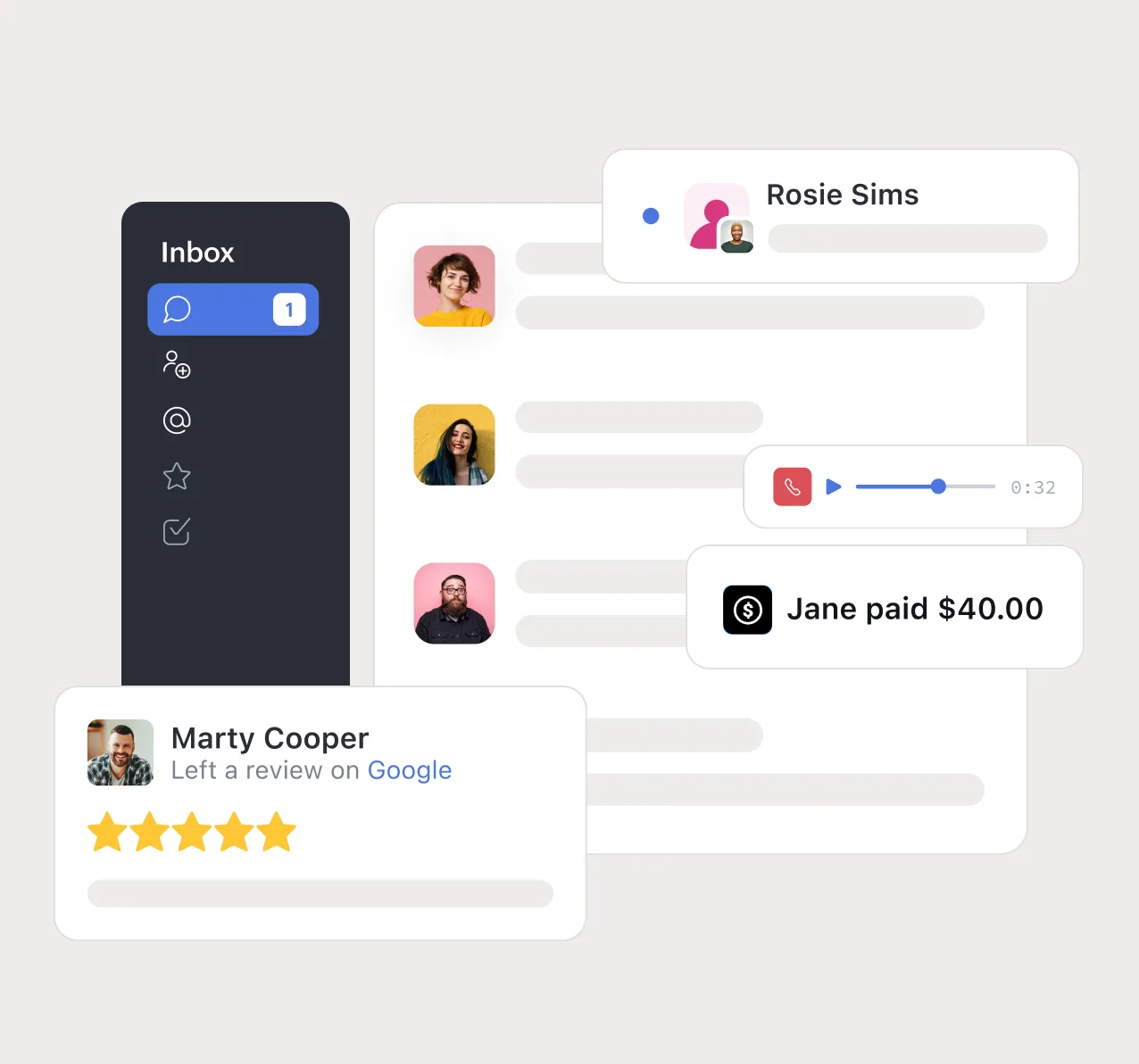
Best for: Local and multi-location businesses focused on reviews, payments, and customer messaging.
Podium bundles messaging, reviews, payments, and webchat into one platform for local businesses: auto dealers, dental offices, home services.
Pros:
- Calling included alongside messaging
- Review management and payment collection built in
- Good for multi-location businesses
Cons:
- Expensive: starts at $399/month
- No HubSpot or Salesforce native integration
Pricing: Starts at $399/month.
10. Braze
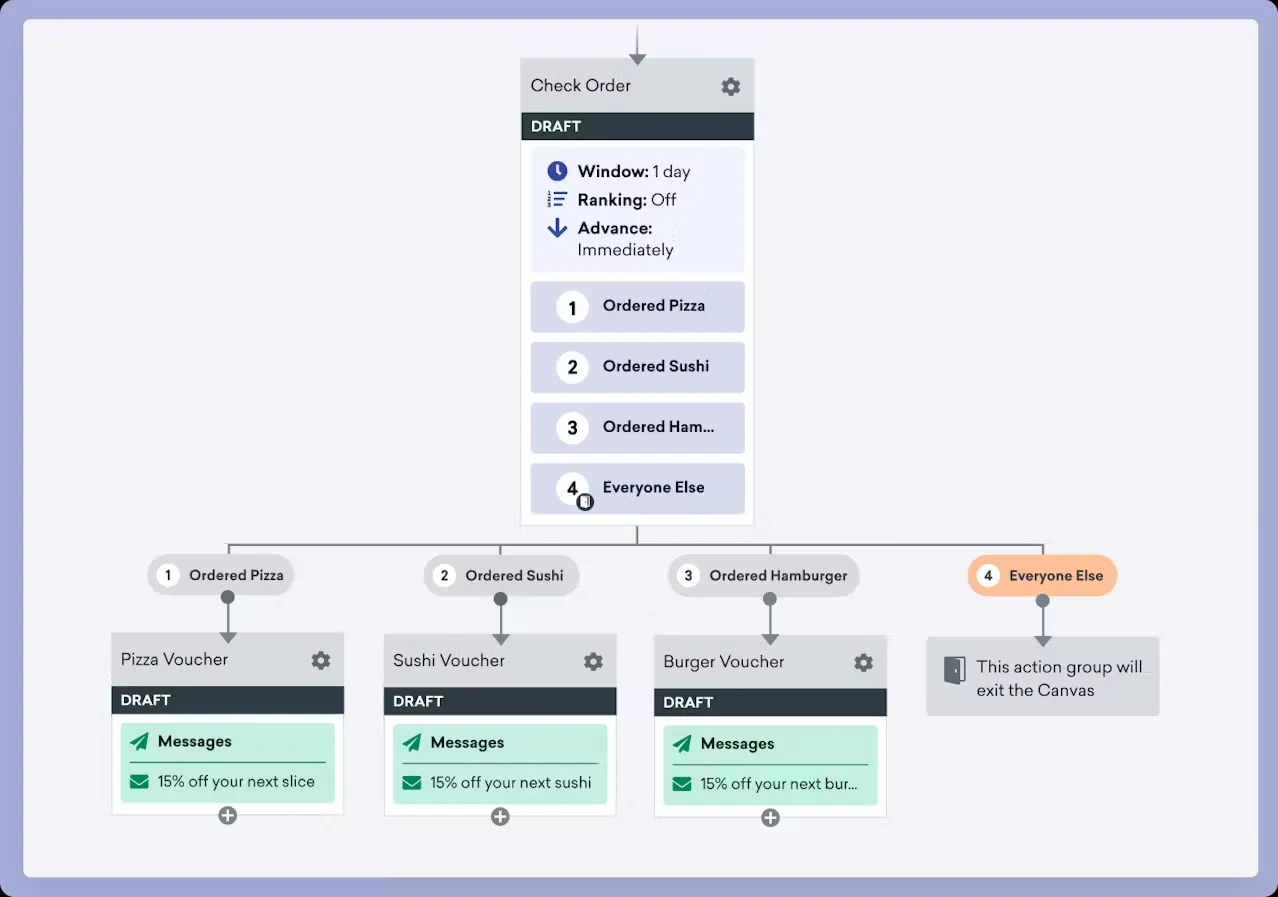
Best for: Enterprise brands running omnichannel engagement at massive scale.
Braze is an enterprise customer engagement platform. SMS and RCS are two channels among many, alongside email, push, in-app messaging, and WhatsApp. The segmentation engine is powerful, and the platform handles billions of messages. But it requires a dedicated team and a large budget.
Pros:
- True omnichannel: SMS, RCS, email, push, in-app, WhatsApp
- Powerful segmentation and real-time personalization
- Scales to very large message volumes
Cons:
- Enterprise pricing (typically $50,000+/year)
- Complex setup requiring dedicated resources
- Overkill for SMEs and mid-market teams
Pricing: Custom, enterprise-level. Requires a sales conversation.
11. Yotpo
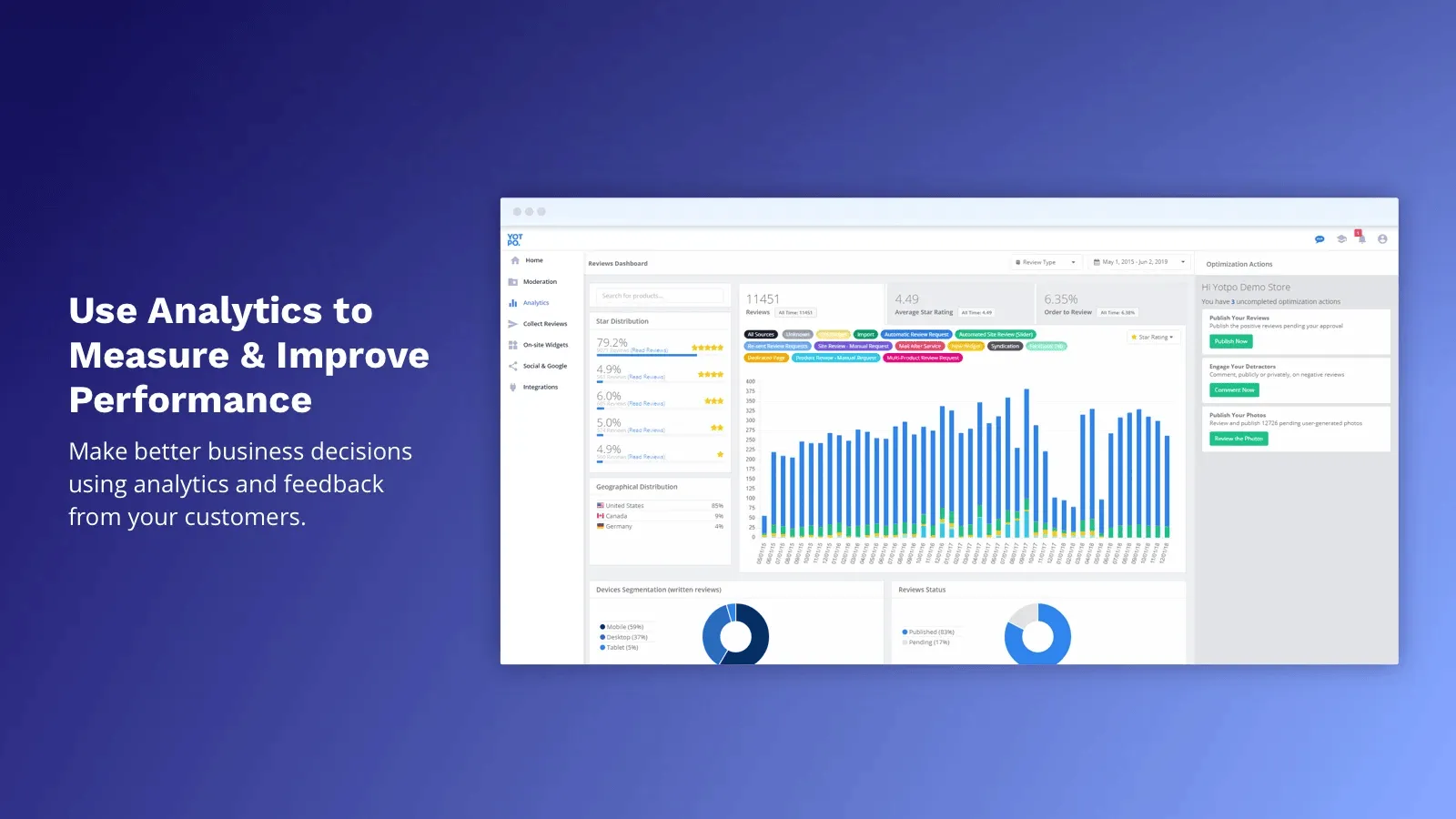
Best for: Ecommerce brands that want SMS, reviews, and loyalty managed together.
Yotpo bundles SMS marketing with reviews and loyalty programs. If your retention strategy leans on review collection and repeat-purchase incentives, having all three in one platform eliminates the need for separate tools.
Pros:
- SMS + reviews + loyalty in one platform
- Segmentation based on review data and sentiment
- Shopify-native
Cons:
- Bundling means paying for features you might not use
- SMS features less specialized than dedicated SMS tools
Pricing: Entry plans start around $19/month.
12. Emotive
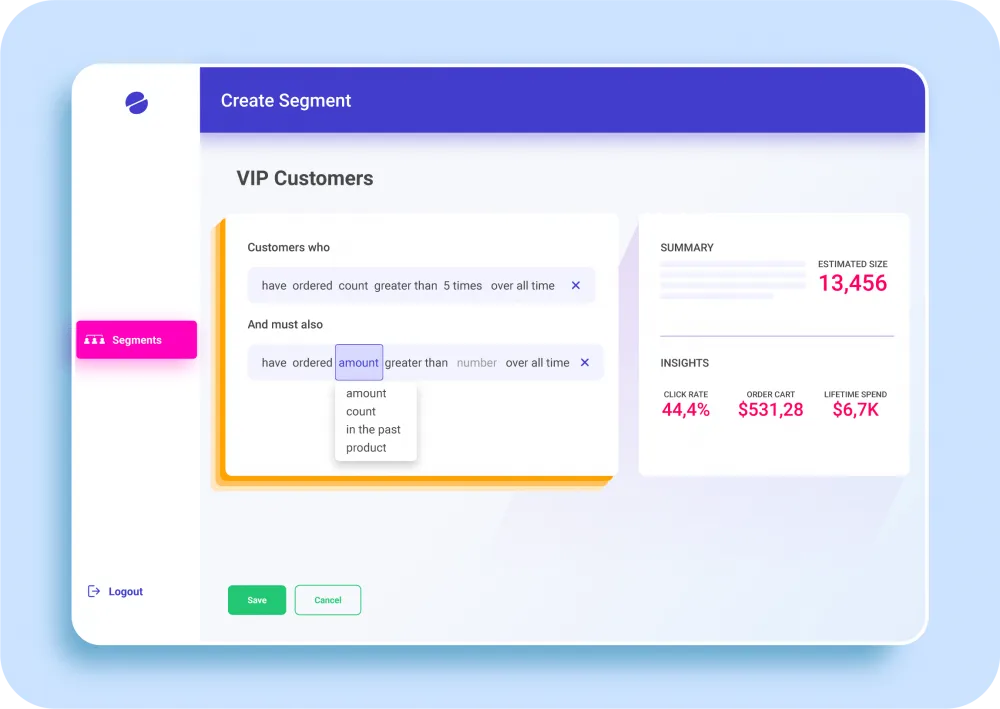
Best for: Premium DTC brands that want human-touch conversational SMS at scale.
Emotive positions itself around conversational, human-assisted SMS marketing. Behavior-based campaigns run on a personal tone. Their TextPros service provides a team of SMS experts who handle strategy, copywriting, and execution.
Pros:
- Human-touch conversational style, not just automated blasts
- Strong behavioral segmentation
- Dedicated compliance team for TCPA/CCPA/CTIA
Cons:
- Enterprise-level pricing
- Not self-serve: requires onboarding and setup
Pricing: Custom, enterprise-level.
13. TxtCart
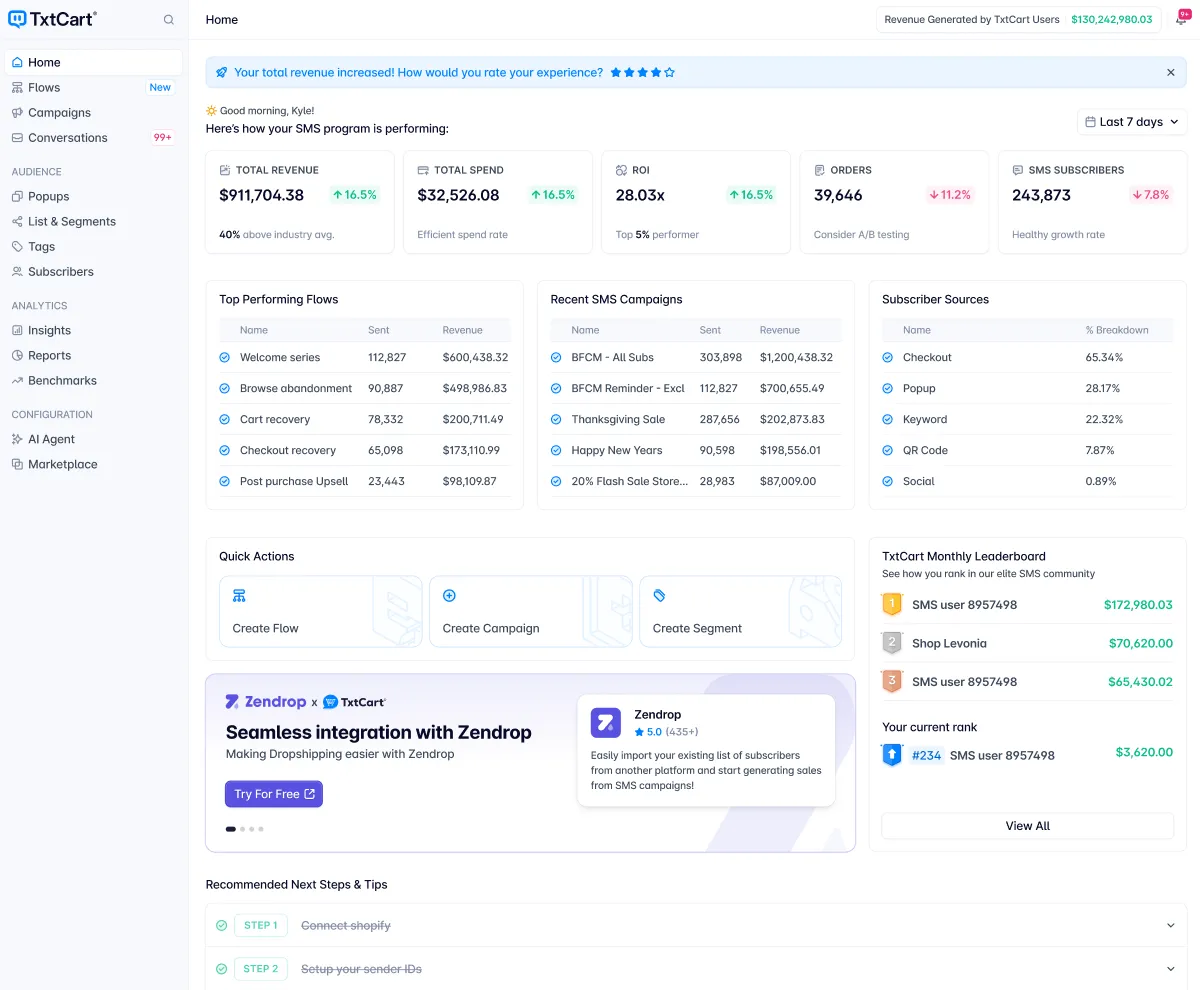
Best for: Shopify merchants who want a dedicated tool for AI-powered cart recovery.
TxtCart does one job: recover abandoned carts using AI-generated text messages. Built-in popups grow the subscriber list feeding recovery flows.
Pros:
- Purpose-built for AI-powered cart recovery
- Shopify-native
- Lower cost of entry than full-suite platforms
Cons:
- Narrow focus: does not replace a full marketing platform
- Not useful if cart recovery is not your main need
Pricing: Starts around $29/month.
14. Brevo
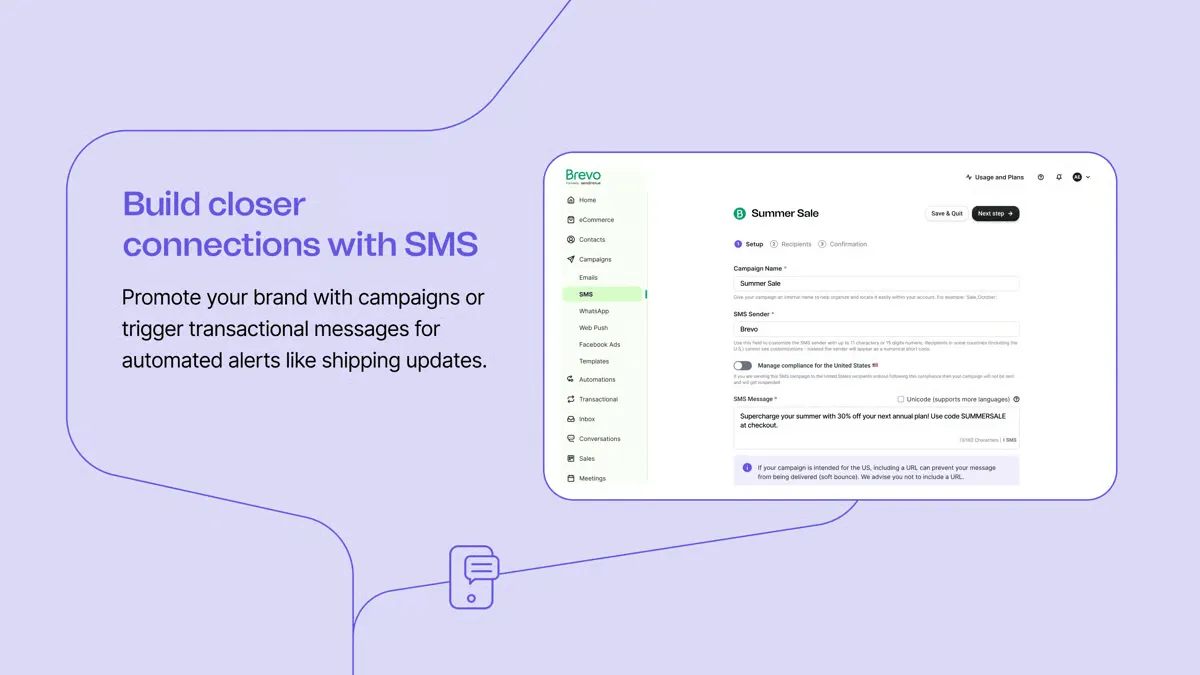
Best for: Brands that want transactional and marketing messaging on one predictable bill.
Brevo (formerly Sendinblue) combines transactional and marketing messaging across email and SMS, priced per contact. That per-contact billing is more predictable than per-message pricing for teams with fluctuating send volumes.
Pros:
- Per-contact billing: more predictable costs
- Transactional and marketing SMS in one tool
- HubSpot and Salesforce integrations available
Cons:
- SMS features less specialized than dedicated platforms
- Ecommerce integrations are not as deep as Shopify-native tools
Pricing: Tiered by contacts. Entry plans are budget-friendly.
15. Maestra
Best for: Larger ecommerce brands with 150,000+ active profiles that have outgrown self-serve platforms and want dedicated strategic support.
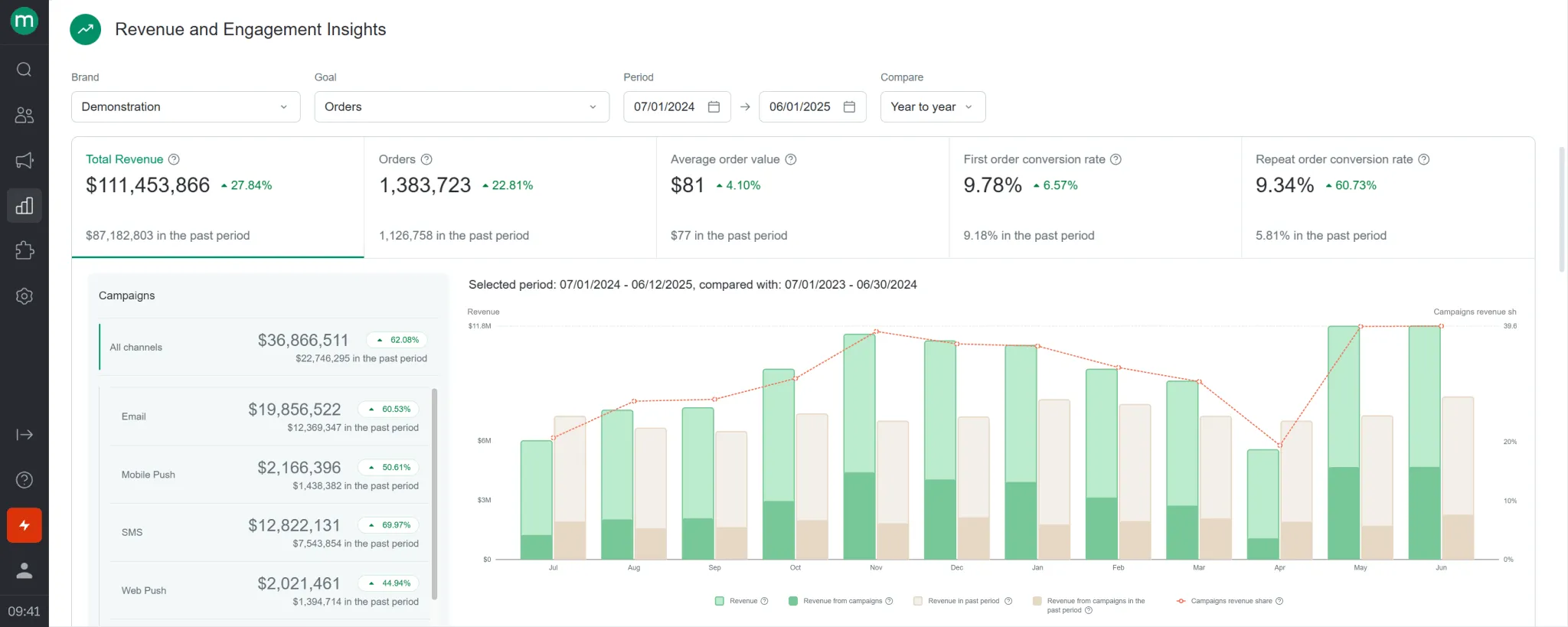
Maestra bundles a dedicated marketer with the software. Real-time CDP, unified customer profiles, and full-service support make it a white-glove upgrade path from Klaviyo or Omnisend.
Pros:
- Dedicated strategic support included
- Real-time CDP with unified profiles across every touchpoint
- Built for brands outgrowing self-serve tools
Cons:
- $2,990/month minimum: serious commitment
- Overkill for smaller brands
Pricing: Starts at $2,990/month for 150,000 active customer profiles.
Attentive vs Salesmsg: head-to-head
This is the comparison that matters most if you are reading this from a B2B or service-business perspective. Attentive and Salesmsg solve different problems for different teams.
When to pick Attentive: You are a DTC ecommerce brand where SMS drives a significant portion of store revenue. You need subscriber acquisition popups, cart recovery flows, and RCS. Your budget can handle enterprise-level contracts.
When to pick Salesmsg: Your team runs on HubSpot or Salesforce. You need texting and calling from the same number, with every conversation logged to the CRM. You want published pricing you can budget for without a sales call.
One Capterra reviewer captured the frustration that leads teams to Salesmsg: "I want to keep Attentive... but I will have to think hard about having an ESP that does not talk to our SMS. Not having this does give me pause." That integration gap between SMS and CRM is exactly what Salesmsg was built to close.
Attentive vs Klaviyo: head-to-head
When to pick Attentive: You are an ecommerce brand where SMS is the primary revenue channel, and you want the best subscriber acquisition and SMS automation tools regardless of cost.
When to pick Klaviyo: Your email program is already in Klaviyo, and you want SMS to share the same customer data and segmentation. You prefer published pricing and the ability to start small.
When to pick neither: You run a B2B sales team on HubSpot or Salesforce and need texting plus calling integrated with your CRM. That is what Salesmsg is built for.
Attentive vs Postscript: head-to-head
When to pick Attentive: You sell on multiple ecommerce platforms (not just Shopify), your SMS volume justifies enterprise pricing, and you want RCS capabilities alongside SMS.
When to pick Postscript: You are Shopify-only, you want transparent pricing you can budget for, and you value being able to see exactly what each message costs before committing.
How to choose the right Attentive alternative
- B2B sales follow-up through a CRM: Salesmsg. It is the only platform on this list built for sales teams that need SMS, calling, and CRM logging in one place.
- Ecommerce SMS + email on Shopify: Klaviyo (if you also need email) or Postscript (if you want SMS-only with transparent pricing).
- Budget-friendly multichannel: Omnisend or Brevo, both with free or low-cost tiers to start.
- API-first custom build: Twilio. Full control, no platform fee, but you need developers.
- Local and multi-location: Podium. Bundles messaging, reviews, and payments for service businesses.
- Enterprise omnichannel at scale: Braze. Big budget, big team, big volume.
Compliance checklist: what to verify before switching
Switching SMS platforms means your compliance obligations travel with you. Here is what to check:
10DLC registration. 10DLC (10-digit long code) is a US carrier requirement for A2P (application-to-person) business messaging. Ask your new provider whether they handle registration or if you need to do it yourself. Salesmsg, SlickText, and SimpleTexting handle registration for you. Twilio gives you the tools but you manage the process.
TCPA consent. Your opt-in consent records need to transfer with your subscriber list. Document the date, method, and language of each consent record before migrating.
Number porting. If you use a 10DLC number, your registration typically transfers with the number. Short codes may need to be re-provisioned with the new provider, which can take 8 to 12 weeks.
For the full breakdown, read our SMS marketing compliance guide.
FAQs about Attentive competitors
Who are Attentive's biggest competitors?
Attentive's main competitors include Klaviyo, Postscript, Omnisend, Salesmsg, SlickText, and Twilio. The right choice depends on whether you run ecommerce SMS campaigns, B2B sales follow-up, or need to build a custom messaging stack from scratch.
How much does Attentive cost per month?
Attentive does not publish pricing. You need to book a demo for a custom quote. Vendr's buyer data puts the median annual contract at $40,000, with a range from $1,800 to $72,000. Competitors like Salesmsg ($25/month) and SimpleTexting (~$29/month) publish transparent pricing.
Is there a good Attentive alternative for B2B sales teams?
Salesmsg is built for B2B sales and marketing teams. It combines SMS, MMS, and calling in one platform, integrates natively with HubSpot and Salesforce, and includes shared team inboxes so managers can see every conversation. Attentive is designed for ecommerce, not B2B sales workflows.
Can I use Attentive with HubSpot?
Attentive offers a HubSpot integration, but it is limited compared to tools built specifically for HubSpot workflows. Salesmsg has a native HubSpot integration that triggers texts from workflows, logs conversations to contact timelines, and supports two-way messaging from inside HubSpot.
What is the difference between Attentive and Klaviyo for SMS?
Attentive is SMS-first with strong subscriber acquisition tools (two-tap signup, popups). Klaviyo is email-first and added SMS later. If your email program already runs on Klaviyo, adding SMS there keeps your data unified. If you want the strongest standalone SMS automation for ecommerce, Attentive is stronger.
Do I need to re-register my phone number if I switch from Attentive?
It depends on the number type. 10DLC numbers typically transfer with their A2P campaign registration. Short codes may need re-provisioning with your new provider, which can take 8 to 12 weeks.
Which Attentive competitors include calling features?
Most Attentive alternatives are SMS-only. Salesmsg, Podium, and Twilio (via API) offer both SMS and calling. For B2B teams that need to call and text from the same number, that is a significant advantage over SMS-only tools.
Does Salesmsg handle TCPA and 10DLC compliance the same way Attentive does?
Both handle it, but differently. Attentive's compliance tools are built for ecommerce sign-up and list-growth flows. Salesmsg's TCPA, self-serve 10DLC upgrades, and HIPAA-conscious compliance are built around CRM-logged conversations.
The bottom line
Attentive is a strong tool for ecommerce SMS marketing. If you are a DTC brand running high-volume subscriber campaigns through Shopify, it earns its place on the shortlist. But most teams searching for "Attentive competitors" are looking because Attentive does not fit their setup: the pricing is opaque, the CRM integration is shallow, and calling is not an option.
If your team runs on HubSpot or Salesforce and needs SMS, calling, and pipeline visibility in one place, start a free 14-day Salesmsg trial and see how it works with your actual workflows. No credit card required.