10 Best EZ Texting Alternatives for Revenue Teams in 2026




TL;DR
Salesmsg is the best EZ Texting alternative for revenue teams, logging texting and calling straight into HubSpot or Salesforce instead of leaving conversations stuck in bulk SMS blasts. TextUs stands out for high-volume outbound sales teams, and Sakari for a HubSpot-only texting fit with no calling.
10 Best EZ Texting Alternatives for Revenue Teams in 2026
Why look for alternatives to EZ Texting?
EZ Texting falls short once conversations need calling, CRM sync, and logging built into one platform for revenue teams. It handles two-way texting fine, but a call never joins that same thread. Logging is native for HubSpot; Salesforce and most other CRMs connect only through Zapier. A rep chasing up a text with a call hits that gap first. A manager checking what was said to a lead hits it next. That plays out three ways:
- No native calling: EZ Texting is text-only. A team that also calls leads ends up running a second platform for voice, then cross-referencing two tools for the full conversation history.
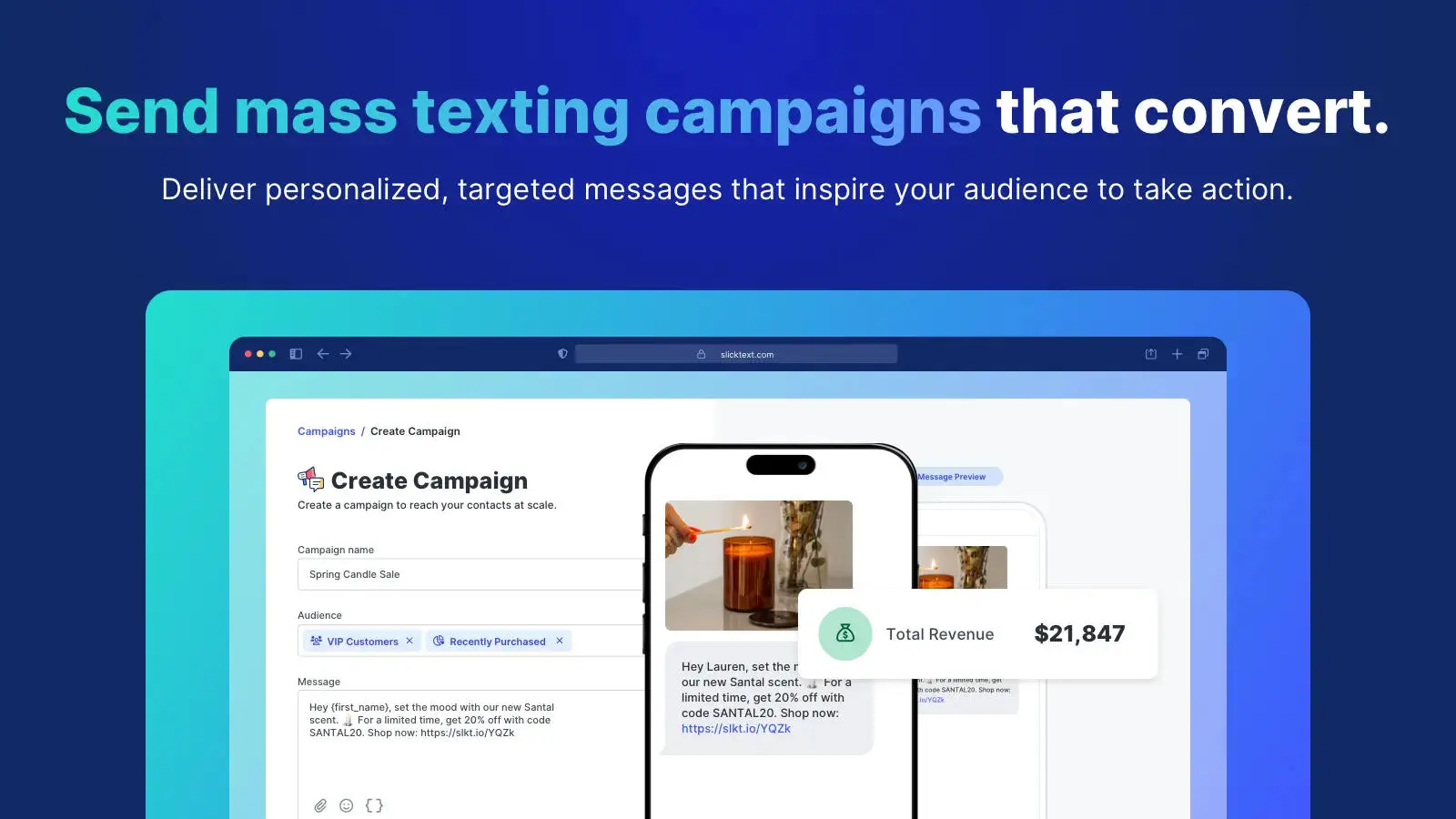
- Shallow CRM integration: EZ Texting's native HubSpot app syncs contacts nightly, but advanced features like A/B testing and analytics still require its own dashboard. Salesforce and most other CRMs connect only through Zapier, which breaks down for complex workflows and reliable logging.
- Reps go around the platform: When a tool doesn't fit how a sales team works, reps text from personal phones instead, off the record, unlogged, invisible to a manager. It's one of the most common reasons revenue teams start shopping for a platform that logs every call and text automatically.
If those gaps sound familiar, here are 10 platforms worth a look.
The 10 best EZ Texting alternatives
1. Salesmsg
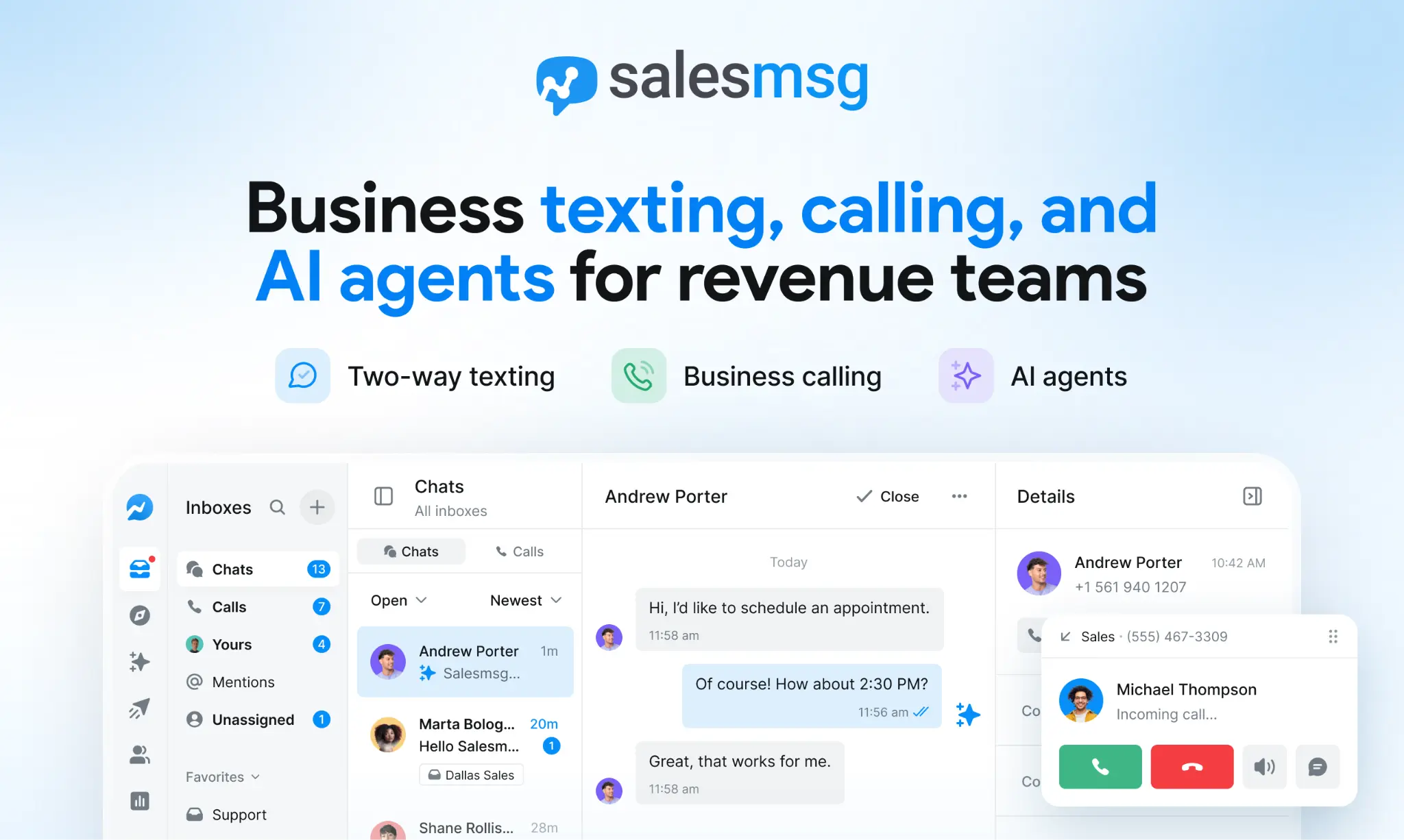
Salesmsg is a conversation platform for revenue teams that unifies business texting, calling, AI agents, and CRM-logged conversations in one place. Every text and call syncs to the contact record automatically, so reps and managers see the full history without switching tools.
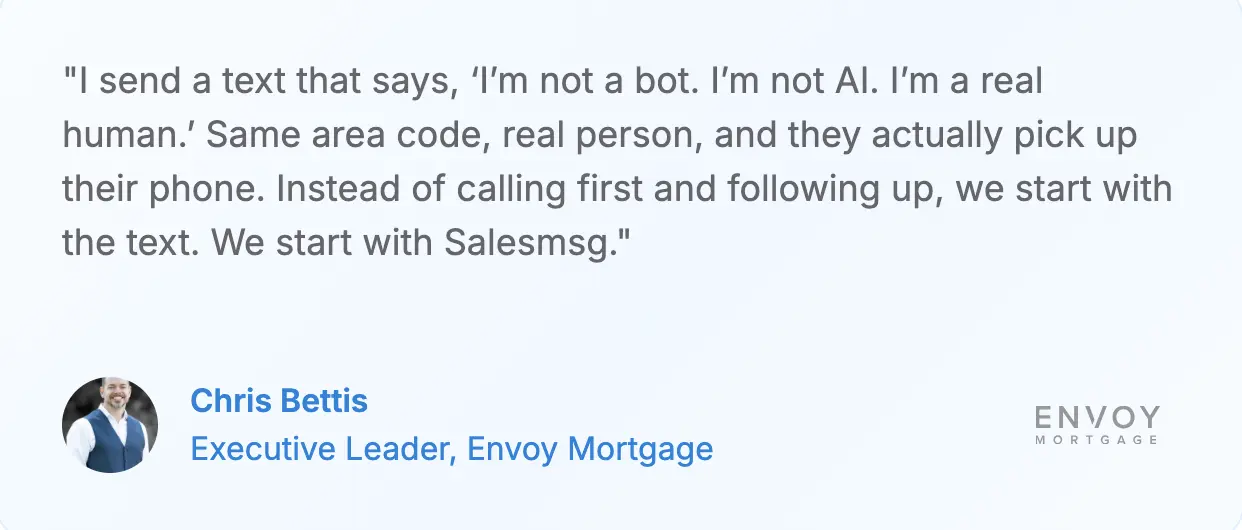
Envoy Mortgage runs Salesmsg across 100+ locations for more than 50,000 one-to-one texts a month, all logged in HubSpot. Their team leads with a text telling prospects they're not a bot, just a real person texting from a real local number, and that's what gets the phone picked up.
A few core strengths drive that:
Pros:
- Native two-way sync with HubSpot and Salesforce, not a bolt-on integration
- Texting and calling from the same number and platform
- AI agents qualify leads and book meetings when the team is offline
- TCPA, 10DLC, and HIPAA compliance built in
Cons:
- Built for teams already on a CRM
- Not built for pure mass-marketing blasts with no sales or support workflow behind them
Best for: Revenue teams at CRM-mature companies who need texting, calling, and automation inside HubSpot or Salesforce.
Pricing: Plans start at $25/month.
2. TextUs
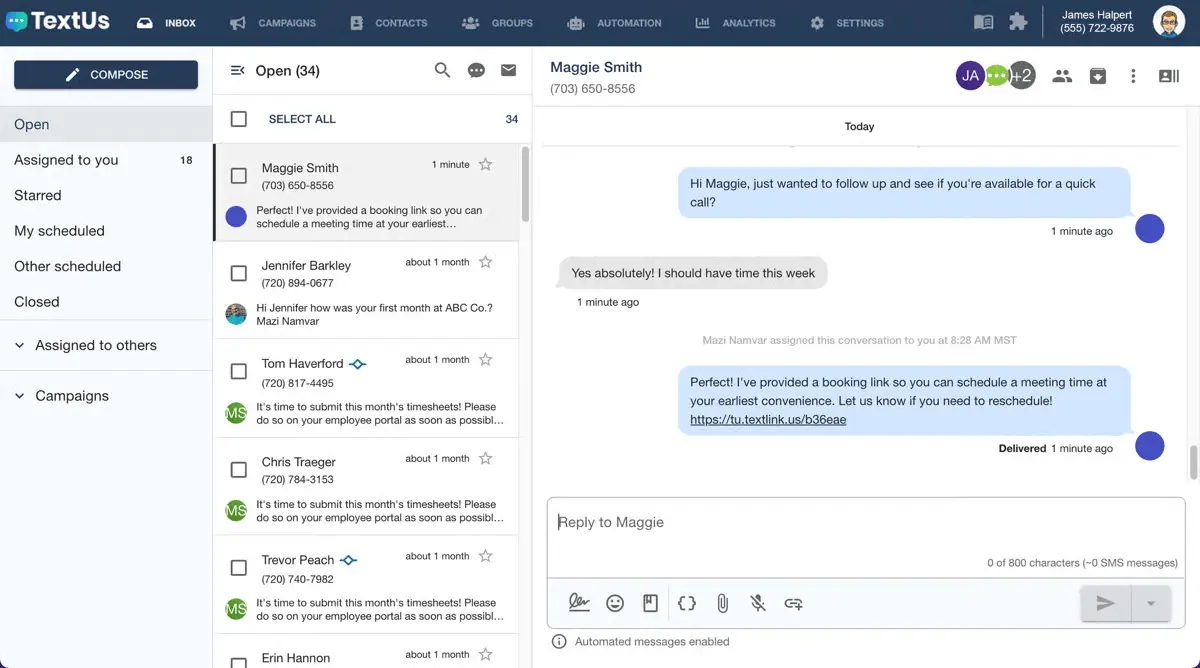
TextUs is built for sales and recruiting teams running high-volume outbound texting, with native integrations into HubSpot, Salesforce, and staffing tools like Bullhorn and Greenhouse.
Pros:
- Native CRM and applicant-tracking integrations
- Bulk texting built around a rep's daily call list
- Strong fit for staffing, recruiting, and compliance-heavy outbound
- Fast, guided onboarding
Cons:
- Weaker on native calling than platforms built for text and voice together
- Base subscription runs several hundred a month, pricier than marketing-first tools
- Mass-texting large groups can get clunky at scale
Best for: Outbound sales and recruiting teams that live in a CRM and need fast, high-volume texting.
Pricing: Base plans run $300 to $500/month, custom above that.
3. Podium
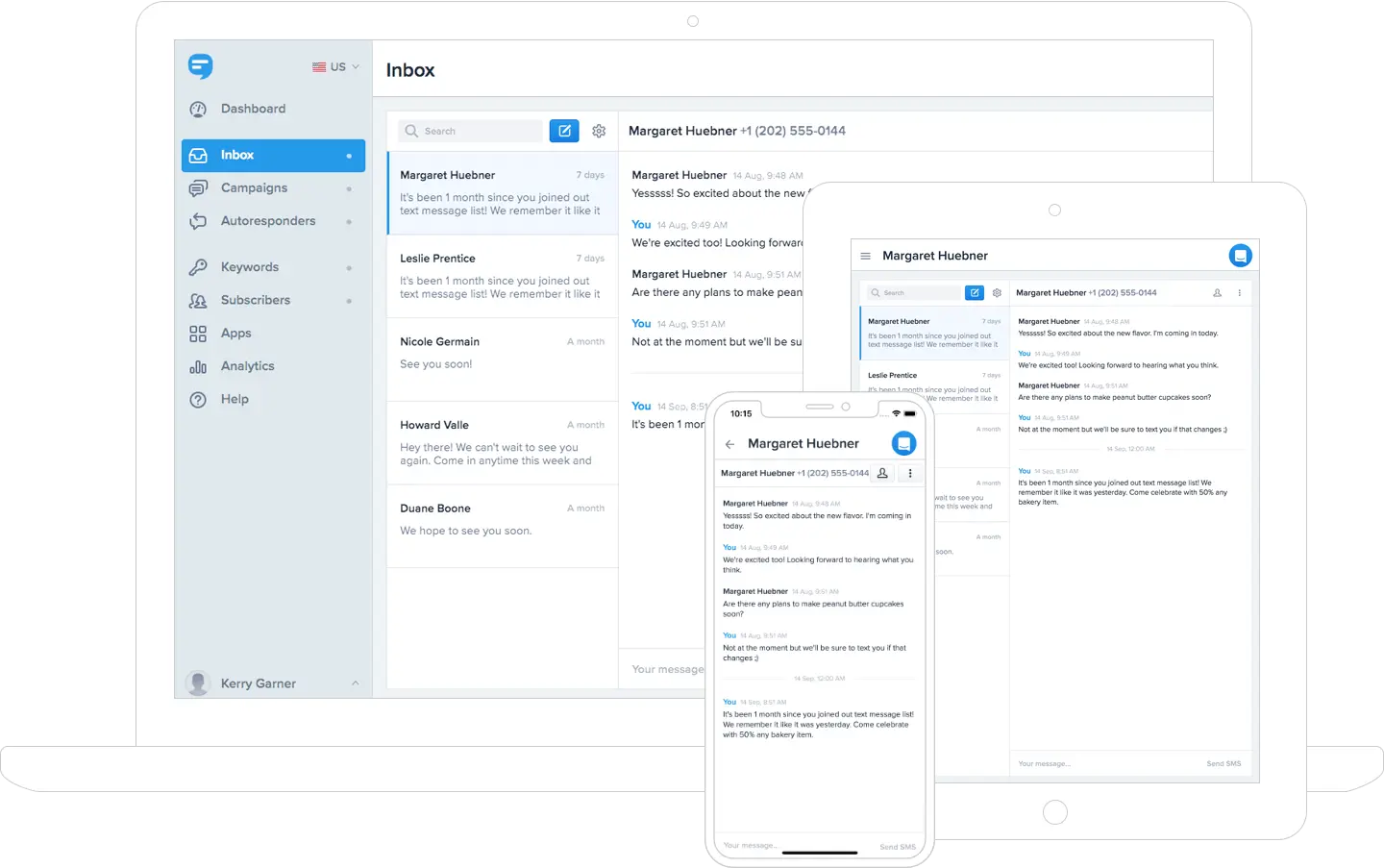
Podium centers on local business communication: reviews, payments, and messaging in one inbox. Strong fit for businesses that need to collect reviews and manage messaging in the same place.
Pros:
- Built-in review collection and payment links
- Centralizes messaging across channels in one inbox
- Good fit for appointment-based local businesses
- Rated highly for usability on G2
Cons:
- Less built for high-volume, workflow-driven sales texting
- Advanced reporting, custom branding, and AI tools often locked behind higher tiers
- Reviewers report annual-contract lock-in and difficulty cancelling
Best for: Local businesses focused on reviews, payments, and customer messaging over sales-pipeline texting.
Pricing: Starts around $399/month for Core, $599/month for Pro.
4. Heymarket
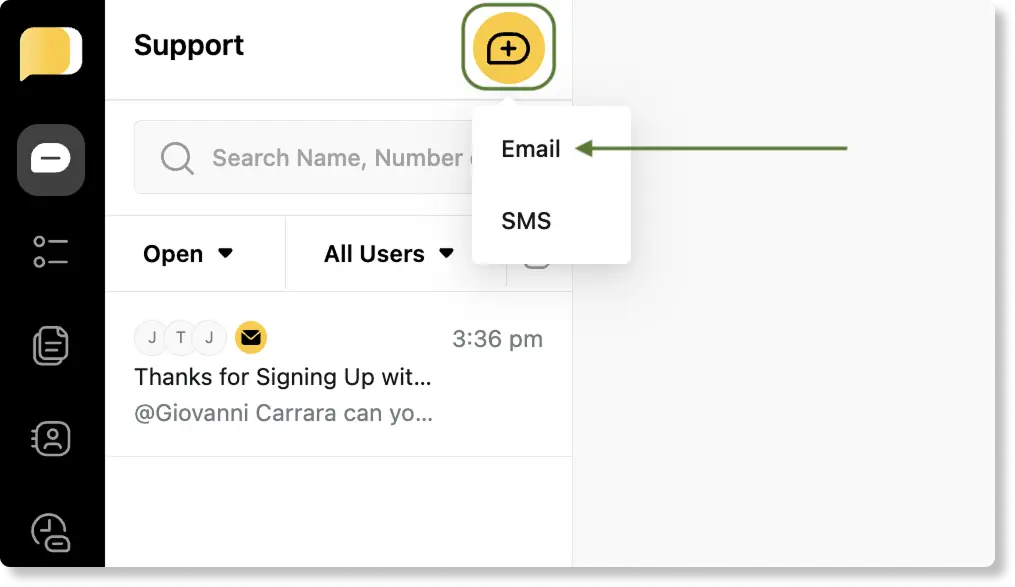
Heymarket offers a shared team inbox for omnichannel messaging, including SMS and WhatsApp in one place. Teams outgrow it once they need deeper automation or CRM-triggered workflows.
Pros:
- Shared inbox with conversation management and templates for team collaboration
- Supports multiple messaging channels beyond SMS
- Native HubSpot integration on every plan
- Free trial available
Cons:
- Per-user pricing with a two-user minimum adds cost before a team scales
- Salesforce needs a paid add-on
- Lacks native automated campaigns, requiring Zapier to fill the gap
Best for: Small teams that want one shared inbox across a few channels, without heavy CRM automation.
Pricing: Starts around $19 to $31/user/month, 2-user minimum.
5. SimpleTexting
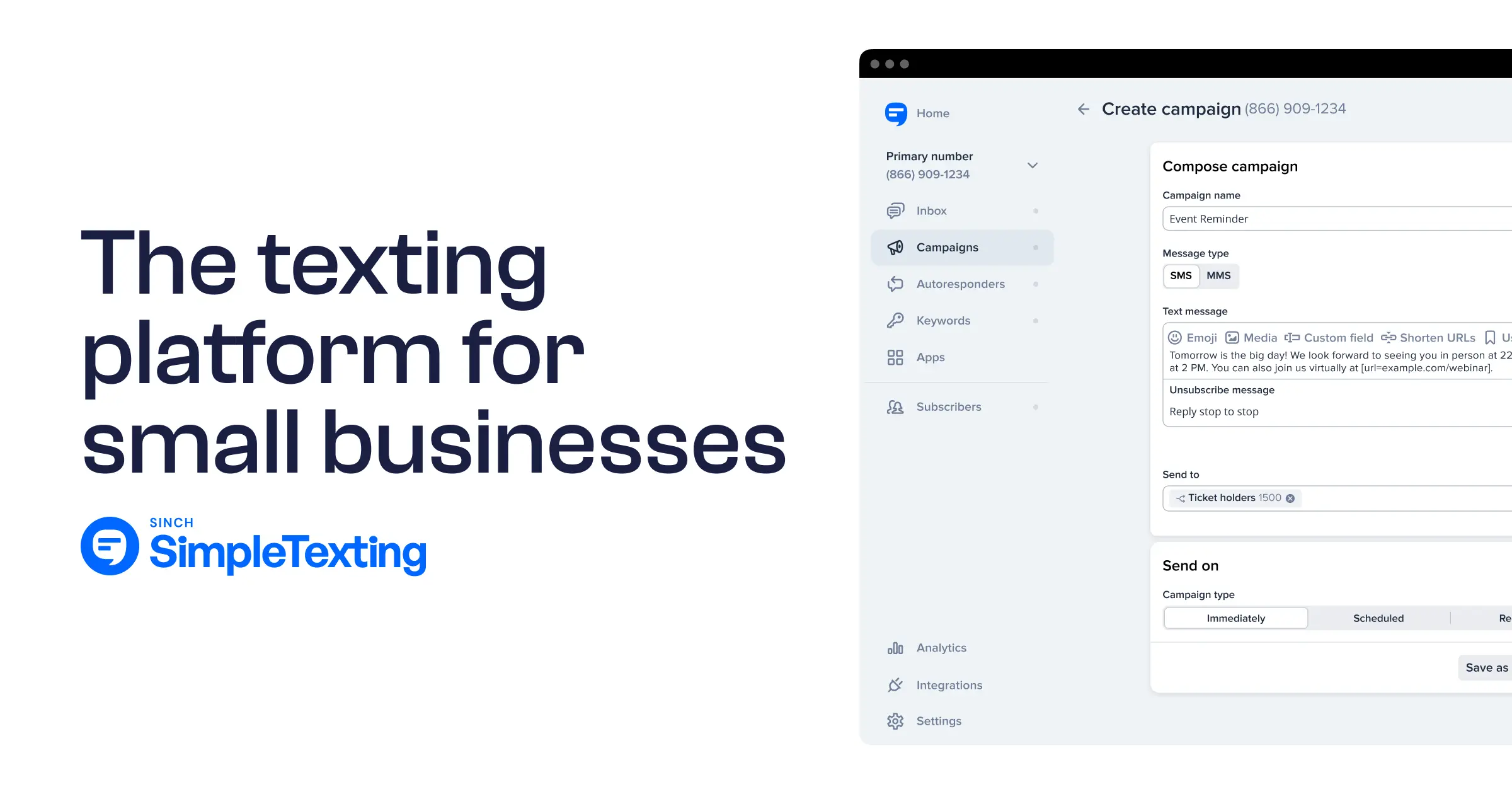
SimpleTexting is a bulk SMS marketing platform built for one-time campaigns and broadcast messaging, closer to EZ Texting than to a sales conversation platform.
Pros:
- Straightforward, credit-based pricing with unlimited contacts
- Solid list segmentation for marketing sends
- HubSpot integration included
- API access beyond native integrations
Cons:
- No native calling
- Built around campaign volume, not two-way conversation workflows
- No backup method for bounced texts
Best for: Businesses that need reliable bulk SMS marketing over a sales or support platform.
Pricing: Starts at $39/month for 500 credits.
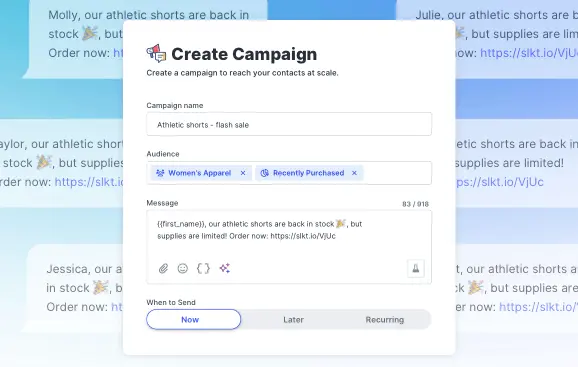
6. SlickText
SlickText is another marketing-first mass texting platform, similar in scope to EZ Texting. Well reviewed for ease of use and list-building tools like keyword opt-ins.
Pros:
- Intuitive campaign builder
- Strong list-growth and keyword opt-in tools
- Credits roll over instead of expiring
- Support team known for fast, hands-on help
Cons:
- No native calling or CRM sync built for revenue teams
- RCS messaging requires a separate setup fee
- Friction with number porting when migrating platforms
Best for: Marketing teams running SMS promotions and list-building campaigns.
Pricing: Starts at $29/month for 500 credits.
7. Twilio
Twilio is a programmable communications API. Development teams use it to build custom texting, calling, and messaging workflows from the ground up.

Pros:
- Full flexibility to build custom SMS, voice, and messaging workflows
- Global infrastructure and local numbers across 100+ countries
- Enterprise-grade reliability and security
- Responsive developer support
Cons:
- Requires development resources to build and maintain
- No shared inbox or CRM sync
- Diagnosing number or service issues is largely on the user
Best for: Engineering teams building a custom communications stack.
Pricing: Pay-as-you-go, based on usage.
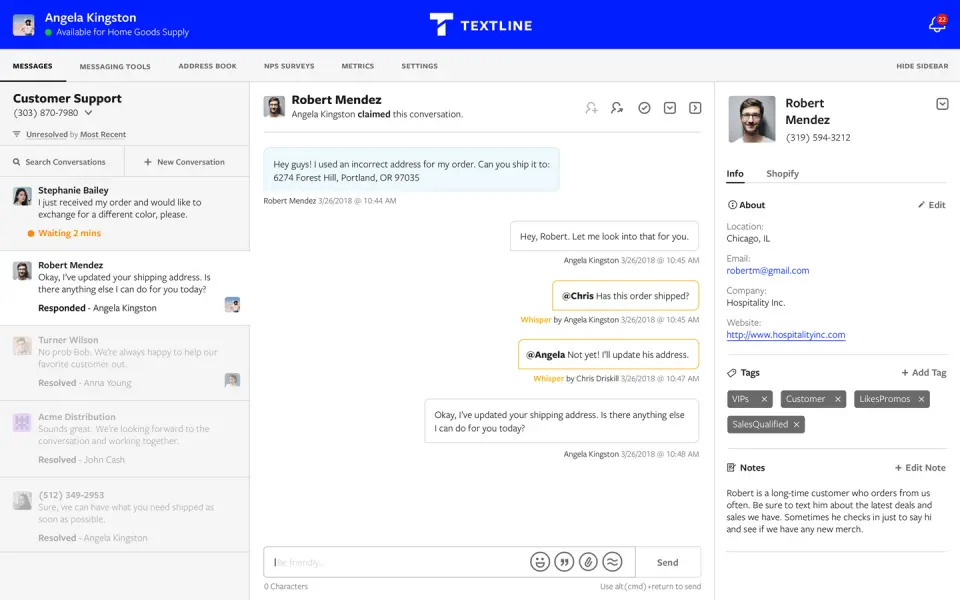
8. Textline
Textline focuses on two-way business texting for customer-facing teams, with a shared inbox and basic automation. Similar territory to Heymarket, built for team messaging over sales automation.
Pros:
- Clean shared inbox for team texting
- Straightforward setup for customer service use cases
- Decent integration options for support workflows
- Ease of use and responsive support
Cons:
- Limited native calling
- Built for support conversations more than outbound sales volume
- Mobile app updates aren't always user-friendly
Best for: Customer support and service teams that need shared two-way texting without a full sales automation layer.
Pricing: Custom, based on team size.
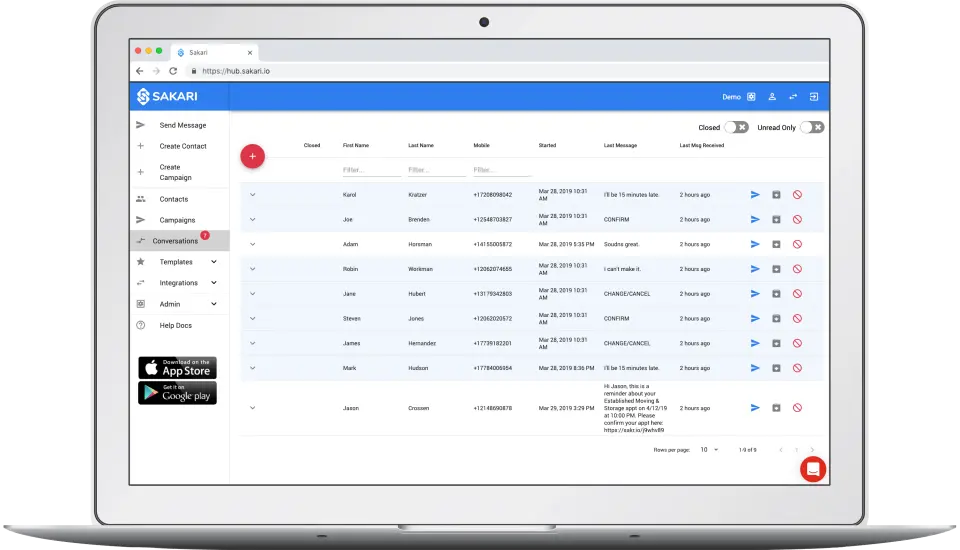
9. Sakari
Sakari is built around SMS for HubSpot, with texting triggered directly from HubSpot workflows. Texting only, no calling or AI agents.
Pros:
- Deep, HubSpot-specific SMS integration
- Workflow-triggered texting inside HubSpot
- Simple setup for teams that only need texting
- Transparent pricing, compared to competitors
Cons:
- No native calling
- Narrower feature set than platforms built for texting, calling, and AI agents together
- Add-on fees for calling functionality increase total cost
Best for: HubSpot-only teams that need SMS triggered from workflows and don't need calling.
Pricing: Custom, based on message volume.
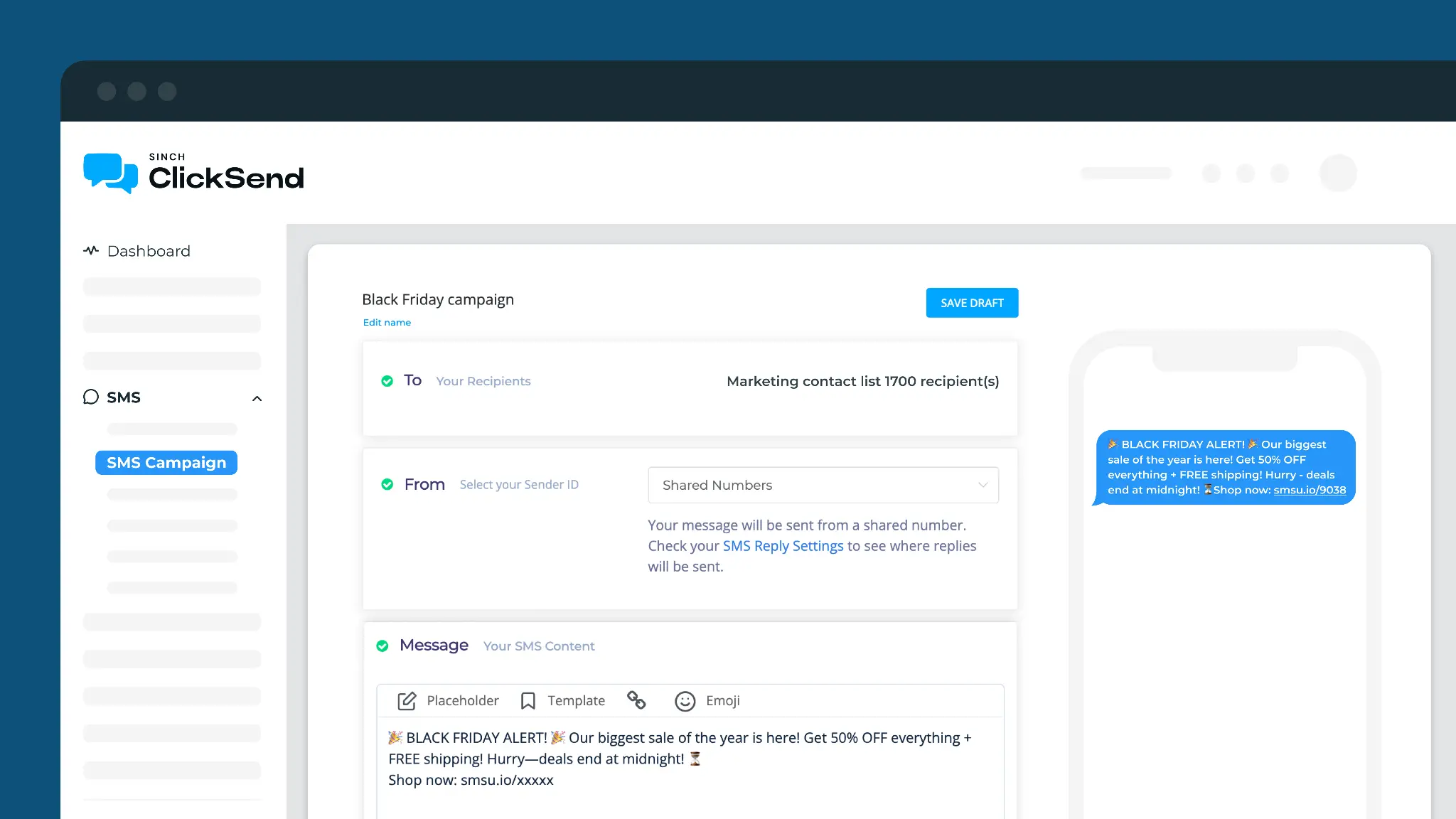
10. ClickSend
ClickSend runs on pay-as-you-go pricing across SMS, MMS, and channels like Viber, with no monthly minimum. A fit for low-volume senders or occasional international messaging.
Pros:
- True pay-as-you-go, no monthly commitment
- Multi-channel support including international messaging
- Competitive per-message cost at low to mid volume
- 24/7 customer support
Cons:
- Less focus on team collaboration or shared inboxes
- No CRM-native automation for sales workflows
- Toll-free number approval can take time
Best for: Low-volume senders or occasional international SMS without a monthly plan.
Pricing: Pay-per-message, roughly $0.01 to $0.03 before carrier fees.
How to choose the right EZ Texting alternative
Every alternative on this list can send a text. Few do the two things that matter for a revenue team: log to a CRM automatically and place calls from the same platform. EZ Texting does neither. Here's what separates the rest:
- Fit to your volume: Salesmsg and TextUs scale around message volume, built for teams sending thousands of workflow-triggered texts a month. SimpleTexting and SlickText scale by credits and campaigns instead, better suited to broadcast sending than conversation depth.
- Calling and CRM depth: Salesmsg and TextUs offer both, native CRM sync plus calling, though reviewers rate TextUs's calling weaker. Sakari and most marketing-first platforms cover CRM but skip calling, often leaning on Zapier instead of a native sync, which strains under CRM-mature workflows.
- Who actually uses it: Marketing-first platforms like SimpleTexting, SlickText, and ClickSend are built for broadcast campaigns and list growth. Sales- and support-first platforms like Salesmsg, TextUs, Podium, and Textline are built for ongoing, two-way conversations tied to a pipeline or support queue. Handing a marketing tool to a sales team, or the reverse, works against the team.
- What the reviews say: TextUs onboards fast but gets clunky at real mass-texting volume. Podium's contracts are harder to exit than they look at signup. SlickText edges out SimpleTexting on support. Twilio's flexibility assumes a team can debug its own issues.
The alternatives split into two options: some add texting to a broader suite, like reviews or loyalty tools; others build the full conversation, texting, calling, and CRM sync, as the product itself. Salesmsg is the second kind:
- Native two-way sync to HubSpot and Salesforce, logged automatically to the contact record
- Texting and calling from the same number and platform
- AI agents that qualify leads and book meetings when the team is offline
- TCPA, 10DLC, and HIPAA compliance built directly into the platform
Book a demo to see it in action.
FAQ
Do EZ Texting alternatives cost more than the sticker price suggests?
Some do. TextUs's base subscription runs $300 to $500/month before add-ons. Podium's contracts are harder to exit than they look at signup, per reviewer reports. SimpleTexting and SlickText run flat, credit-based pricing instead. Salesmsg starts at $25/month, the same entry point as EZ Texting, then scales with message volume, with calling, CRM sync, and AI agents included from that price.
How is Salesmsg's HubSpot and Salesforce sync different from a Zapier connection?
A Zapier connection triggers on basic events but breaks down once a workflow gets complex, and doesn't reliably log every text and call to the contact record. Salesmsg avoids that with a native sync that needs no manual setup and drops nothing between systems. That matters most for teams running established sequences, since a broken sync means a manager loses visibility into what's actually being said to a lead.
What should I check before choosing an EZ Texting alternative?
A few questions worth asking as you shortlist: does the platform log texts and calls to your CRM automatically, or only through Zapier? Is calling built into the same platform, or a separate tool? Does pricing scale with message volume, or with seats and campaigns? Who handles compliance, like TCPA and 10DLC opt-outs, the platform or your team? Do you need AI agents and automation, or just reliable two-way texting?
How hard is it to switch from EZ Texting to something like Salesmsg?
Most platforms, including Salesmsg, offer contact and number porting during onboarding, so a team isn't starting from zero. The bigger lift is usually rebuilding automations in the new platform. Salesmsg ships new capabilities monthly, which keeps narrowing that gap over time.


_Best%20SMS%20Tools%20for%20HubSpot%20in%202026.webp)