15 Best Sales Engagement Software Tools in 2026 (For B2B Teams)



TL;DR: What you get from this guide
- 15 sales engagement software tools covered, more than any other list on this topic
- Tools span every channel: SMS + calling, full outreach platforms, email sequencers, dialers, and conversation intelligence
- Each entry includes what the tool does, who it is for, G2 rating, and one honest trade-off
- Salesmsg leads the list as the only full engagement platform that combines two-way SMS, inbound and outbound calling, multiple message types, and AI agents in one place, with native HubSpot and Salesforce integration
- A quick comparison table and buyer's guide let you find your fit without reading every entry
Bottom line upfront: If your team runs on HubSpot or Salesforce and needs to text, call, send rich messages, and run AI-powered follow-up from a single platform, Salesmsg covers all of that without requiring three separate tools. For sequencing-heavy outbound at scale, Outreach and Apollo are the two most widely used full-stack options. The 15 tools below break down by use case so you can find your fit in under five minutes.
Most sales engagement software roundups list the same 8 to 10 tools, ignore SMS as a real channel, and skip the SMB segment entirely. That is not what this is. G2 data shows that 72% of sales teams successfully adopt their engagement platform and most recover their investment in under eight months, but only when the tool they pick actually matches how their team works. Discussions on r/sales and r/SalesOperations consistently show the same frustration: most comparison articles recommend enterprise platforms that cost $100+ per seat and assume a full RevOps team to configure them. This guide covers 15 options across every price point and use case.
What is sales engagement software?
Sales engagement software is the execution layer your sales team uses to reach out to prospects and follow up across channels like email, phone, SMS, and LinkedIn. Unlike a CRM, which stores your contacts and deal history, a sales engagement platform is where reps actually do the work: sending messages, making calls, running sequences, and tracking what gets replies.
The category covers a wide range of tools. Full platforms like Outreach and Salesloft manage cadences across every channel. Dedicated platforms like Salesmsg handle SMS, calling, and AI-powered engagement specifically. Email-native tools like Mixmax and Lemlist focus on inbox outreach. Most B2B sales teams use at least two of these layers, though the trend is toward platforms that bring more channels into one place.
Quick comparison: all 15 tools at a glance
Pricing noted below is the publicly available starting rate at time of writing. G2 ratings pulled October 2026. Always verify current pricing before making a decision.
The 15 best sales engagement software tools in 2026
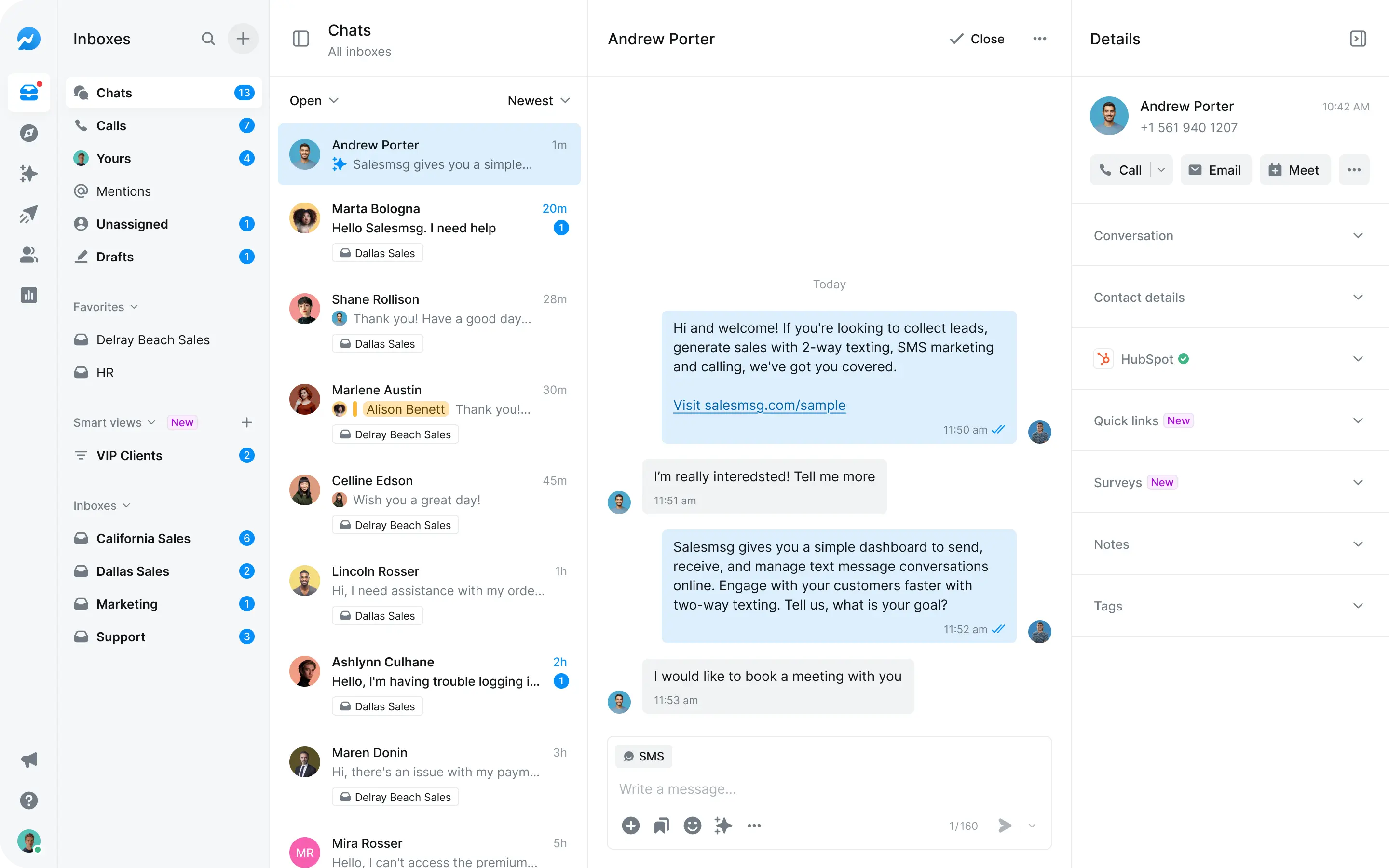
1. Salesmsg: Best for SMS, calling, and AI-powered engagement on HubSpot or Salesforce
G2 rating: 4.7/5 | G2 reviewers highlight the native HubSpot and Salesforce integrations as the standout, along with fast setup time and responsive support. On Capterra, the platform holds a 4.6/5 rating.
Best for: B2B sales and CS teams at SMBs using HubSpot or Salesforce who want SMS, calling, and AI follow-up running from one platform, not three.
- Two-way SMS and MMS from a shared business number, so any rep can pick up a conversation where a colleague left off
- Inbound and outbound calling from the same number your team texts from, with call recording, voicemail drop, and call routing
- AI agents that qualify leads, answer common questions, and follow up on no-replies automatically
- Native HubSpot and Salesforce integration with two-way sync: texts, calls, and AI conversations all log as activities on the contact record
- Built-in 10DLC registration and TCPA compliance tools
- Shared team inbox where every inbound text and call lands in one view, with assignment, notes, and tags
Pricing: Starts at $25/mo. Plans scale by message volume. 14-day free trial available with no credit card required.
Trade-off: Salesmsg focuses on SMS, calling, and AI engagement. It does not run multi-step email cadences. If your team needs email sequencing alongside text and call outreach, pair Salesmsg with HubSpot Sequences or a dedicated email platform.
Start a free trial of Salesmsg or book a demo to see how it connects to your HubSpot or Salesforce instance.
2. Outreach.io: Best for enterprise outbound at scale
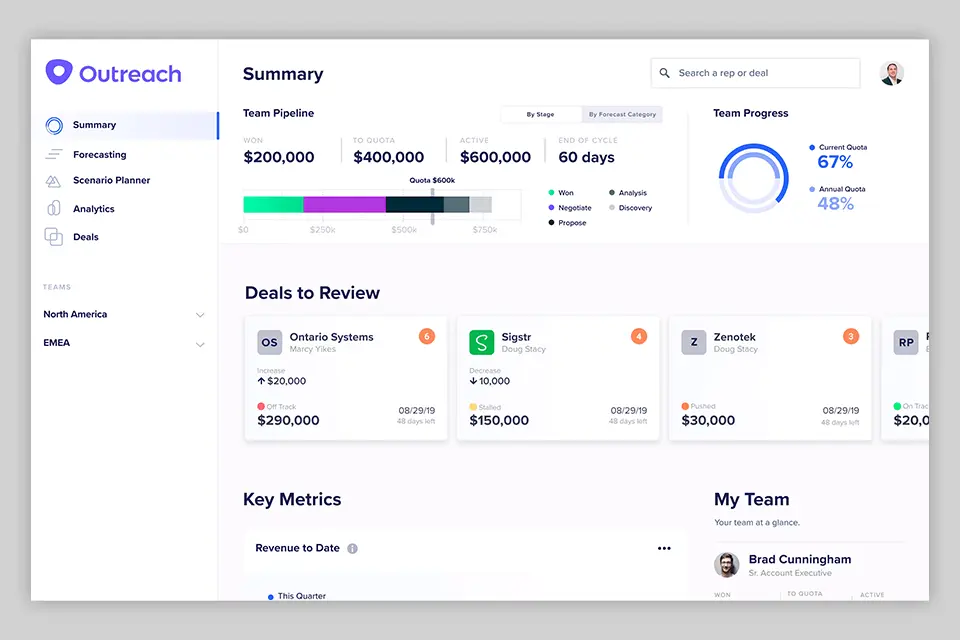
G2 rating: 4.3/5 | The lowest G2 score among the full-platform tools on this list. G2 reviewers praise the sequence builder and pipeline forecasting but frequently flag complexity, long onboarding times, and Salesforce sync issues. Reddit discussions on r/sales echo the same: teams love the feature depth but report that getting full value takes a dedicated admin.
Best for: Mid-market and enterprise sales teams with a dedicated RevOps function and 25+ reps running outbound sequences at volume.
- Multi-step sequence builder across email, call, and LinkedIn with A/B testing
- Revenue intelligence dashboards that surface deal risk and rep performance gaps
- AI-generated email suggestions and call summaries
- Deep integrations with Salesforce, LinkedIn Sales Navigator, and major CRMs
- Rebranded to Outreach.ai in 2026 with new Amplify Core, Plus, and Pro tiers and an AI credit layer
Trade-off: Priced for enterprise (estimated ~$100/seat/mo) with a steep learning curve. The 2026 AI credit layer makes total cost harder to predict. No public pricing, so expect a sales conversation before you know the cost.
3. Salesloft: Best for cadence management and coaching
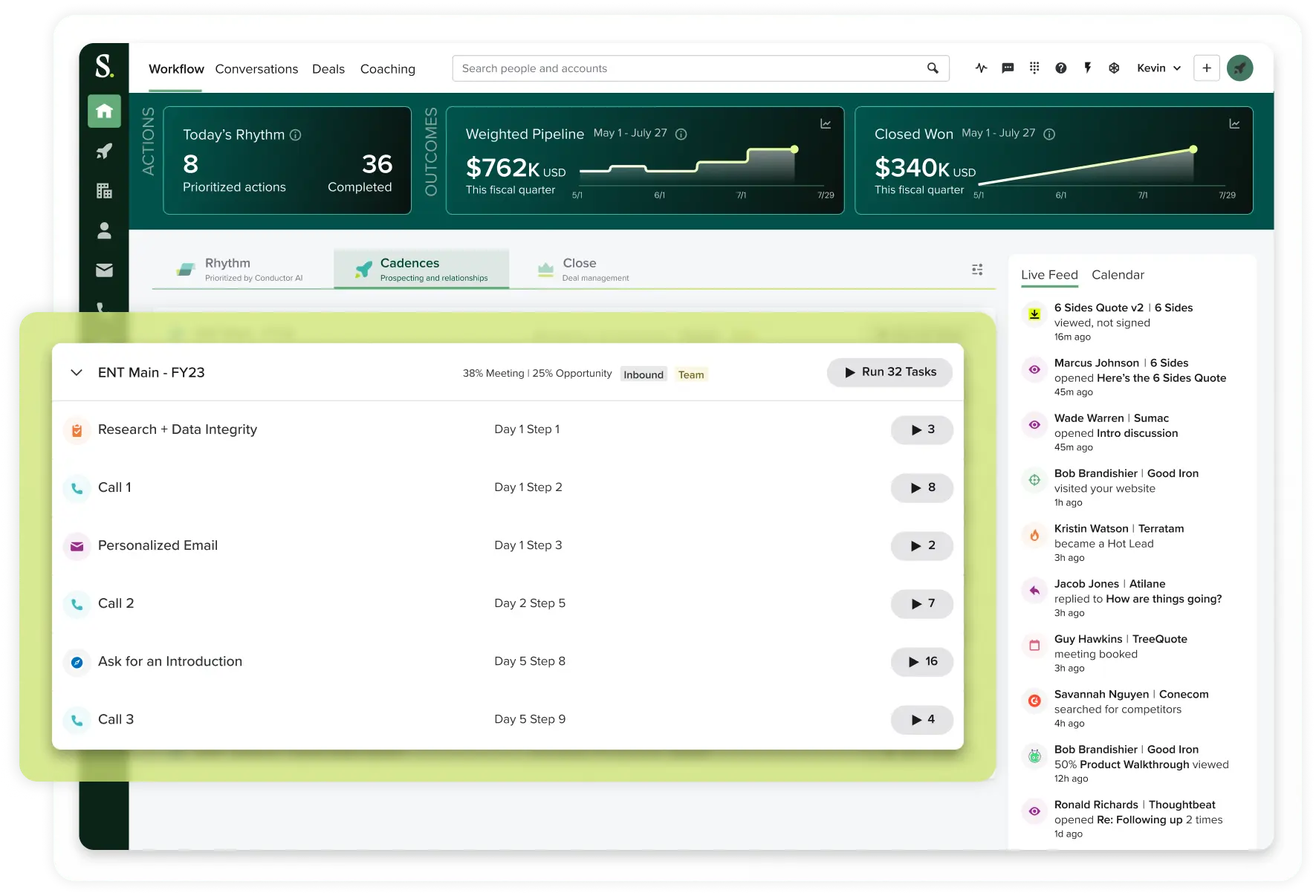
G2 rating: 4.5/5 | Rated higher than Outreach on G2 for ease of setup and ease of admin. Capterra reviewers note that Salesloft kept them organized and productive. On Reddit, multiple r/sales threads describe Salesloft as easier to adopt than Outreach. Merged with Clari in late 2025, expanding into revenue forecasting.
Best for: Sales organizations where manager coaching and call quality review are as important as outreach volume.
- Cadence builder with email, phone, and social steps including LinkedIn touchpoints
- Conversation intelligence: call recording, transcript, and AI analysis of talk time, objection handling, and next steps
- Deal intelligence that surfaces stalled opportunities based on engagement signals
- Rhythm: an AI-powered task prioritization feature that tells reps what to do next
Trade-off: Enterprise-priced and complex to configure. SMS is available but not native, it routes through a third-party provider. Teams that want real two-way texting will need to add a tool like Salesmsg on top.
4. Apollo.io: Best for prospecting and outreach in one tool
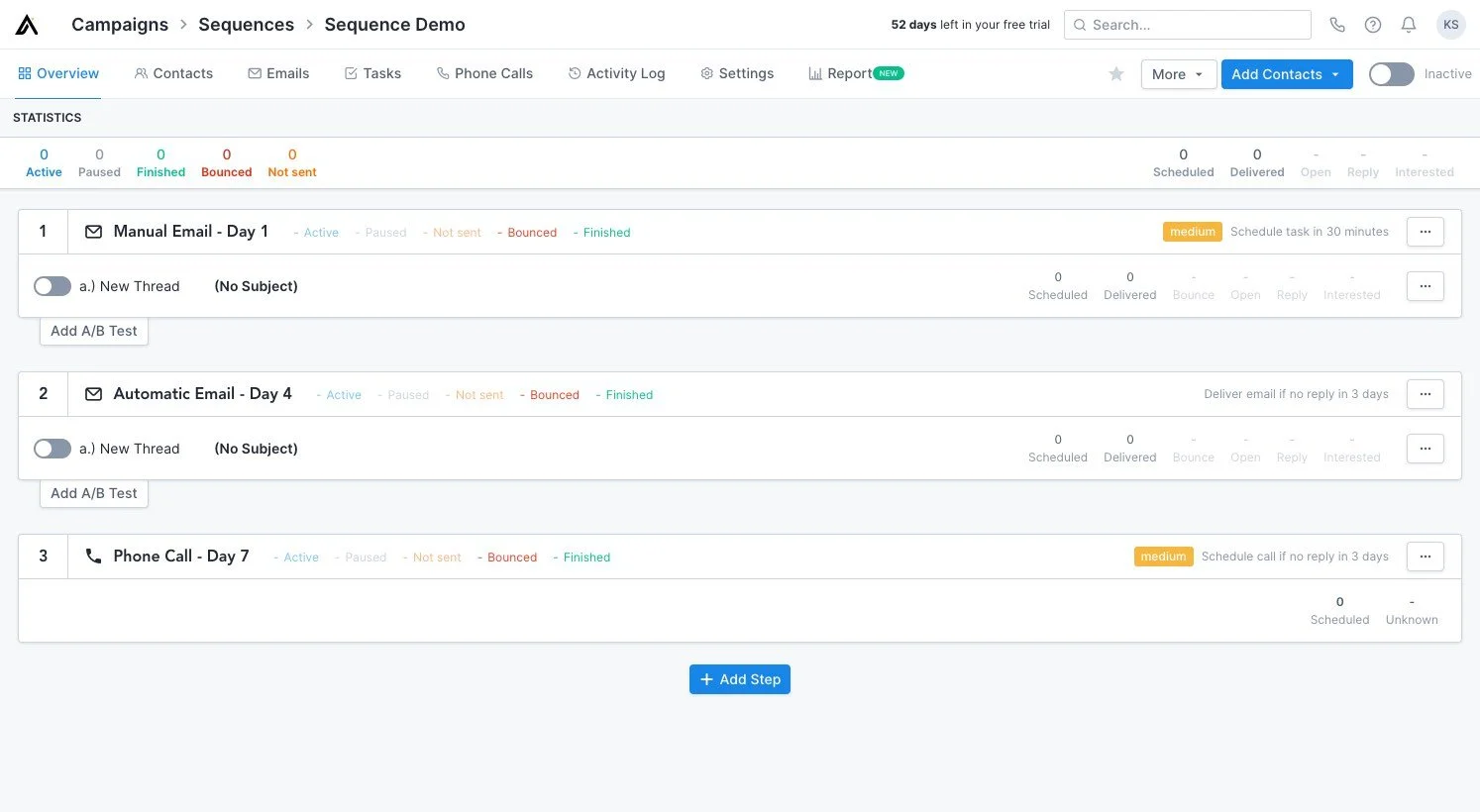
G2 rating: 4.7/5 (9,500+ reviews) | G2 reviewers praise the contact database quality and the fact that prospecting and outreach live in one tool. Won the 2026 MarTech Breakthrough Award for Best AI-Powered Sales Solution. On Reddit, users describe it as the default for lean outbound teams, though some on r/sales note the interface can feel clunky once you layer features.
Best for: SDR and outbound teams that need prospecting data and sequencing without buying a separate data provider.
- Contact and company database with 275M+ records, filterable by job title, company size, industry, tech stack, and funding stage
- Sequence builder for email, phone, and LinkedIn with automated steps and manual task prompts
- Email tracking, open rates, and reply detection to feed into sequence logic
- Free tier available with limited credits; meaningful usage starts at paid tiers (~$49/user/mo)
Trade-off: Data quality varies by industry and company size. Accuracy on small businesses and non-US contacts can be inconsistent. The sequencer is solid but not as polished as Outreach or Salesloft for complex multi-touch workflows.
5. HubSpot Sales Hub: Best for HubSpot-native teams
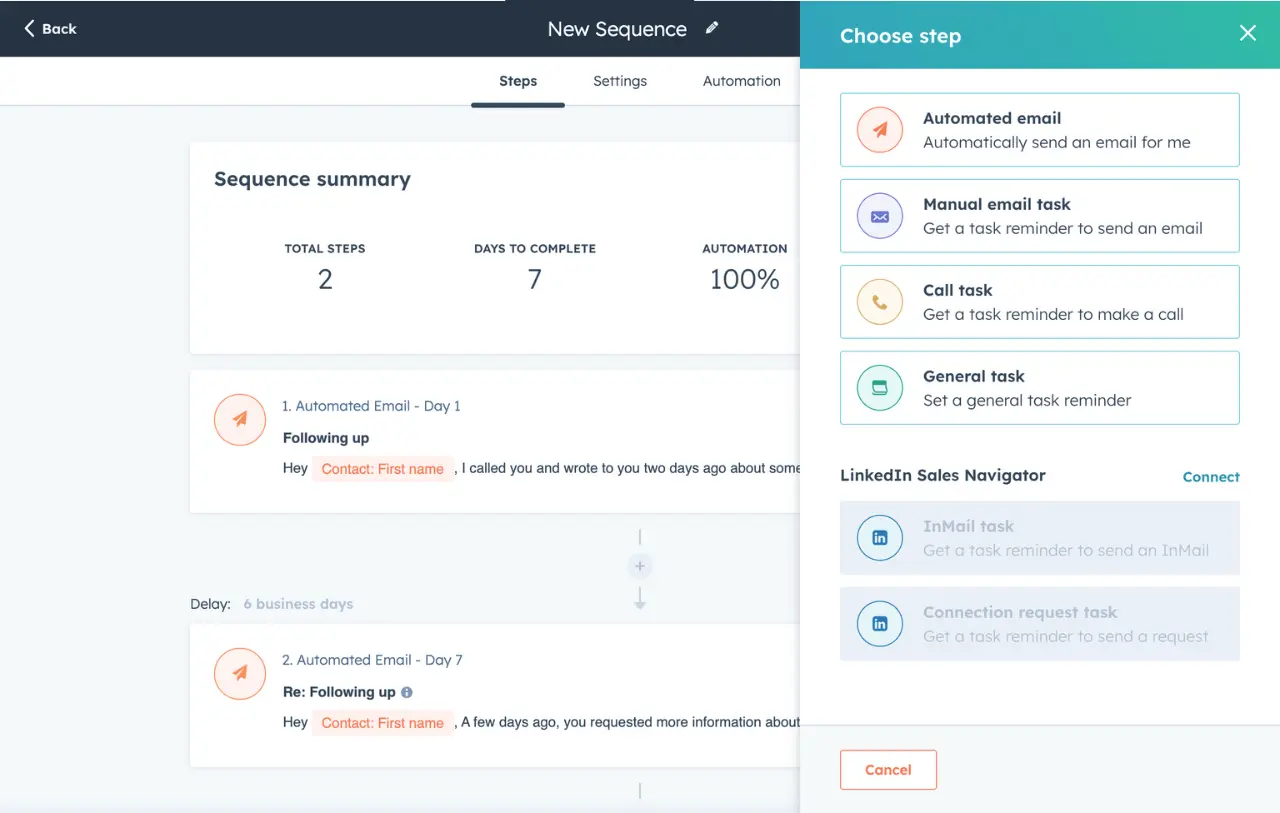
G2 rating: 4.4/5 | G2 reviewers like that sequences, pipeline, and CRM live in one interface with no integration headaches. The main criticism is that the sequence builder is less flexible than standalone tools. On Reddit, HubSpot users say Sales Hub is the path of least resistance, but caution that building complex drip campaigns in HubSpot requires workarounds.
Best for: Teams already in HubSpot that want to add structured sequences without introducing a separate platform.
- Email sequences with automated follow-up steps and enrollment based on list membership or deal stage
- Meeting scheduler with calendar sync and custom booking links
- Built-in calling with call recording and logging to the contact record
- Email tracking: opens, clicks, and reply detection visible in the contact timeline
Trade-off: Not a match for Outreach or Salesloft in terms of sequence complexity or analytics depth. SMS is not native in Sales Hub. Salesmsg is built specifically for this gap, adding two-way texting and calling to HubSpot without leaving the platform.
6. Salesforce Sales Engagement: Best for Salesforce-native teams
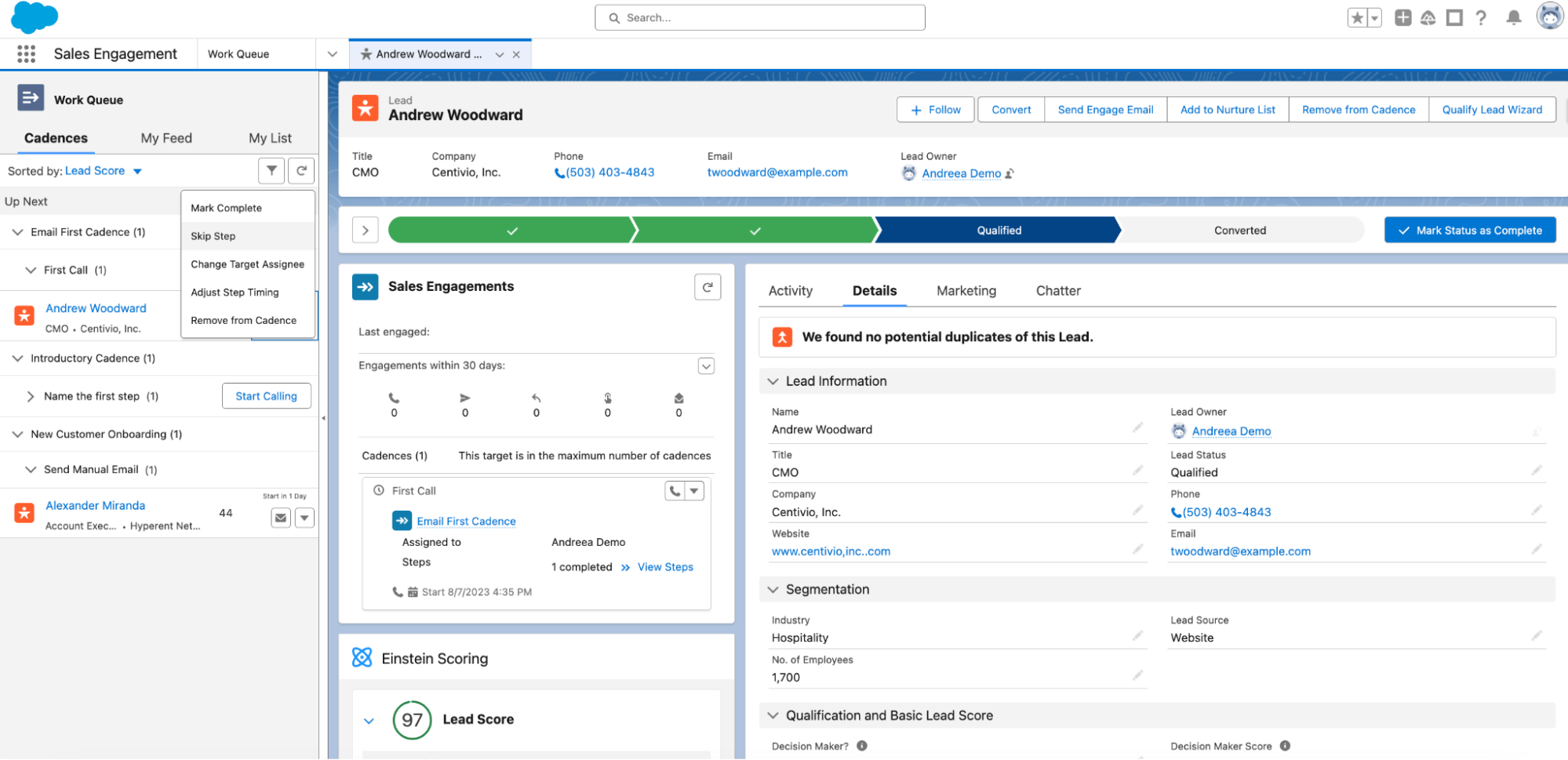
G2 rating: 4.4/5 | Reviewers appreciate the zero-vendor-added approach and native Einstein scoring. The common complaint is that the cadence builder is less intuitive than standalone tools. Ships at $50/user/mo on Pro and Enterprise editions; bundled into Unlimited.
Best for: Enterprise Salesforce shops where the CRM is the single source of truth and adding a third-party tool creates integration risk.
- Work queues that prioritize which leads to contact and in what order, based on Einstein scoring
- Cadence builder with email and call steps, configured inside Salesforce Flow
- All activity logs automatically to the Salesforce contact and opportunity record
- Einstein conversation insights for call coaching
Trade-off: Requires an existing Sales Cloud license. The cadence builder is functional but less intuitive than standalone tools. SMS is not included. Adding a texting app to Salesforce is the most common way teams fill that gap.
7. Reply.io: Best for multi-channel automation on a budget
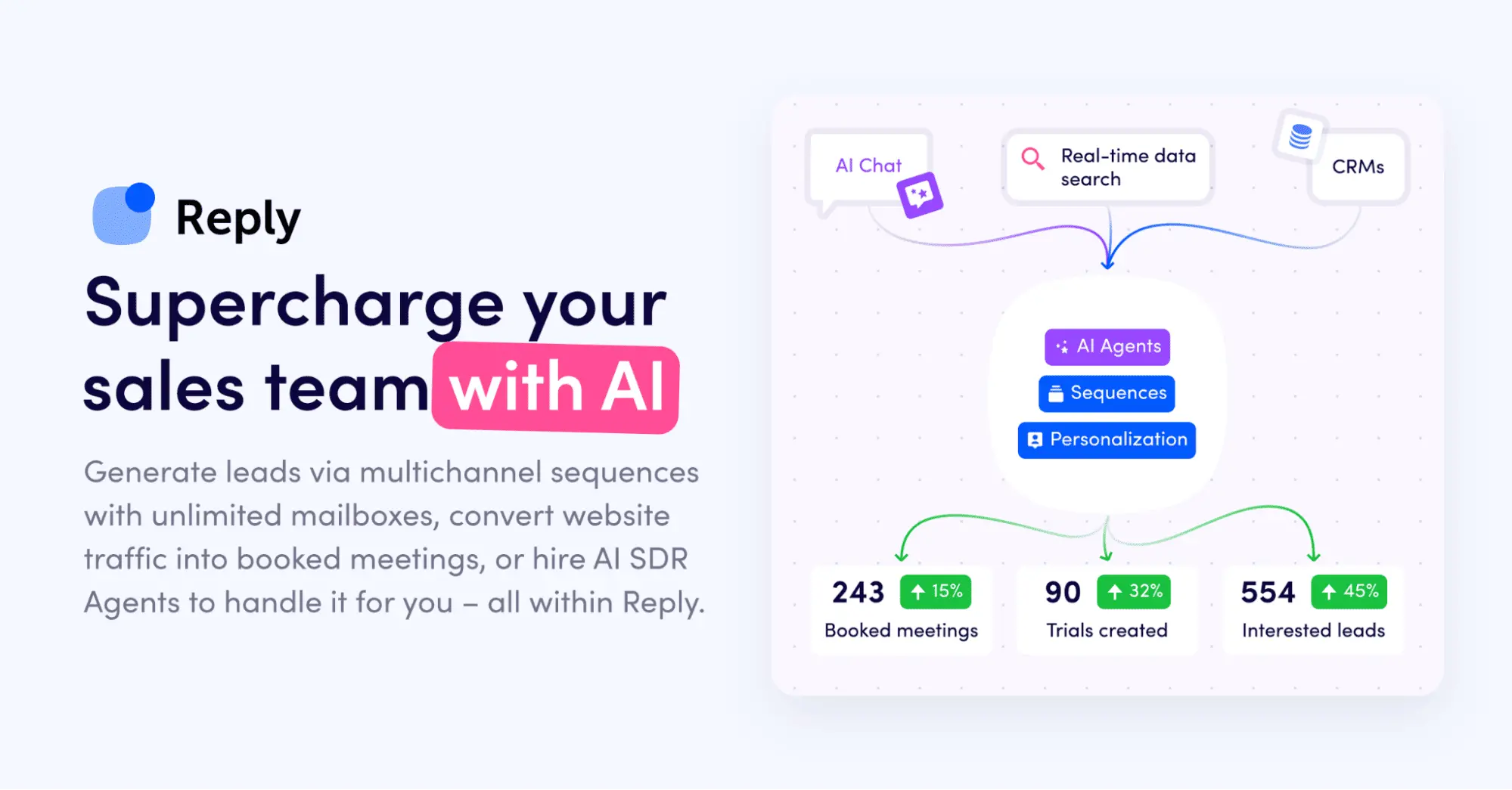
G2 rating: 4.6/5 | G2 reviewers highlight the multi-channel sequence builder and the AI SDR agent (Jason AI). The most common criticism is a steeper learning curve than simpler tools. On Reddit, Reply.io is frequently recommended alongside Apollo as part of a lean outbound stack.
Best for: Smaller outbound teams and agencies running multi-channel sequences on a tighter budget.
- Sequence builder covering email, LinkedIn, calling, WhatsApp, and SMS steps in one workflow
- AI email writer that generates personalized first lines from the prospect's LinkedIn profile or website
- A/B testing for subject lines and message content within sequences
- Built-in contact database to supplement your own lists
Trade-off: SMS is more of a sequence step than a true two-way texting experience. If you need a shared inbox, AI agent responses to inbound texts, and a real conversational texting workflow, you will want a dedicated SMS platform alongside it.
8. Klenty: Best for growing SMB sales teams
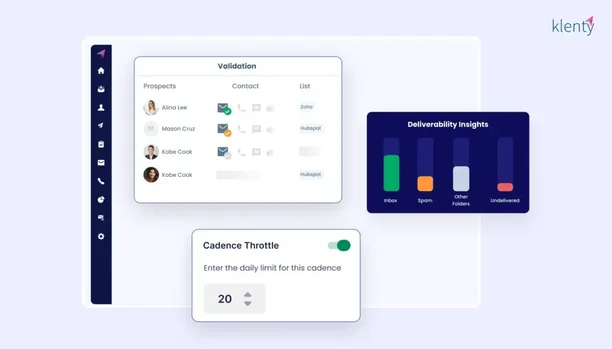
G2 rating: 4.6/5 (1,000+ reviews) | G2 reviewers call out the clean interface and fast onboarding as the main reasons teams pick it over Outreach. On Reddit, SMB teams recommend Klenty as the middle-ground option that does not require a RevOps team to configure.
Best for: SMB sales teams of 5 to 50 reps who need structured cadences and CRM sync without the enterprise price tag or setup time.
- Cadence playbooks with email, call, LinkedIn, and SMS steps
- Prospect intent signals that flag when a contact visits your website during an active sequence
- Bi-directional CRM sync with HubSpot, Salesforce, Pipedrive, and Zoho
- Email deliverability tools including inbox rotation and warm-up
Trade-off: Solid but not standout in any single area. The calling feature is basic compared to dedicated dialer tools, and the reporting is limited. Teams that scale past 50 reps often outgrow it.
9. Lemlist: Best for cold email and LinkedIn combined
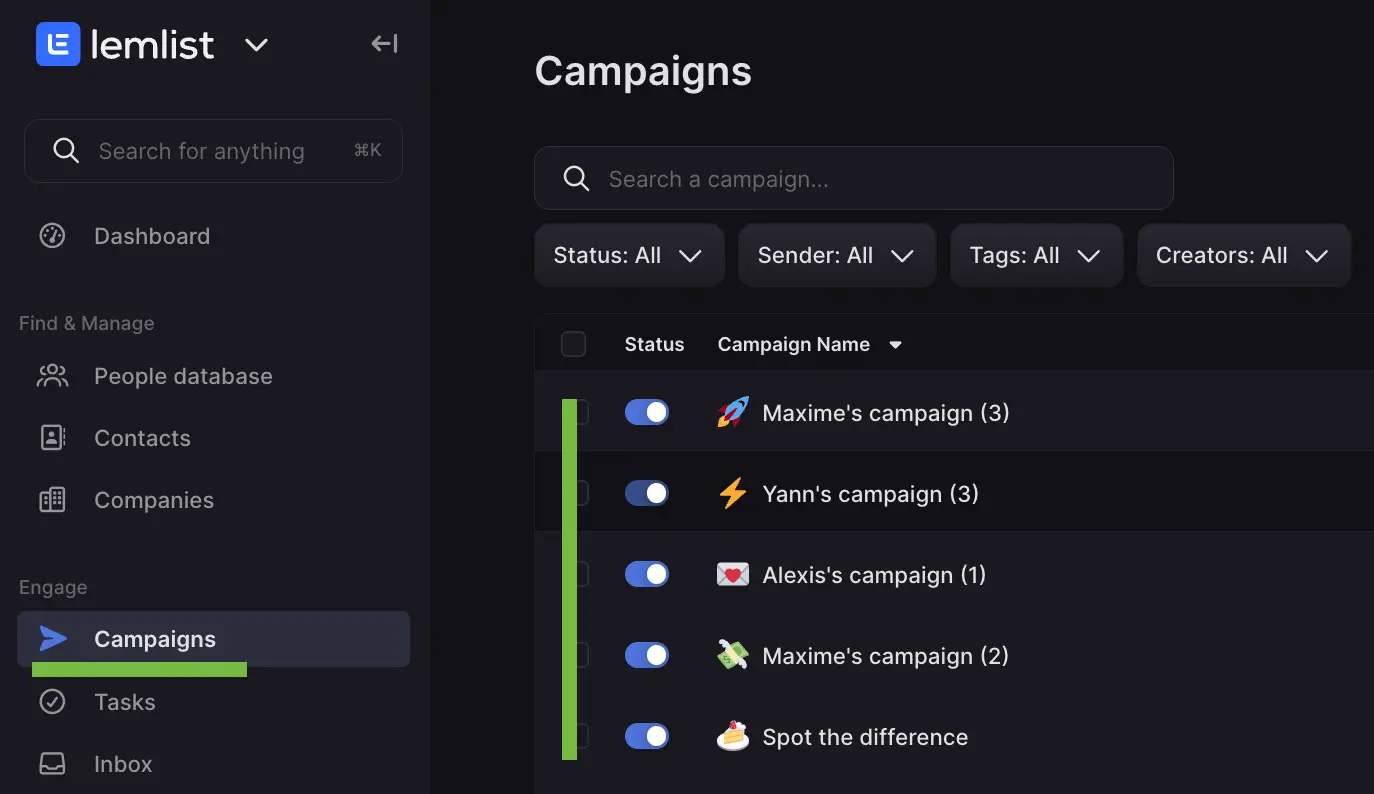
G2 rating: 4.5/5 (4.8/5 in the cold email sub-category, the highest in that niche) | Reviewers praise the dynamic image personalization as a genuine differentiator. On Reddit, cold email practitioners frequently mention Lemlist for campaigns where standing out visually matters more than volume.
Best for: SDRs and founders running high-personalization cold email campaigns where standing out in the inbox is the primary goal.
- Dynamic image personalization: embed a screenshot with the prospect's name and company logo overlaid automatically
- LinkedIn automation steps including connection requests, messages, and profile views
- Email warm-up tool (Lemwarm) to protect deliverability on new sending domains
- B2B lead database built in for list building alongside sequences
Trade-off: Email-first with no serious calling or SMS workflow. If outbound calling or texting is part of your process, you will need additional tools. The personalization features are useful but take setup time.
10. Mixmax: Best for Gmail-native outbound teams
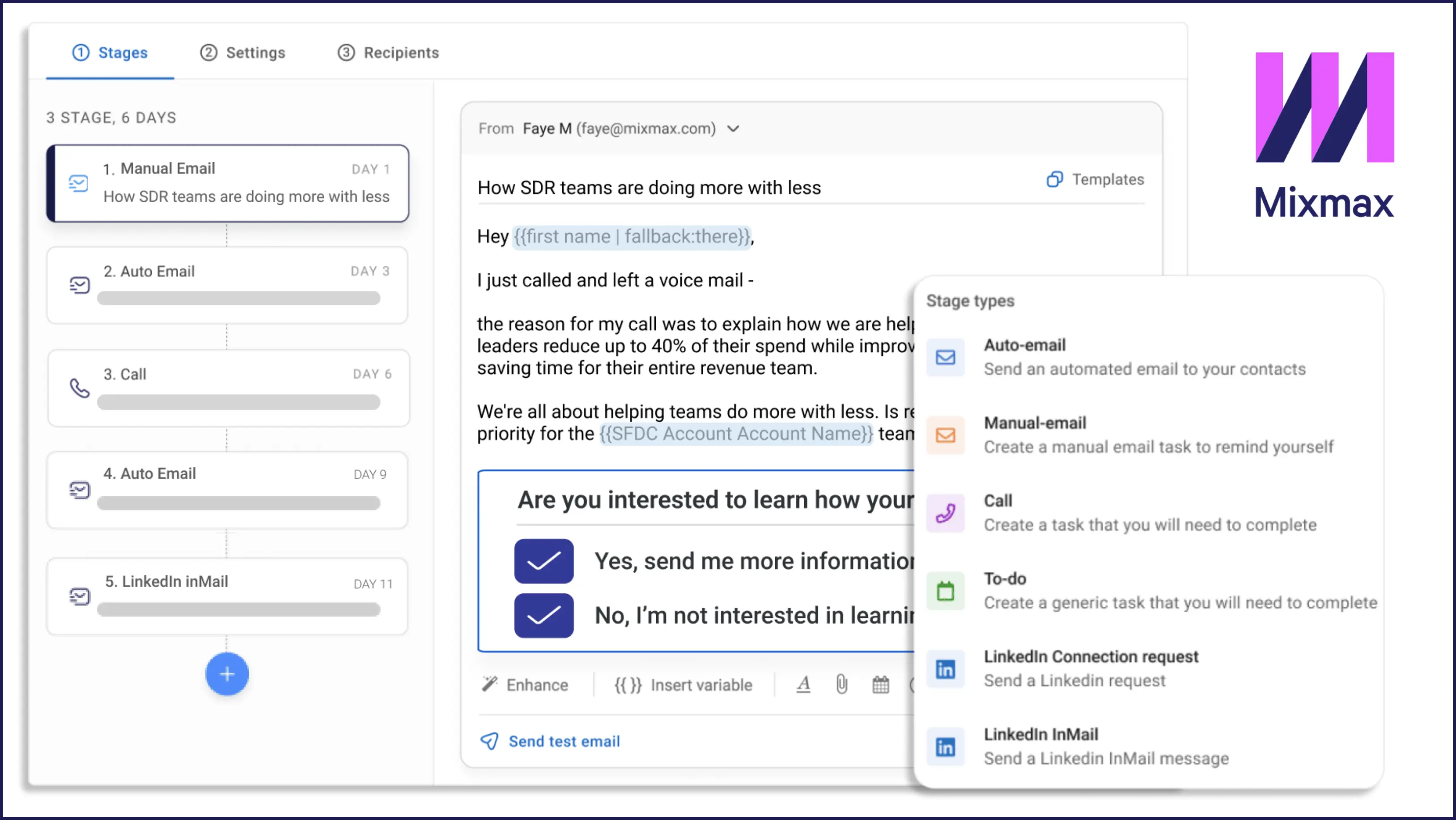
G2 rating: 4.6/5 | G2 reviewers like the seamless Gmail integration and real-time tracking notifications. The main criticism is Gmail-only with no Outlook support. Teams evaluating alternatives frequently cite the need for calling and SMS as reasons for switching.
Best for: Gmail-based sales teams that want email tracking and light sequencing without switching to a full platform.
- Real-time email open and click tracking inside Gmail with desktop notifications
- Sequence automation that runs follow-up emails automatically if the prospect does not reply
- One-click meeting scheduling that embeds available time slots directly in the email body
- HubSpot and Salesforce logging with a single click from the Gmail compose window
Trade-off: Gmail-only. No calling or SMS features. Teams that need SMS alongside their email outreach will need a separate tool.
11. Kixie: Best for dialer-heavy outbound teams
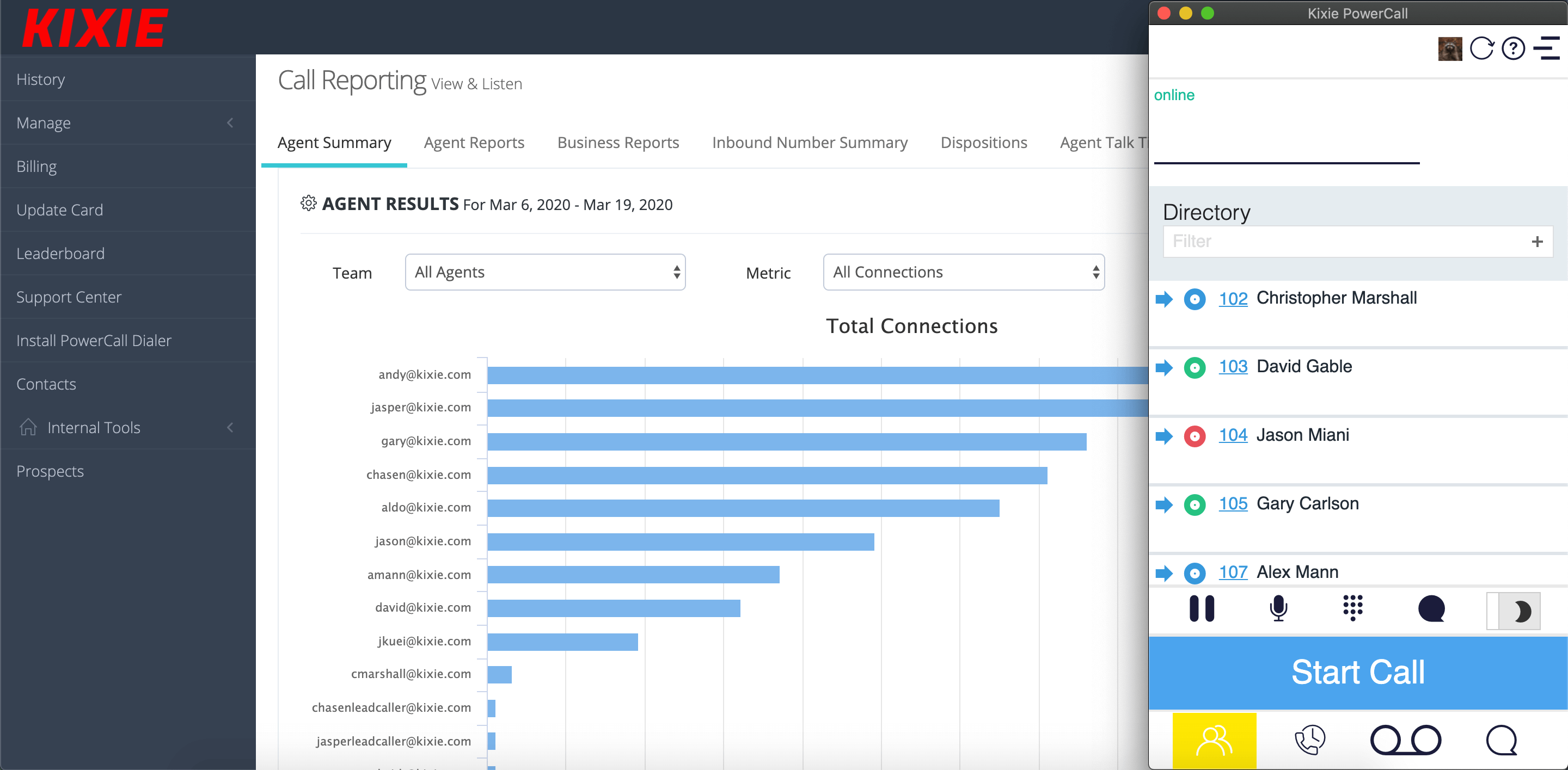
G2 rating: 4.7/5 | One of the highest G2 scores in the dialer category. Reviewers highlight the power dialer speed and local presence feature. On Reddit, inside sales teams recommend Kixie when the outreach motion is phone-first. For a broader look at the dialer category, see our comparison of power dialer tools.
Best for: Inside sales teams where phone outreach volume is high and connection rates are the primary metric.
- Power dialer that automatically dials the next contact when a call ends
- Local presence calling that shows a number matching the prospect's area code
- Voicemail drop: leave a pre-recorded voicemail with one click instead of recording it live
- SMS available from the same number reps call from
Trade-off: SMS is functional but not designed for two-way conversational texting workflows. The shared inbox and AI agent features that Salesmsg includes are not part of Kixie's offering. For teams that need both a serious dialer and serious SMS, using both tools is common.
12. Orum: Best for parallel dialing at scale
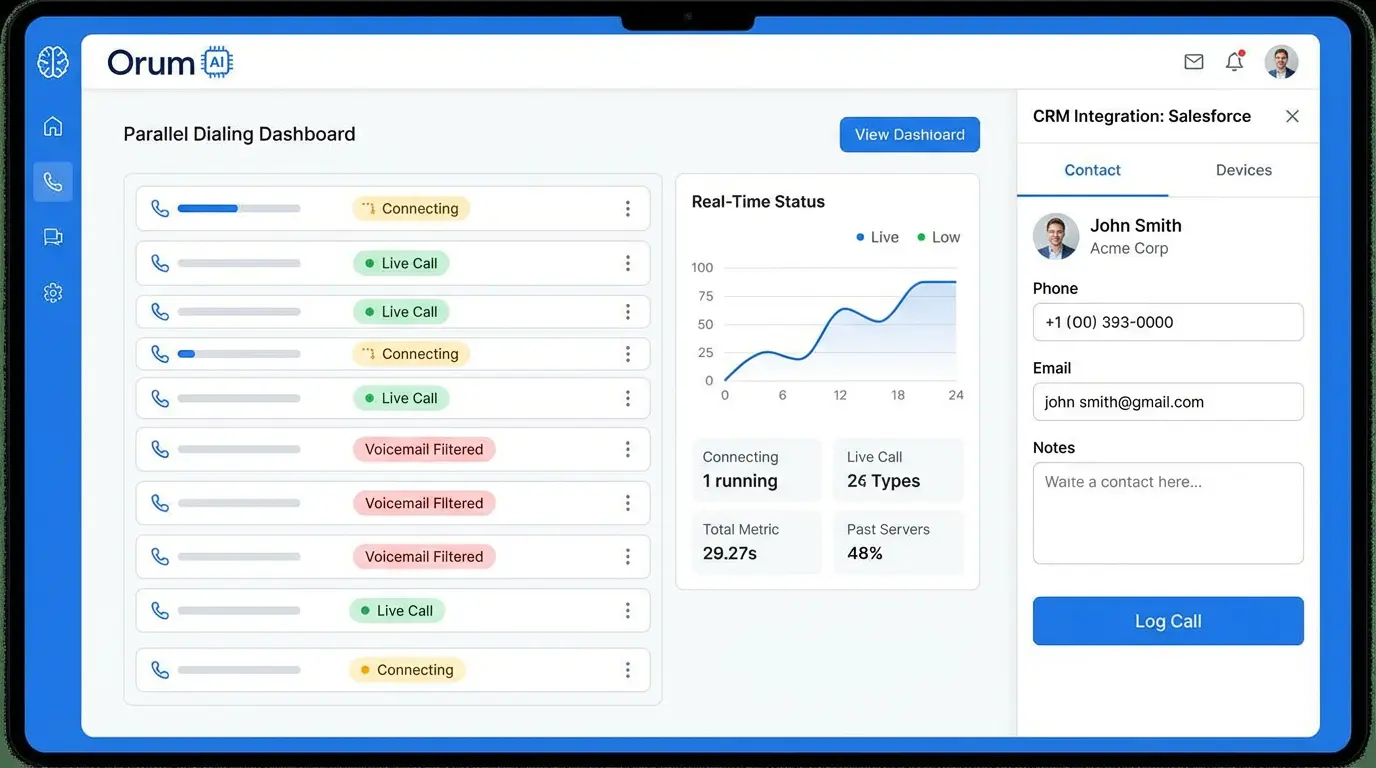
G2 rating: 4.6/5 | G2 reviewers say the parallel dialing feature is a genuine productivity multiplier, with some reporting 3-5x more live conversations per rep per day.
Best for: High-volume outbound SDR teams where maximizing live conversation time per rep-hour is the primary goal.
- Parallel dialing: calls multiple numbers at once, connects the rep when a human answers
- AI filters out voicemail, fax lines, and busy signals so reps only get live pickups
- Live call transfer to account executives when a meeting is ready to be booked on the spot
- Real-time coaching: managers can listen and whisper to reps during live calls
Trade-off: Orum is a dialer, not a full engagement platform. It handles calling extremely well and nothing else. Pair it with a sequencer for email and a tool like Salesmsg for SMS to cover the full channel mix.
13. Gong: Best for conversation intelligence and rep coaching
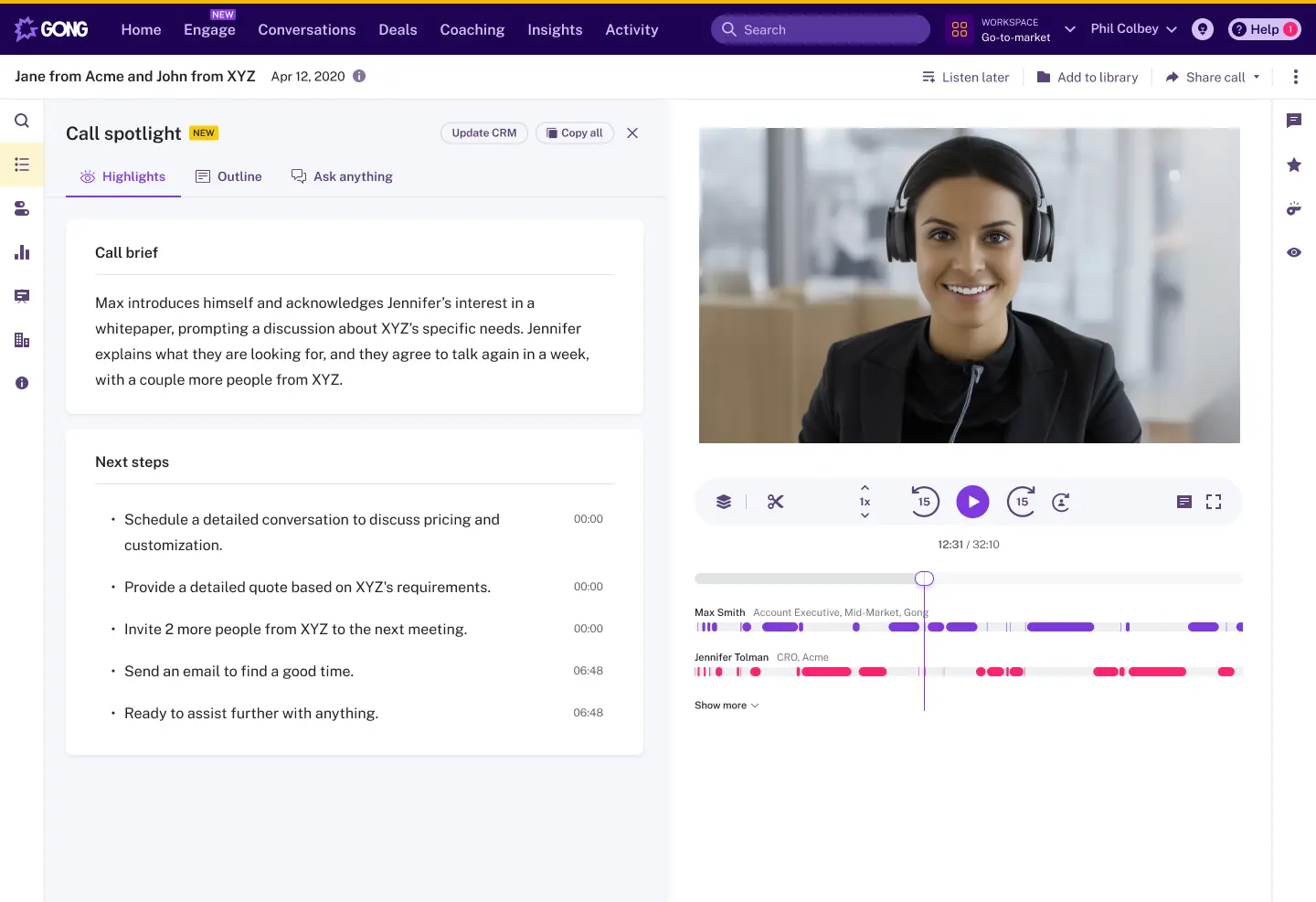
G2 rating: 4.8/5 (6,100+ reviews) | The highest G2 rating on this list. The most common praise is the depth of call analysis and the ability for managers to coach from data. On Reddit, sales managers describe Gong as the tool that makes coaching scalable. If your team uses call recording for compliance or training, Gong covers both use cases.
Best for: Sales managers and RevOps leaders who want to improve rep performance through data-driven coaching.
- Auto-recording and transcription for every call with speaker identification and topic tagging
- Deal intelligence: surfaces stalled deals based on engagement drop-off and keyword changes
- Competitor mention tracking: flags whenever a prospect mentions a competitor by name on a call
- Email and call analytics that correlate rep behaviors with win rates
Trade-off: Gong does not do outreach. It analyzes conversations that are already happening. Expect enterprise pricing. It is frequently purchased alongside an outreach platform, not instead of one.
14. ZoomInfo Sales: Best for intent data and outreach combined
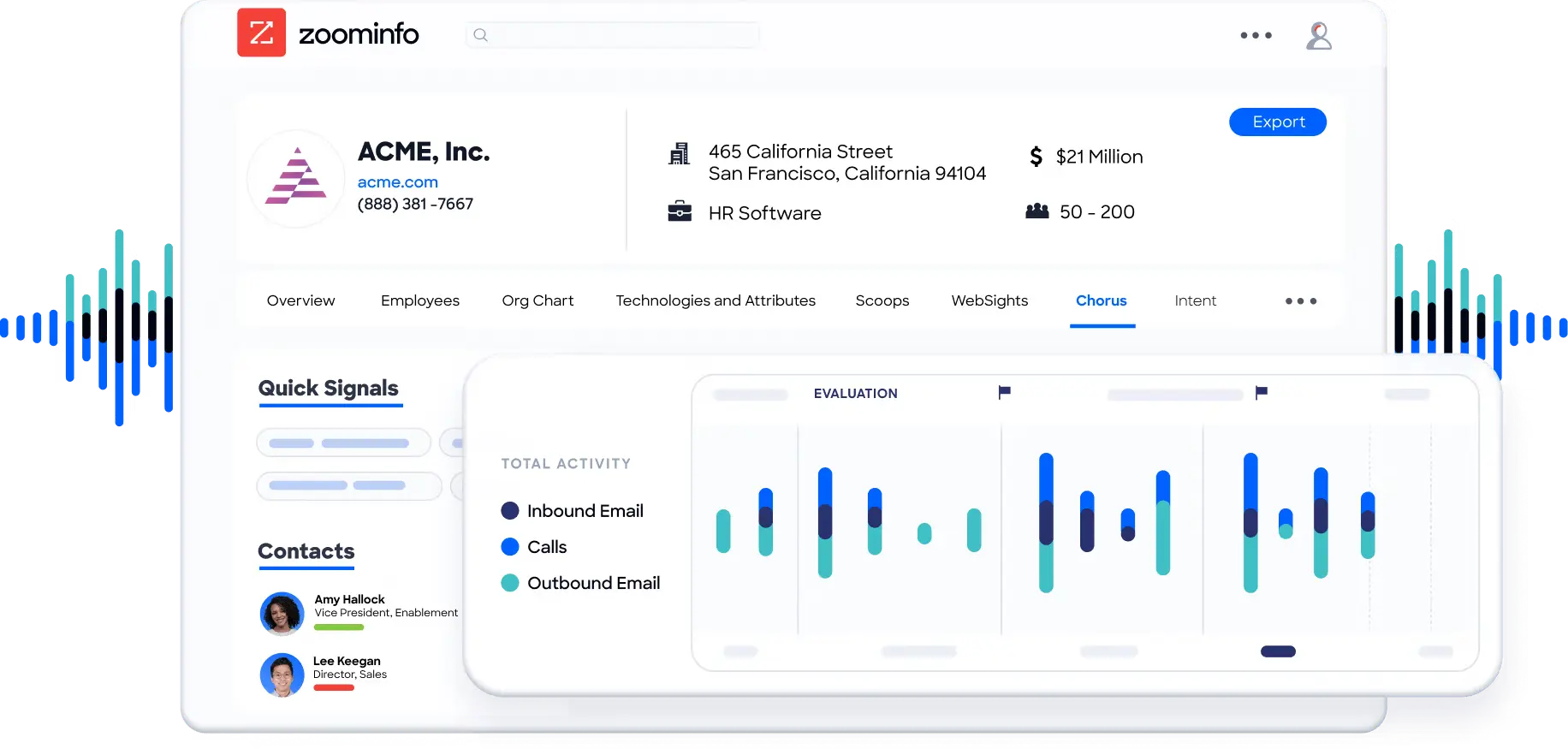
G2 rating: 4.4/5 | G2 reviewers praise the database depth and intent signal quality. The most common complaints are pricing complexity and intent data priced as a separate add-on. On Reddit, teams recommend ZoomInfo for data but frequently pair it with a separate engagement tool rather than relying on SalesOS alone.
Best for: Mid-market and enterprise sales teams where timing outreach to active buyers is more important than contact volume.
- Intent signals: identify companies showing buying intent based on content consumption patterns before they fill out a form
- Contact database with over 260M professional profiles, including direct-dial phone numbers and verified emails
- SalesOS engagement features: sequences, cadences, and outreach tools built into the same platform as the data
- Streaming intent alerts that notify reps in real time when a target account crosses an intent threshold
Trade-off: Expensive. Intent signals are priced as an add-on in some tiers. For smaller teams, the data quality justifies a subscription, but the full SalesOS engagement features may not add enough on top of a simpler sequencer.
15. Yesware: Best for lightweight email tracking and templates
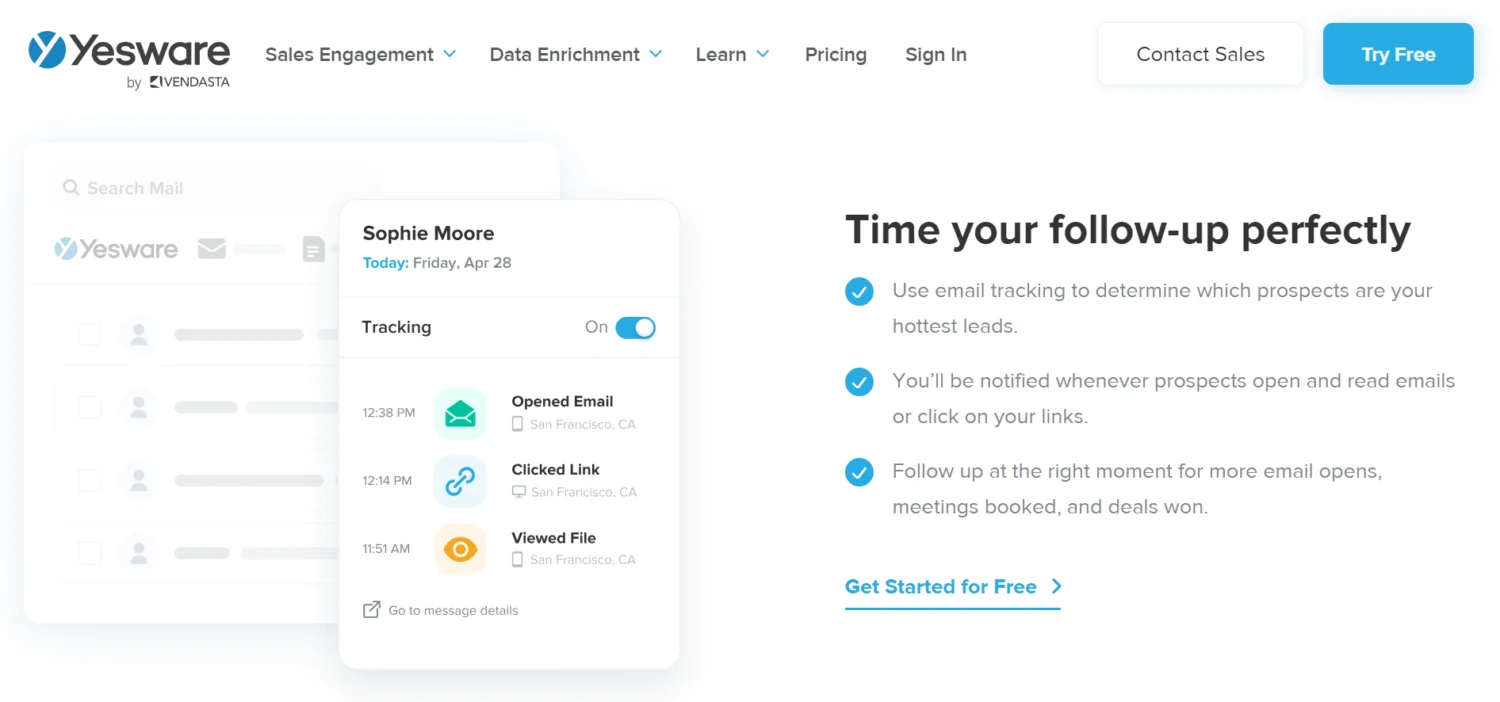
G2 rating: 4.4/5 | G2 reviewers describe Yesware as an all-in-one sales toolkit for reps who live in their inbox. The main praise is simplicity. The main criticism is that reporting is basic and the tool does not scale past about 20 reps.
Best for: Individual contributors and small teams that want email visibility and basic follow-up automation without buying a full platform.
- Open, click, and attachment tracking inside Gmail and Outlook
- Template library with merge fields for personalization at the team level
- Campaigns feature for basic email sequences with automatic follow-up steps
- Salesforce and HubSpot logging with one click from the compose window
Trade-off: Minimal by design. No calling, SMS, or LinkedIn features. Think of it as a gateway tool, useful at the start, not a long-term platform.
How to choose the right sales engagement software for your team
Before you evaluate any tools, answer these five questions. They will narrow your shortlist from 15 to 2 or 3 options fast.
1. What CRM does your team use? This is the single most important filter. Tools that integrate natively with your CRM eliminate manual data entry and keep your pipeline accurate. If a tool requires a Zapier workaround to connect, that workaround will break at some point, and it will break during a sales sprint.
2. What channels does your outreach actually use? Email only? Email plus phone? SMS? LinkedIn? Do not pay for a multi-channel platform if your team only uses two channels. But if SMS and calling are part of your process, make sure the tool handles them as first-class features. SMS consistently outperforms email on reply rates for sales follow-up, but most platforms bolt it on rather than building for it.
3. How many reps are you deploying this for? Tools priced at $100 per seat per month are fine for an 8-person team but matter a lot for a 50-person team. Check whether the platform charges per seat, per usage, or per account.
4. Do you need AI in the loop? AI features range from email subject line suggestions to fully autonomous AI agents that qualify leads and route conversations. If AI-powered lead qualification is a priority, make sure the tool has actual AI agents, not just a text assistant. Our review of AI sales tools breaks this category down further.
5. Who is configuring and managing this? Some platforms assume a dedicated admin. Others are self-serve in 30 minutes. If you do not have a RevOps team, avoid tools that require one. Discussions on r/SalesOperations make this point repeatedly: the tool rarely fails, but the process and data hygiene around it often do.
Final verdict
There is no single best sales engagement software. The right pick depends on your CRM, your team size, and which channels your outreach actually runs on.
For B2B teams on HubSpot or Salesforce that want to add texting, calling, and AI-powered follow-up to their existing workflow, Salesmsg is the platform built specifically for that use case. It is the only tool on this list that handles inbound and outbound calling, two-way SMS, multiple message types, and AI agents from a single shared inbox, all synced natively to your CRM. You are not stitching together a dialer, an SMS app, and an AI tool. It is one platform.
For sequencing-heavy outbound at scale, Outreach and Salesloft are the two most battle-tested full-stack options. Apollo is the best starting point if you also need prospecting data alongside sequences. HubSpot Sales Hub is the path of least resistance if you are already in HubSpot. And Yesware or Mixmax work well for individual contributors who want email visibility without committing to a platform.
Start a free Salesmsg trial or book a 20-minute demo to see how SMS, calling, and AI agents fit into your current HubSpot or Salesforce workflow.
FAQs
What is sales engagement software?
Sales engagement software is the tool your reps use to reach out to prospects and follow up across channels like email, phone, SMS, and LinkedIn. It is the execution layer that sits on top of your CRM. While your CRM stores your contacts and deal history, your sales engagement platform is where the actual work happens: sending messages, making calls, running sequences, and tracking what gets a response.
How is sales engagement software different from a CRM?
A CRM is a database. It stores contacts, companies, deals, and activity history. Sales engagement software is where your reps actually do the outreach: it runs sequences, logs calls, sends texts, and tracks engagement signals like email opens and reply rates. Most teams use both. Salesmsg, for example, syncs every text and call back to HubSpot or Salesforce automatically so the CRM stays current without reps logging anything manually.
What is the best sales engagement software for small businesses?
For small teams under 25 reps, Apollo.io and Klenty are the most commonly recommended starting points. If SMS and calling are part of your outreach, Salesmsg is the dedicated platform for that, built to connect to HubSpot or Salesforce without replacing them. Business texting consistently produces higher reply rates than email for follow-up.
Is sales engagement software worth the cost?
G2 data shows 72% of sales teams successfully adopt their sales engagement platform, and most recover their investment in under eight months. The teams that do not see ROI typically picked a tool that does not match how they actually work. The speed and consistency of your follow-up process matters as much as which platform runs it.
Can Salesmsg be used as a full sales engagement platform?
Yes, for SMS, calling, and AI-powered engagement specifically. Salesmsg handles inbound and outbound calling, two-way SMS and MMS, AI agents that qualify leads and respond automatically, and a shared team inbox. It is not an email sequencer. For teams that run email cadences, Salesmsg works alongside HubSpot Sequences, Outreach, or Apollo.
What channels do sales engagement platforms typically support?
Full platforms like Outreach, Salesloft, and Apollo cover email, phone, and LinkedIn. SMS is less common as a native feature. Salesmsg is built for SMS and calling as the primary channels, not as an afterthought. AI-powered SMS automation is becoming a standalone engagement channel as buyer behavior shifts toward text-first communication.
What should I look for when choosing sales engagement software?
Start with CRM fit: does the tool connect natively to your CRM without requiring a Zapier workaround? Then check channel coverage and team size fit. Finally, evaluate whether the platform has the compliance support your industry needs. TCPA compliance and 10DLC registration are non-negotiable for SMS.