SMS in Business: Close More Deals with Texting



_SMS%20in%20Business_%20Close%20More%20Deals%20with%20Texting.webp)

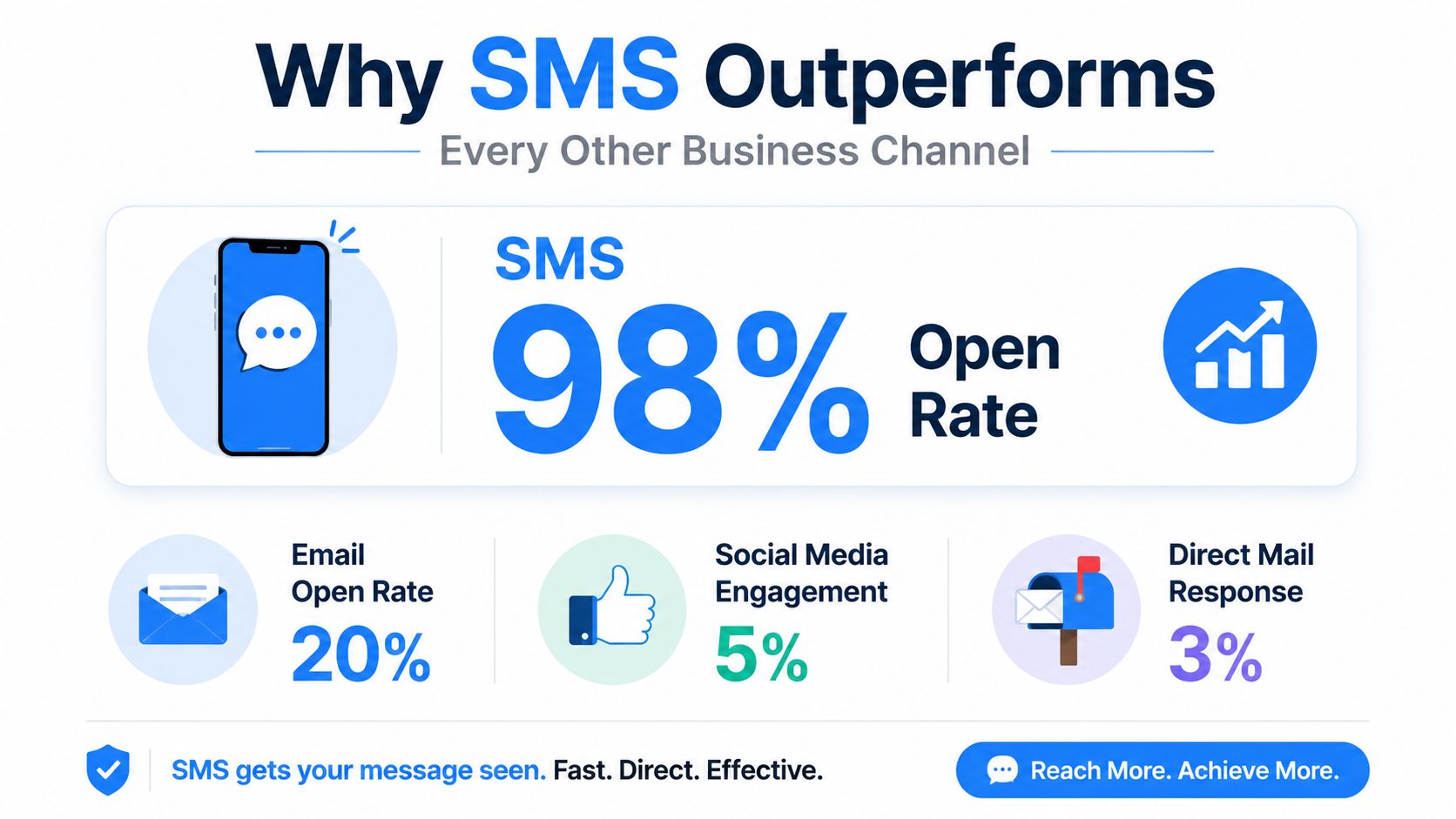
SMS in business works because people actually read it. Texts get a 98% open rate and most get read within three minutes, according to our 2026 State of SMS Benchmark Report. Most teams still use it like a broadcast tool. The bigger win is treating it as two-way, CRM-native communication that moves deals, confirms appointments, and solves problems fast.
The question isn't whether SMS works. It's where it earns its place in your stack, and how to keep it compliant and tied to revenue.
Why speed wins in business texting
Open rates get attention. Speed is what actually changes outcomes. A lead who fills out a form at 10pm gets an email that sits in their inbox until morning. Text them, and 90% of messages get read within three minutes.
That gap matters most on the first reply. Our benchmark report found 57% of teams try to text a new lead within 30 minutes, but only 14% have it automated to go out in under a minute. That's the difference between winning the deal and hoping the lead is still around later.
Practical rule: use SMS when the message only matters if someone sees it right now.
The format forces discipline too. A standard text is capped at 160 characters before it splits into multiple segments. That's useful. It pushes you to write around one decision, not five.
How revenue teams use SMS every day
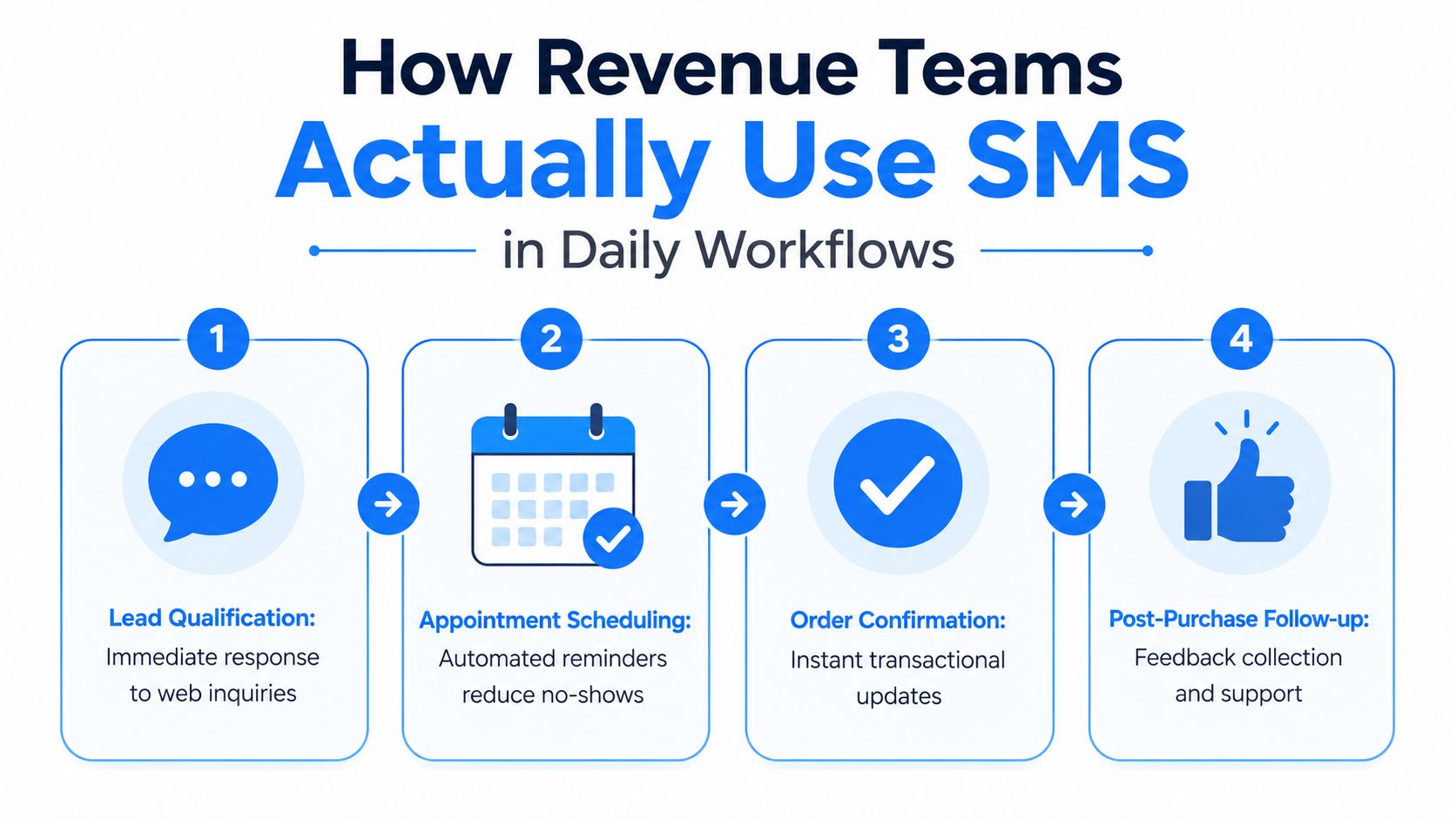
The strongest SMS programs run on operational triggers, not campaign calendars. Sales moves buyers faster. Support cuts back-and-forth. Service teams keep appointments on track.
Sales follow-up and lead qualification
A lead fills out a form and the rep texts within minutes instead of waiting on an email thread. The first message qualifies interest, confirms timing, or books the next step while the buyer is still active. For ready-to-send copy, see our sales follow-up templates.
Appointment reminders and order updates
Clinics, salons, and field service teams trigger texts off a booking or a job ticket. The message is a confirmation, reminder, or reschedule prompt, and it keeps the customer informed without a hold-music phone call.
Support routing and FAQ handling
Conversational SMS answers common questions, routes tickets, and captures preferences. This works best when the question is simple enough to solve by text and urgent enough to need a fast answer.
Marketing broadcasts with tighter targeting
Broadcasts still work when they're segmented and built around one idea. A good broadcast reads like a timely nudge, not a campaign blast. For a full playbook on running one, see how to run an SMS campaign.
Two-way texting vs one-way broadcasts
The biggest mistake in business texting is treating it like a shorter email. One-way broadcasts work for announcements. They break down the moment a customer has a question or a timing conflict. Two-way SMS turns the channel into a working service layer.
What changes in a two-way model
A broadcast is one-to-many. A conversation is one-to-one, even when automation handles the first move. If the customer can reply, you need a response path and clear ownership. Automate the routing and FAQ capture. Route pricing questions, complaints, and anything with buying intent straight to a person.
Keep the cadence respectful
- Route buying intent and objections to a rep fast
- Automate FAQs, booking prompts, and status checks
- Escalate to a person when the bot lacks context
- Pause outreach once someone stops responding
Where SMS should live in your stack
SMS earns its keep when it lives where your team already works. A native CRM integration logs activity automatically and puts every message on the contact timeline, so managers see what happened without chasing screenshots.
If you're a Salesforce team, see our complete guide to Salesforce SMS integration. If you run HubSpot, our HubSpot drip campaign guide covers adding SMS to an existing sequence.
Compliance and deliverability basics
Most SMS problems start with process, not copy. A good message still misses if consent is thin or registration is incomplete. Half of businesses rate their compliance concern at 3 or below on a 10-point scale, per our benchmark report, and most of the work is a one-time setup, not a daily task.
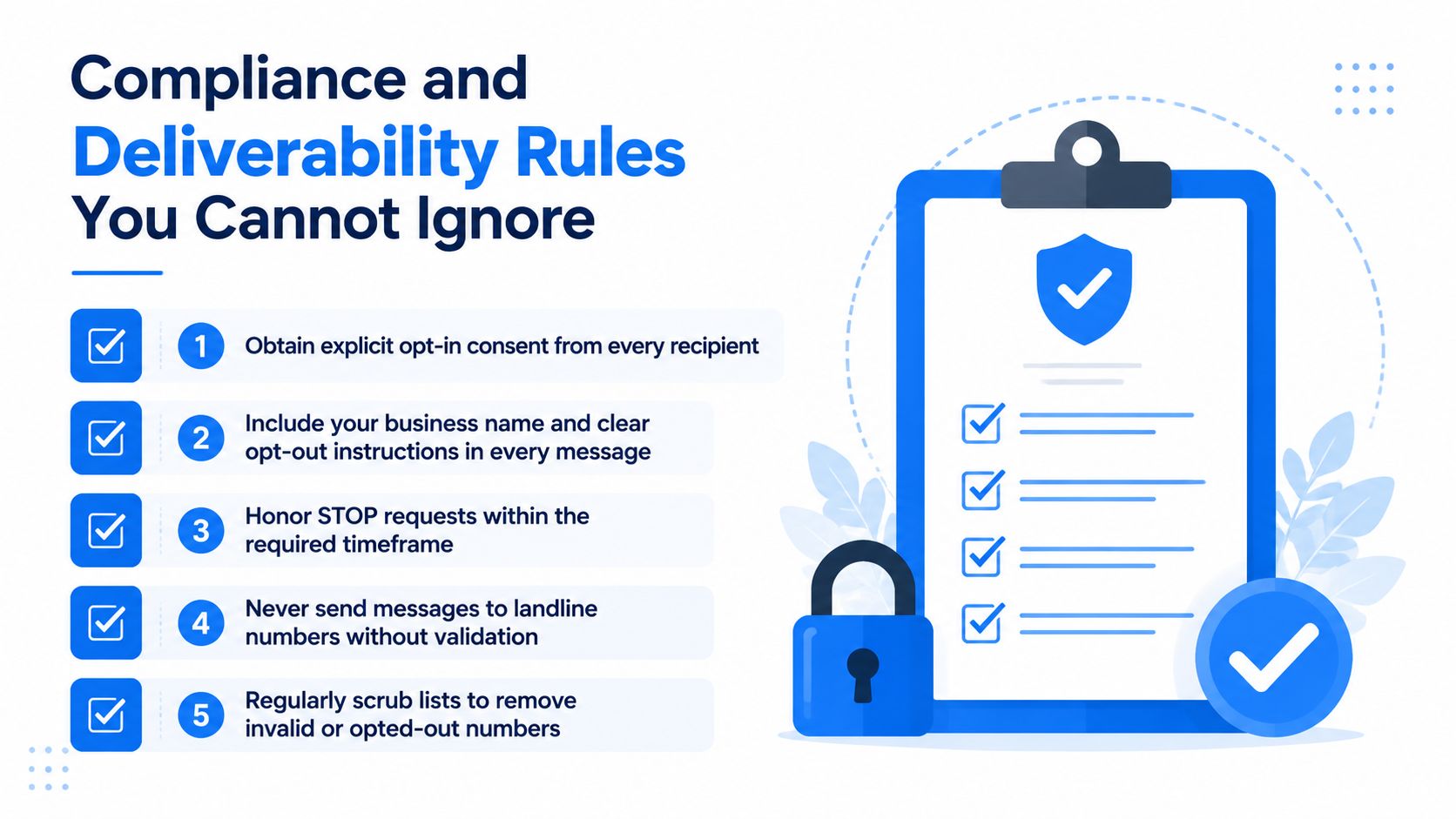
- Get written consent before sending marketing texts
- Register your number for 10DLC before sending at volume
- Add your legal name to your website footer
- Process opt-outs immediately, across every workflow
- Keep segments under 160 characters where you can
For the full breakdown, read our SMS marketing compliance guide and our SMS deliverability guide.
Measure what matters, not just opens
An open rate tells you the message was seen. It doesn't tell you whether it moved a deal or booked a meeting. Track these instead:
- Track how fast your team replies to inbound texts
- Track whether the text led to a booking or sale
- Track if texted contacts move faster than untexted ones
- Track cost per meaningful exchange, not per send
Pairing texts with calls is one of the clearest levers here. Businesses that combine the two see a median engagement rate of 24%, compared with 9% for text-only, a 2.6x lift, per our benchmark report.
Getting started with business SMS
Start with the workflows that already have clear intent. Appointment reminders and lead follow-up are the safest first steps because they're high value and easy to measure.
- Pick a platform that logs activity into your CRM automatically
- Build consent capture into forms you already use
- Define who answers replies and how fast
- Launch one message, one purpose, one follow-up path
If your team is ready to treat texting as a real revenue channel, start a free trial or book a demo to see two-way texting, calling, and CRM logging running in one platform.
SMS in business FAQ
Is SMS better than email for business communication?
They serve different jobs. Email works for depth and detail. SMS wins on speed, with a 98% open rate and most texts read within three minutes. The best programs use both.
How fast should a business respond to a lead by text?
Within a minute if you can automate it. Only 14% of teams do, per our benchmark report, even though 57% try to text new leads within 30 minutes.
Do I need consent to text customers for marketing?
Yes. Get written consent before sending marketing texts under TCPA. Transactional messages like appointment reminders have more flexibility, but keep a record of consent either way. See our compliance guide for the full rules.
What's the difference between a broadcast and two-way SMS?
A broadcast sends one message to many people with no expected reply. Two-way SMS expects a response and needs a routing plan, whether that's a human, an AI agent, or both.