AI SMS Marketing: 10 Use Cases for Revenue Teams



_AI%20SMS%20Marketing.webp)

AI SMS marketing uses AI to send, respond to, and personalize text messages without a person typing every reply.
It’s how teams qualify inbound leads in seconds, book meetings while the office is closed, and handle support replies without pulling a rep off pipeline work.
Right now, 28% of businesses are testing or actively using AI features in their SMS workflows, according to our 2026 SMS Benchmark Report. The teams already using AI agents to respond to inbound texts are converting leads that their competitors are still letting sit in a queue.
This guide covers what AI SMS marketing actually is, why it matters for sales, marketing, and customer support teams, and 10 specific use cases that revenue teams are running today.
What AI SMS Marketing Actually Is
AI SMS marketing is texting that can read what your contact sends and reply based on what they actually said.
Older SMS marketing automation is rule-based. So if a contact texts STOP, then it automatically unsubscribes.
If it’s 9 AM Tuesday, then send the welcome message. That works, but the moment a contact replies with anything off-script, the workflow stalls, and a human has to pick it up.
AI SMS handles the off-script replies.
An AI agent reads “is this still available?” or “can we do Thursday instead?” and responds with the right answer pulled from your knowledge base or your calendar.
The conversation keeps moving without a rep in the loop.
For revenue teams, that’s a valuable shift. Conversations get qualified, booked, or answered without a rep doing the manual work in between.
Basic SMS Automation vs. Real AI
Let’s look at the difference between the two in some realistic situations.
A scheduled SMS sends a webinar reminder 24 hours before the event. A lead replies asking about parking. The workflow doesn’t know what to do, so the message sits in an inbox until someone has time to answer.
On the other hand, a real AI agent reads the parking question, pulls the answer from your event details, and replies in seconds. Same workflow trigger, but the conversation doesn’t run into a dead-end. The replies read like a person wrote them, which is the bar an AI detector would expect any quality content to clear.
That’s the difference between scheduled SMS and conversational SMS marketing. One runs on rules, the other runs on moment-to-moment context.
Why It Matters and Who It’s Actually For
Most AI SMS marketing content is written for retail brands sending promo codes. But the biggest wins are happening in B2B. Revenue teams running HubSpot, Salesforce, or another CRM see compounding gains when AI handles the parts of texting that don’t scale.
Here’s what AI SMS does for each team.
Sales Teams
A rep sends a broadcast to 200 cold leads on Tuesday morning. Sixty replies come back over the next hour. Without AI, the rep is now buried in a backlog, qualifying replies one at a time while hot leads cool off.
With an AI agent in the loop, the agent reads each reply, asks two qualifying questions, and flags the leads who match the rep’s ICP. By the time the rep checks the inbox, they’re calling the eight people most likely to close. (More on this in our full guide to SMS for sales.)
Marketing Teams
Marketing's problem with SMS campaigns is what happens after send.
A broadcast goes out, replies come in, and they pile up because marketing isn't staffed to run 1-on-1 conversations and sales doesn't want to triage marketing's replies. AI fills that gap.
Let’s look at a scenario:
A re-engagement text goes to 1,500 dormant contacts and about 200 respond. Your AI agent sorts who's still interested, drops them into the right nurture sequence, and tags the rest as unsubscribed.
Marketing keeps moving instead of begging sales to handle the replies.
Customer Support Teams
A customer texts at 11 PM about a charge they don't recognize on their last invoice.
Without AI, the message waits until morning. By then they've called the support line, left a voicemail, and started questioning whether to renew.
With AI, the agent pulls the invoice from the customer's account and explains the charge in seconds. The concern gets handled before it grows into a churn risk, and support tackles the harder tickets the next morning.
10 AI SMS Marketing Use Cases
Each use case below highlights which team it applies to, what changes when AI is in the loop, and which Salesmsg feature handles it.
1. Respond to Broadcast Replies Automatically
Team: Sales and Marketing
When you send a broadcast to a few hundred contacts, replies pile up fast. Most teams either ignore them or assign a rep to triage every message.
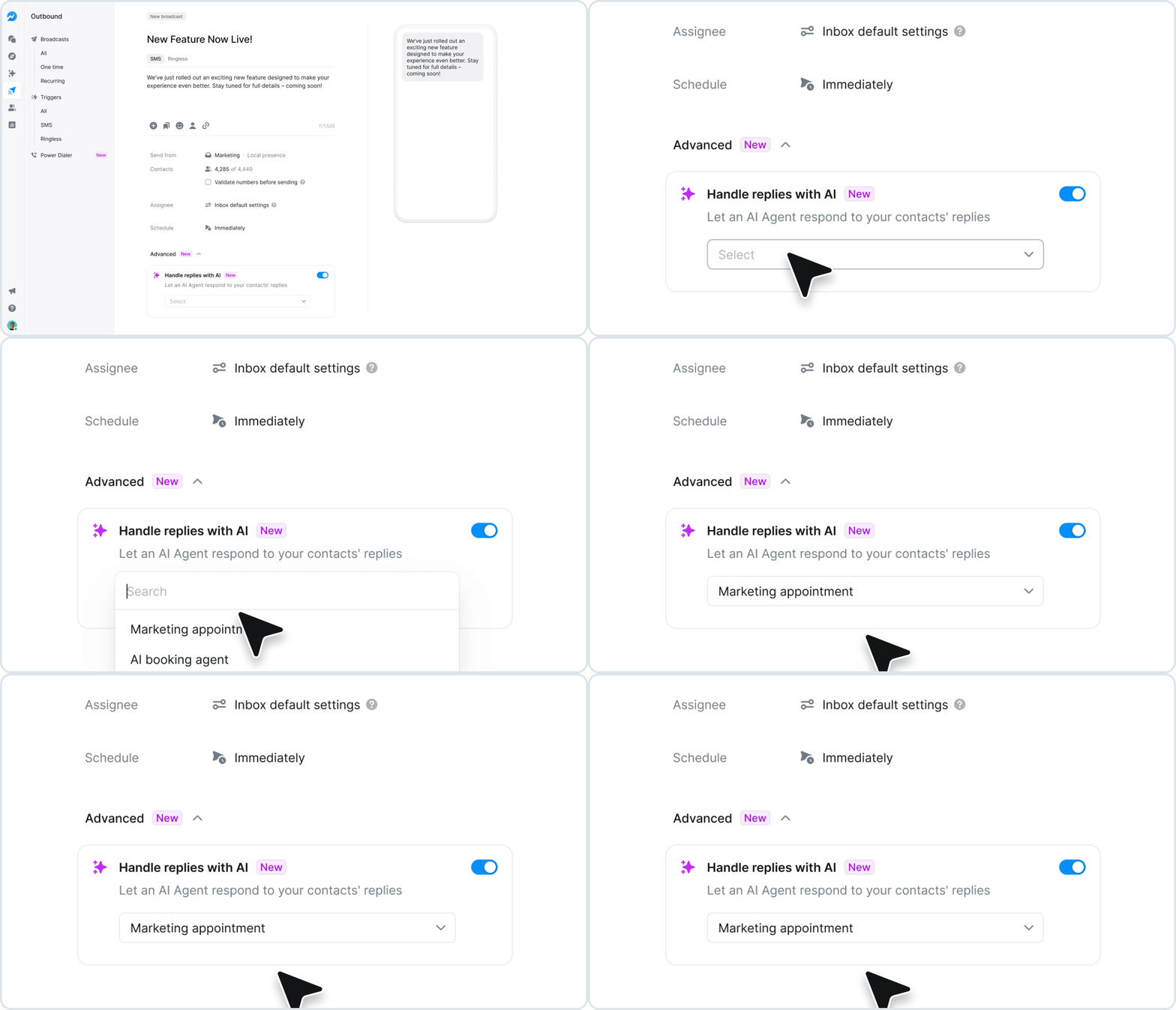
AI Agents read each reply, determine whether it is a lead, a complaint, or a question, and respond accordingly. Hot leads get qualifying questions, FAQ-level questions get answered from your knowledge base, and out-of-office replies get filtered out before anyone wastes time on them.
The rep logs in to find conversations already moving, not a backlog. Setting this up in Salesmsg is easy and all it takes is a single workflow. The same agent can run across every broadcast you send.
2. Qualify Inbound Leads While Your Team Sleeps
Team: Sales
Speed to lead decides a lot of deals. Our benchmark report shows 57% of teams text a new lead within 30 minutes, but only 14% have automated it to under a minute.
The other 86% are leaning on a human being awake to send the reply, which is fine during business hours and a problem every other moment of the week.
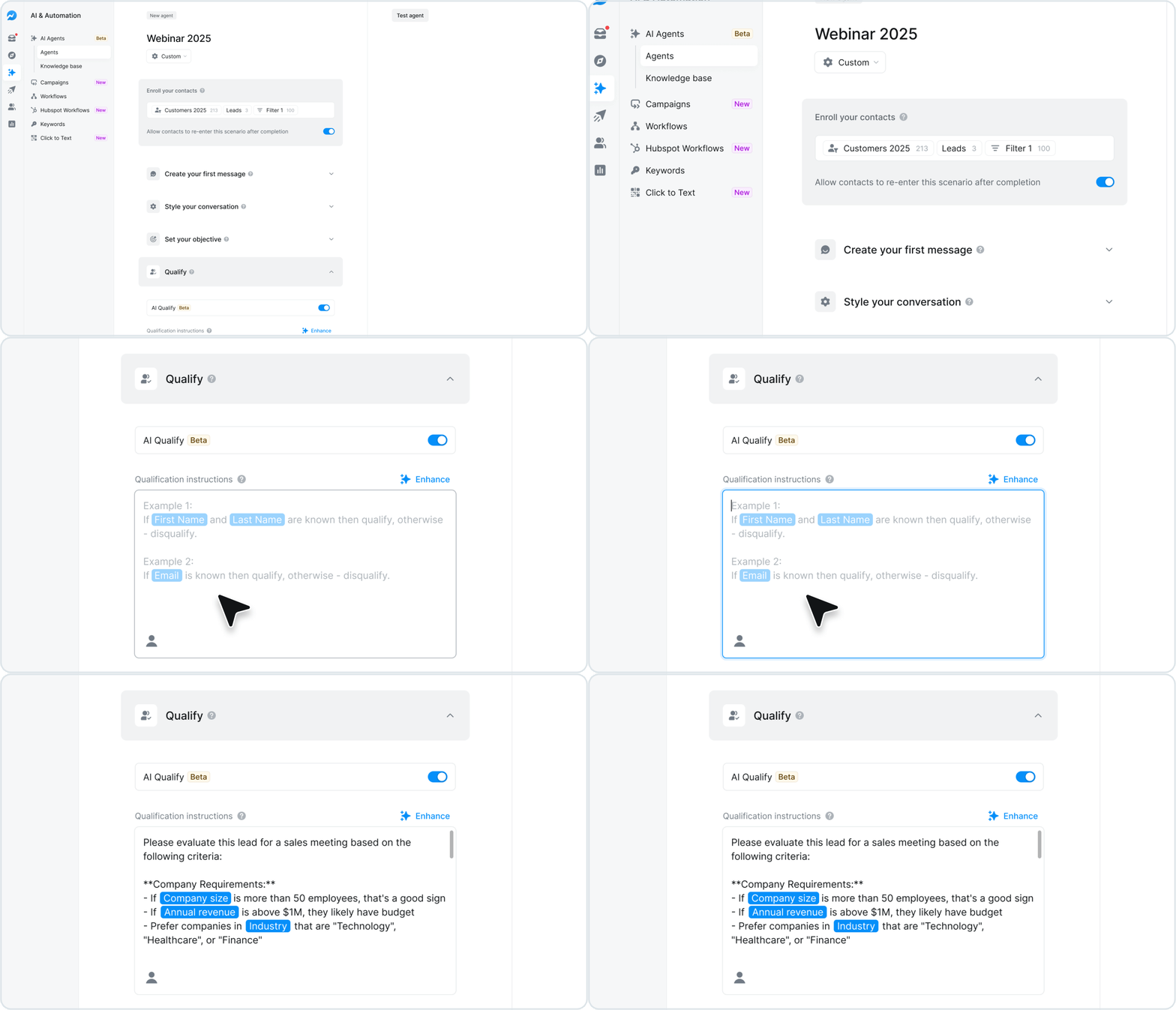
AI Qualify reads the contact's CRM data and the conversation in real time, then asks the right qualifying questions based on whatever criteria your team has defined, whether that's budget, timeline, team size, or something else.
Disqualified contacts get auto-stopped, and qualified ones get flagged and routed to the right rep.
By the time the rep is back at their desk, the qualified leads are already ranked.
3. Book Meetings Without a Human in the Loop
Team: Sales
Booking a demo used to mean three back-and-forth messages: which day works, what time, here’s the link.
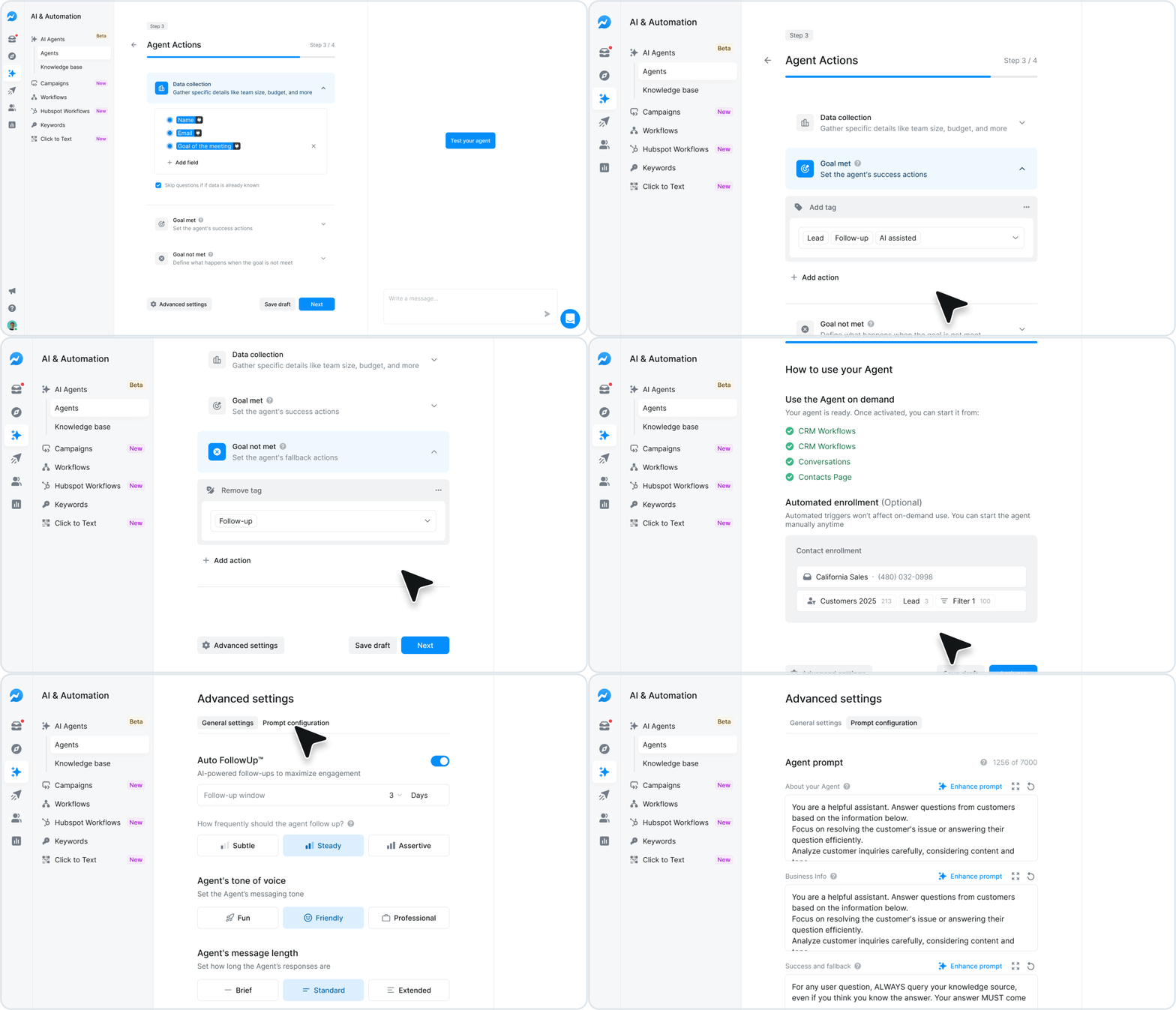
The AI Booking Agent handles all of it. It reads the contact’s reply, checks the rep’s calendar through the Calendly integration, and confirms a time. If the contact needs to reschedule, the agent picks that up too.
You wake up to a calendar with five new demos on it instead of an inbox full of scheduling back-and-forth.
The conversation logs back to the CRM record automatically.
4. Follow Up With Cold Leads at Scale
Team: Sales and Marketing
Most teams know they should be running follow-up sequences.
Most don’t, because nobody has time to write 200 personalized texts. The benchmark report shows 42% of all replies come from follow-up messages, not the first text.
The teams who only send once leave nearly half their conversations on the table.
AI Agents send the first follow-up text, read the reply, and continue the conversation.
If the contact says “not now,” the agent responds appropriately and tags them for a later sequence. If the contact says “yes,” the agent books the call.
Pull from proven follow-up text message examples and load them into the AI agent’s playbook. Then let the agent run the sequence.
5. Handle FAQ Replies From Support Texts

Team: Customer Support
Support teams answer the same handful of questions every day: pricing, hours, account access, refund policy, and where the order is.
The AI Knowledge Base lets you upload your help docs, FAQs, policy pages, and product information in a single step. AI Agents read inbound texts, pull the right answer from the knowledge base, and respond in seconds.
The harder tickets still go to humans, while the easy ones get handled without anyone touching them. Support load drops, response time drops, and your team focuses on the conversations that need a real person.
See AI agents in action. Salesmsg AI Agents respond to inbound texts in under a minute and lift response rates by 88%. Start a free trial and set up your first agent in 10 minutes.
6. Collect Feedback and NPS Scores Via Text
Team: Customer Support
SMS gets way better engagement rates than email.
Our benchmark report shows the CTR for SMS with links at 45%, versus 5% for email, and open rates of 98% versus 22%. The gap is even wider when the message is short and one-touch.
AI Agents send the NPS or feedback text after a milestone (purchase, support ticket close, project completion), read the response, ask a follow-up question if the score is low, and log everything to the CRM.
High scores get a thank-you and a referral ask.
Low scores get a follow-up to find out what went wrong, plus a flag for the account manager to step in.
You collect more feedback and catch unhappy customers before they churn.
7. Re-engage Dead Leads From Your CRM
Team: Marketing
Every CRM has a graveyard of leads that never converted.
Sadly, most teams forget about them.
The ones who don't usually run an email campaign, watch open rates stall around 10-15% on a dormant list, and write off the rest. A lot of those contacts aren't dead, they just stopped reading email.
SMS reaches them on a channel they still check, and AI Agents make running SMS re-engagement realistic.
It works like this.
Trigger the workflow from a HubSpot or Salesforce filter (no activity in 180 days, deal stage closed-lost more than 90 days ago), send a single text, and let the agent handle the replies.
Interested contacts get re-qualified, and the rest get cleaned out of your active list without any extra work.
8. Run Post-Event or Post-Webinar Follow-Up Sequences

Team: Marketing
The 48 hours after a webinar are some of the most valuable follow-up time you’ll get. Attention is still fresh, and the contact remembers what they liked.
Most teams blow this window on a single email blast.
AI Agents send a follow-up text the next morning. If the contact attended, the message asks for feedback or pushes the next CTA. If they missed it, the message offers the replay link. Replies get handled by the agent, who can answer questions, send resources, or book a follow-up call.
Pair this with proven SMS campaign ideas, and the post-event window becomes a real revenue moment instead of a missed one.
9. Automate Appointment Reminders and Confirmations
Team: Sales and Customer Support
Appointment reminders are the SMS use case most teams already run. The AI version adds the ability to handle reschedules without a human picking up the conversation.
The AI Booking Agent sends the reminder 24 hours out, reads the reply, and either confirms or offers new times if the contact needs to reschedule. The new meeting lands on the right calendar with a confirmation back to the customer, so your rep stays focused on selling.
No-shows drop, and reschedules stop falling through the cracks.
10. Answer Inbound Calls With an AI Voice Agent
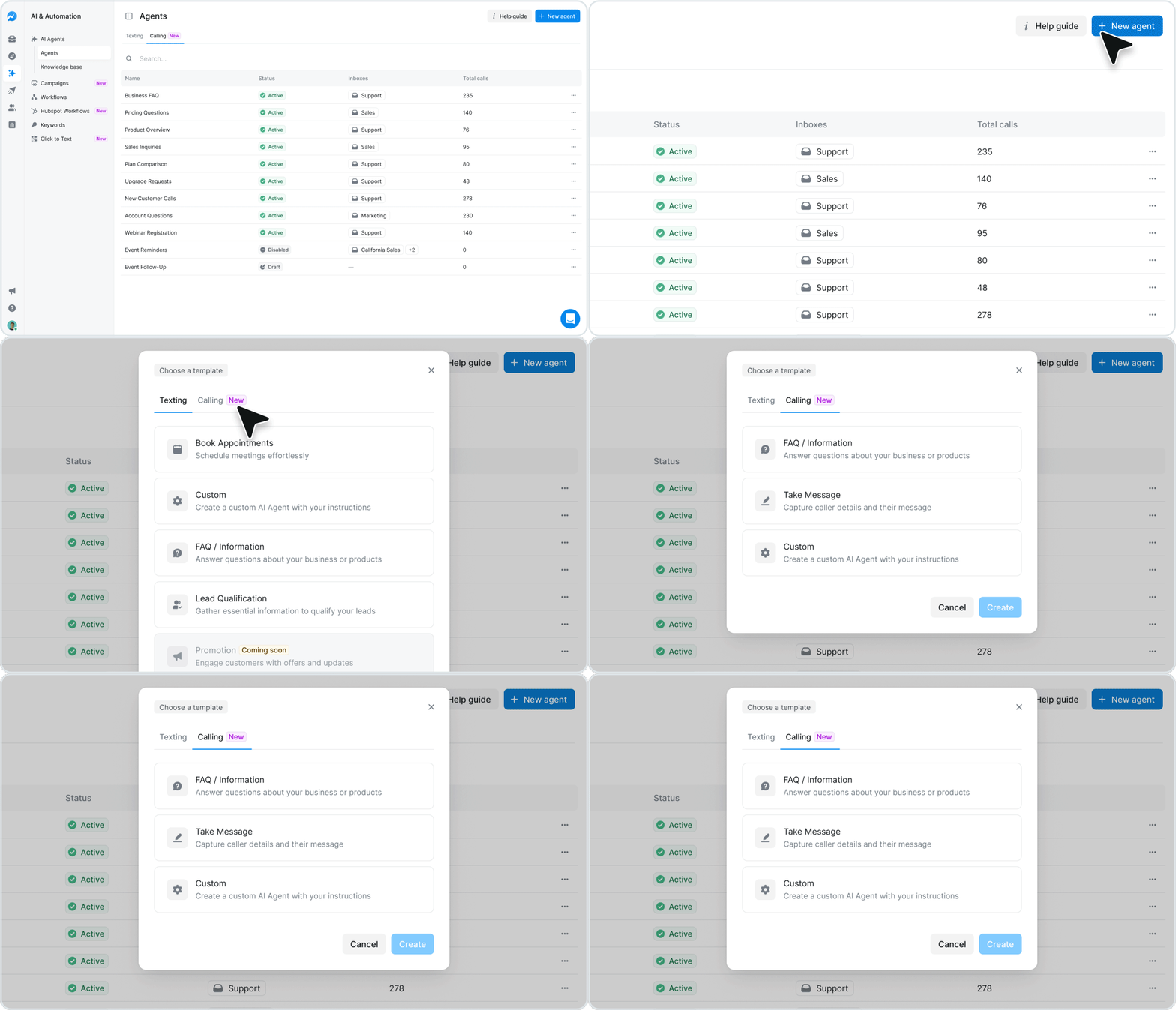
Team: Sales and Customer Support
Texting handles a lot, but some leads still pick up the phone. After hours, those calls usually go to voicemail, and most never get a callback.
AI Calling Agents answer the call, ask qualifying questions, and either book a meeting or log a callback request to the CRM. The voice sounds natural, not robotic, and the conversation gets transcribed and summarized so the rep knows exactly what happened.
For service businesses and B2B teams running business calling software, this turns missed calls into closed conversations.
What to Look for in an AI SMS Marketing Platform
Most AI SMS pitches sound the same. Here’s what actually separates a real platform from a tool that slapped “AI” on its homepage.
AI Agents That Handle Inbound, Not Just Outbound
Many platforms market AI SMS, but that just means AI-generated outbound messages. That’s a writing assistant.
A real AI agent reads inbound replies and continues the conversation.
A Native CRM Connection, Not a Zap
If the integration runs through Zapier, you’ve got latency, breakage points, and a third tool on the bill. Native integrations sit inside HubSpot or Salesforce, automatically log every message to the record, and trigger from CRM events without a middle layer.
Salesmsg connects natively to HubSpot and Salesforce without any Zapier in the middle. Look at the Salesforce SMS integration if you want to see what native looks like in practice.
A Knowledge Base the AI Actually Learns From
An AI agent is only as good as the information it can pull from. Look for platforms that let you upload documents, paste URLs, and add custom text for the agent to use when answering questions.
The AI Knowledge Base inside Salesmsg handles all three. You upload your help docs, FAQs, and product pages once. The AI Agents draw from them whenever a question comes in.
Compliance Built In
A2P 10DLC registration, opt-out handling, and TCPA-compliant consent capture aren’t optional in the US. Any platform you pay for should handle them during onboarding, not leave them to you.
Skip the platforms that treat compliance as a feature you have to figure out on your own.
A Clean Handoff to Humans
The AI shouldn't try to handle everything.
The best platforms let you control when the handoff happens, whether that's based on lead score thresholds, sensitive keywords, deal value, or any other signal that matters in your process.
When the handoff happens, the rep sees the full conversation history, so the customer doesn't have to repeat themselves.
Where AI SMS Marketing Is Going
The 28% of businesses testing AI in their SMS workflows today are building the muscle and the data their competitors will be trying to catch up to in two years. The use cases above all run inside Salesmsg today, with HubSpot, Salesforce, or another CRM, on the other end of every trigger.
Your team can set up their first AI agent in under 10 minutes. Try Salesmsg free and see what happens when inbound replies stop being a bottleneck.
Frequently Asked Questions
What is AI SMS marketing?
AI SMS marketing uses an AI agent to handle the reading and responding side of business texting. The agent reacts to what each contact actually says, asks qualifying questions, pulls answers from a knowledge base, and books meetings without a rep typing the reply.
For revenue teams, that means SMS that runs around the clock without expanding the team.
What’s the difference between SMS automation and AI SMS?
SMS automation follows rules you write in advance. AI SMS understands what the contact wrote back and responds to the meaning, not the keyword.
The practical difference shows up the moment a lead says something unexpected. Automation stalls. AI keeps the conversation going, qualifies the lead, or books the meeting.
What can AI agents actually do in an SMS platform?
AI agents handle the parts of SMS that don't need a human, like qualifying inbound replies, answering FAQs from a knowledge base, booking meetings, sending follow-ups, and routing complex conversations to the right rep. You set the agent's tone, goals, and handoff rules.
The agent runs inside your inbox like a teammate.
Does AI SMS marketing work for B2B, not just e-commerce?
Yes. B2B revenue teams use AI SMS for lead qualification, post-webinar follow-up, pipeline re-engagement, and support, none of which look like a retail promo blast.
Reply rates on B2B SMS are high, and AI removes the manual triage that usually keeps B2B teams from running SMS at scale.
Is AI SMS TCPA compliant?
Yes, when set up correctly. TCPA rules don't change based on who sent the message, only on consent. Contacts need to have opted in, opt-out requests need to be honored instantly, and your number needs to be 10DLC registered. Most reputable platforms handle these pieces during onboarding.
_AI%20lead%20qualification_%20how%20it%20actually%20works%20over%20SMS.webp)

_What%20is%20conversational%20AI%20SMS%20and%20how%20do%20teams%20use%20it.webp)
_WHMA%27s%20Global%20Leadership%20Summit.webp)