SMS Marketing for Restaurants: The Complete 2026 Guide



_SMS%20Marketing%20for%20Restaurants_%20The%20Complete%202026%20Guide.webp)

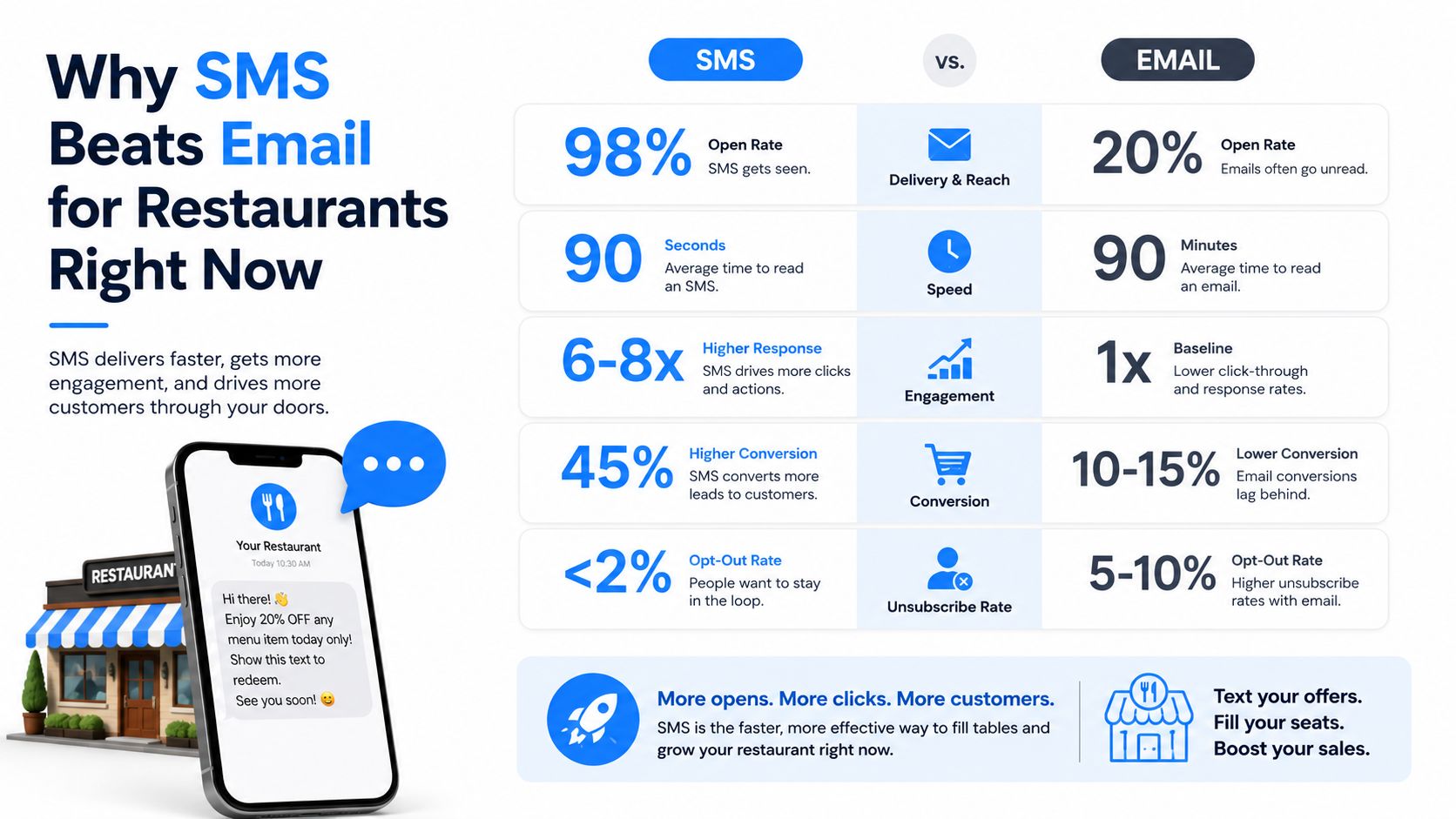
SMS marketing works for restaurants because guests actually see the message. Salesmsg's own 2026 State of SMS Benchmark Report puts SMS open rates at 98%, compared to 22% for email, and SMS click-through rate at 45% with links versus under 5% for email. Those numbers aren't restaurant-specific, but the underlying behavior holds everywhere: people check texts fast, and they act on them more than they act on email.
The bigger shift for restaurants isn't attention, it's timing. A reservation reminder, a lunch push, or a slow-night fill offer only works if it lands while the guest is still deciding where to go. This guide covers what to send, how to build clean opt-ins, how to segment by behavior, and how to tell whether a send created a real visit or just pulled forward one that would have happened anyway.
In this guide
- Why SMS works for restaurants right now
- Build opt-ins like a revenue system
- Message templates and timing that convert
- Segmentation and personalization for higher ROI
- Automating reservations, reminders, and promos
- Compliance and deliverability without the headache
- KPIs and optimization that tie to revenue
- Your 30-day SMS launch plan
Why SMS works for restaurants right now
Restaurant texting wins when the message has a short shelf life. A reservation reminder, a lunch push, or a slow-night fill offer needs to land while the guest is still deciding where to go, not after dinner service is over. That's the practical edge behind the general SMS numbers: high open rates and fast read times mean a text has a real shot at influencing a decision that's still open.
Use SMS for decisions, not essays
A simple rule works with multi-location teams: if the message is time-sensitive, personal, and action-oriented, it belongs in SMS. If it needs a long explanation, a well-built email or landing page usually performs better.
Same-day specials, reservation reminders, waitlist alerts, and order recovery all fit text because guests are already near their phones and the channel rewards a direct ask.
Practical rule: send the text when you want the guest to act before the end of the day, not just remember you later.
Build opt-ins like a revenue system
The channel only works if the list is clean. In real operations, the strongest entry points are keyword-to-join on receipts or table tents, a web form inside online ordering, QR codes on the check or host stand, and a POS prompt at checkout. Those are the moments when the guest already has context and is more likely to say yes.
Double opt-in matters more than most operators think. A confirmation reply or one-tap confirmation helps protect deliverability, while scraped lists and purchased contacts can damage sender reputation fast. Keep a consent log with the timestamp, source, IP, and exact wording the guest accepted. That record is boring until you need it.
Clean opt-ins aren't just a compliance habit, they're a delivery habit. Bad data lowers reach before the first campaign even goes out.
For a deeper comparison of how texting stacks up against email, see SMS marketing vs. email marketing.
Message templates and timing that convert
Most restaurant SMS programs stall because every text sounds the same. Guests tune out broad blasts fast, especially when the message lacks timing, a clear offer, or an immediate reason to act. The fix isn't more volume, it's better sequencing and tighter copy.
Templates that fit real restaurant moments
Use short messages that feel like operational nudges, not ad copy. A confirmation text should go out right after booking. A reminder should hit when the guest still has time to change plans. A birthday offer belongs close enough to the date that it feels personal, not automated.
- Reservation confirmation: “You're booked for Friday at 7. Reply YES to confirm or CHANGE if plans shift.”
- Day-before reminder: “Your table is tomorrow at 7. Reply YES to keep it, or CANCEL to free the spot.”
- Waitlist alert: “Table ready in about 20 minutes. Reply HERE to hold it.”
- Birthday or anniversary offer: “Happy birthday. Stop in this week for a complimentary dessert with dinner.”
- Slow-day flash promo: “Lunch deal today only. Show this text for the code at check-in.”
- Lapsed guest reactivation: “We've missed you. Come back this week and use the code in this text.”
Salesmsg's own platform data shows messages under 100 characters get the highest response rates, and response rates drop with every 100 characters added after that. A short, specific message with a clear call to action consistently beats a long one. We don't have a restaurant-specific number for ideal monthly send frequency, so start with two to four sends a month and adjust based on your own opt-out rate.
What matters more than the format is the business outcome tied to the send. A reservation confirmation protects the book. A waitlist alert fills seats that would otherwise sit empty. A slow-day promo should use a unique code or a check-in script so you can see whether it drove a new visit or just shifted demand from guests who were already planning to come in.
Timing beats cleverness
A good offer at the wrong time still underperforms. A lunch promo should reach guests before lunch plans are locked in, while a dinner prompt needs to hit before they've already chosen somewhere else. Our own platform data points to 10 AM to noon as a strong general send window, which lines up well with a lunch-decision moment.
The practical test is simple. If a message is tied to a reservation, send it at the moment the guest can still confirm or release the table. If it's tied to incremental revenue, send it before the guest has spent that money elsewhere.
For ready-made phrasing to adapt, the templates at Salesmsg's follow-up text templates are a useful starting point for building your own voice without making every message sound corporate.
Segmentation and personalization for higher ROI
Generic blasts are the fastest way to make SMS feel like spam. Different guests have different purchase rhythms, and the same offer won't move all of them. Separating audiences by behavior stops one message from having to do too much.
The five segments that usually pay off first
Start with VIPs, lapsed guests, new guests, location-specific lists, and daypart segments. Those buckets are broad enough to build quickly but specific enough to change the offer. A VIP doesn't need the same nudge as someone who hasn't visited in 90 days.
Personalize with details that matter, not vanity tokens. First name helps, but last visit date, favorite item, and preferred location make the message feel earned. For a multi-location brand, a location-specific list also avoids sending the wrong offer to the wrong neighborhood.
Useful lens: treat each segment like its own mini-campaign, with its own redemption rate, average check, and incremental visit count.
What to send to each group
A VIP might get early access to a chef special. A lapsed guest might get a reason to return that week. A new guest can get a welcome offer tied to the item they already ordered once, which feels more like a recommendation than a discount.
Segmented sends consistently outperform generic broadcasts in practice, though the exact lift depends on your list and offer, so measure each segment separately instead of averaging them together.
One practical mistake is over-personalizing with data that feels intrusive. Keep the message relevant, not creepy. Guests usually respond better to a thoughtful offer than to a text that proves you've tracked every move they made.
Automating reservations, reminders, and promos
The fastest way to tell whether SMS is driving revenue is to tie each message to a trigger you can measure. Reservation events, POS timestamps, and order behavior do that better than manual sends, because they create a clear before-and-after.
Automations that earn their keep
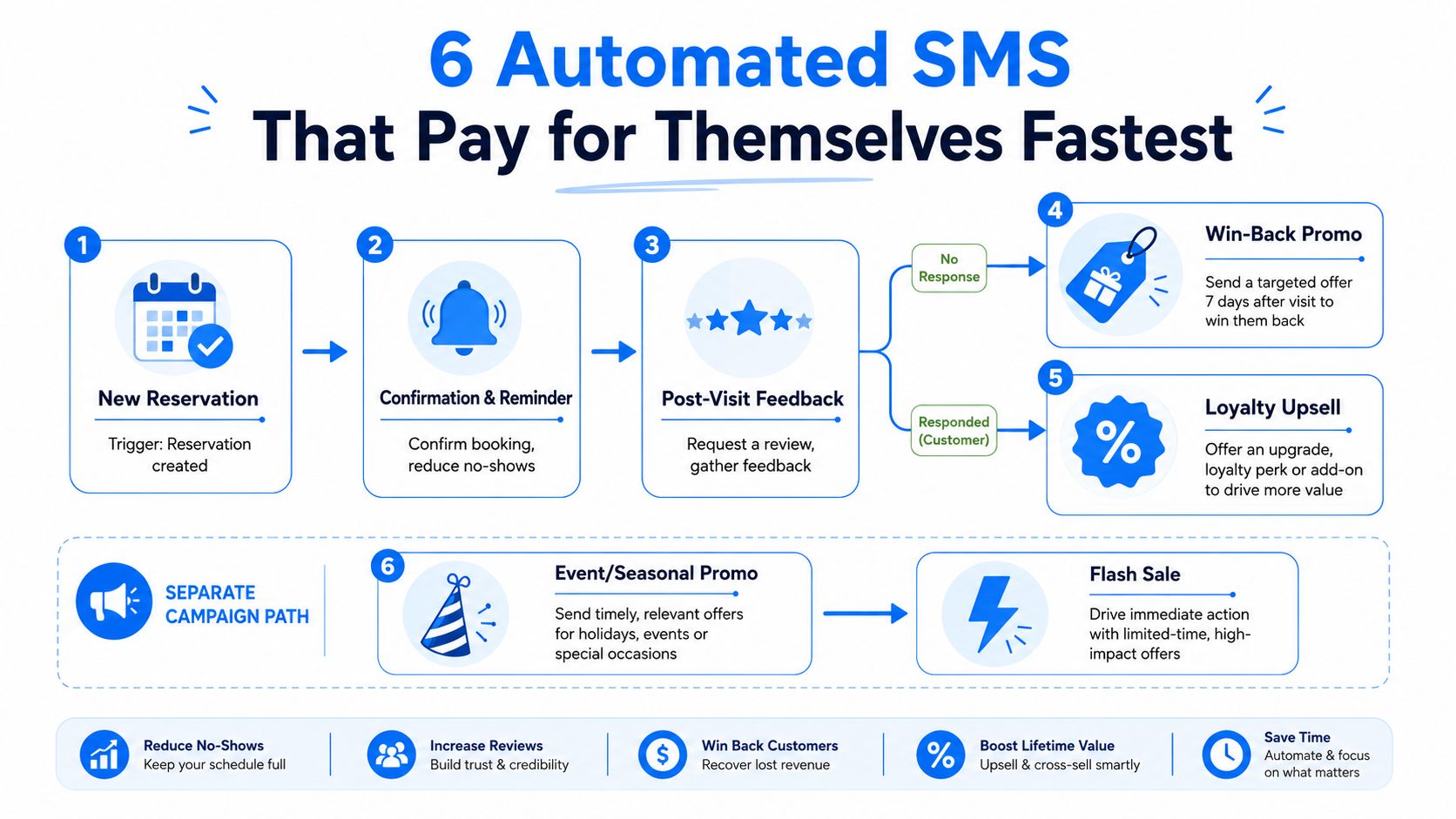
Reservation confirmations should go out the moment a booking lands. That gives the guest a record of the visit and gives the restaurant a clean event to track in the CRM. A 24-hour reminder can ask for a reply to confirm, while a same-day reminder can catch no-shows before the host stand has to absorb the empty table.
Online-order abandonment texts belong in the same system. If a guest starts an order and bails before checkout, a short reminder can recover sales that would otherwise disappear without any staff follow-up. Test the value with a unique promo code compared against a control group.
Loyalty milestones are another trigger worth automating, especially when tied to a reward that changes behavior. A 5th, 10th, or 25th visit message can prompt a return, but track it against the guest's prior cadence so you can tell whether it created a new visit or only rewarded someone already active. Post-visit follow-ups can also collect feedback while the meal is still fresh.
Seasonal and event promos work best when the kitchen needs traffic in a specific window. A lunch push, a slow-night fill-in, or a limited-time menu item can all be automated from the same audience rules.
Keep the loop two-way
A reminder that allows YES or CANCEL does more than reduce no-shows. It gives the host team cleaner counts and creates a reply record tied back to the booking source. That reply data should flow into the guest profile, because the next send should reflect what happened last time, not what the restaurant assumes happened.
For operators using a booking layer, Salesmsg's Booking AI Agent keeps reservations and replies in one place instead of handled as separate tasks, which makes it easier to compare redemption by segment and separate incremental visits from messages that only shifted existing demand.
Compliance and deliverability without the headache
Compliance is where restaurant teams get sloppy, and it's also where deliverability gets hurt. Promotional texts need express written consent, clear sender identification, and an obvious opt-out path. If the guest wants out, honor it immediately.
What carriers and regulators care about
Keep a valid opt-in record, identify your restaurant in the message, and make sure every template includes clear opt-out language. If the guest replies STOP or anything equally clear, suppress the number right away.
10DLC registration is now part of normal send hygiene for business texting. Unregistered long codes get filtered more often, and brand vetting plus campaign use-case descriptions are part of the process in 2026. Restaurants that skip registration usually feel the pain first in throughput, not paperwork. See our 10DLC compliance guide for the full registration walkthrough.
If your delivery falls off, check compliance before you blame copy. Carrier filtering often follows bad list hygiene.
Quiet hours and state rules matter
Sending at the wrong time can create problems even when the message is useful. Quiet-hour discipline keeps a promo from landing too early or too late, and state-specific consent rules can be stricter than a generic national playbook. Review those rules before launching multi-location campaigns.
For a practical breakdown of sender reputation and filtering risk, the SMS deliverability guide is a solid reference point. A useful habit is quarterly consent re-verification for high-value segments, especially if those guests drive most of the revenue.
A simple checklist for the team:
- Register the brand and campaign use case before sending promotional texts.
- Add opt-out language to every template.
- Suppress opt-outs immediately across all lists.
- Audit consent records for source and timestamp.
- Review quiet-hour timing before scheduling location-wide sends.
KPIs and optimization that tie to revenue
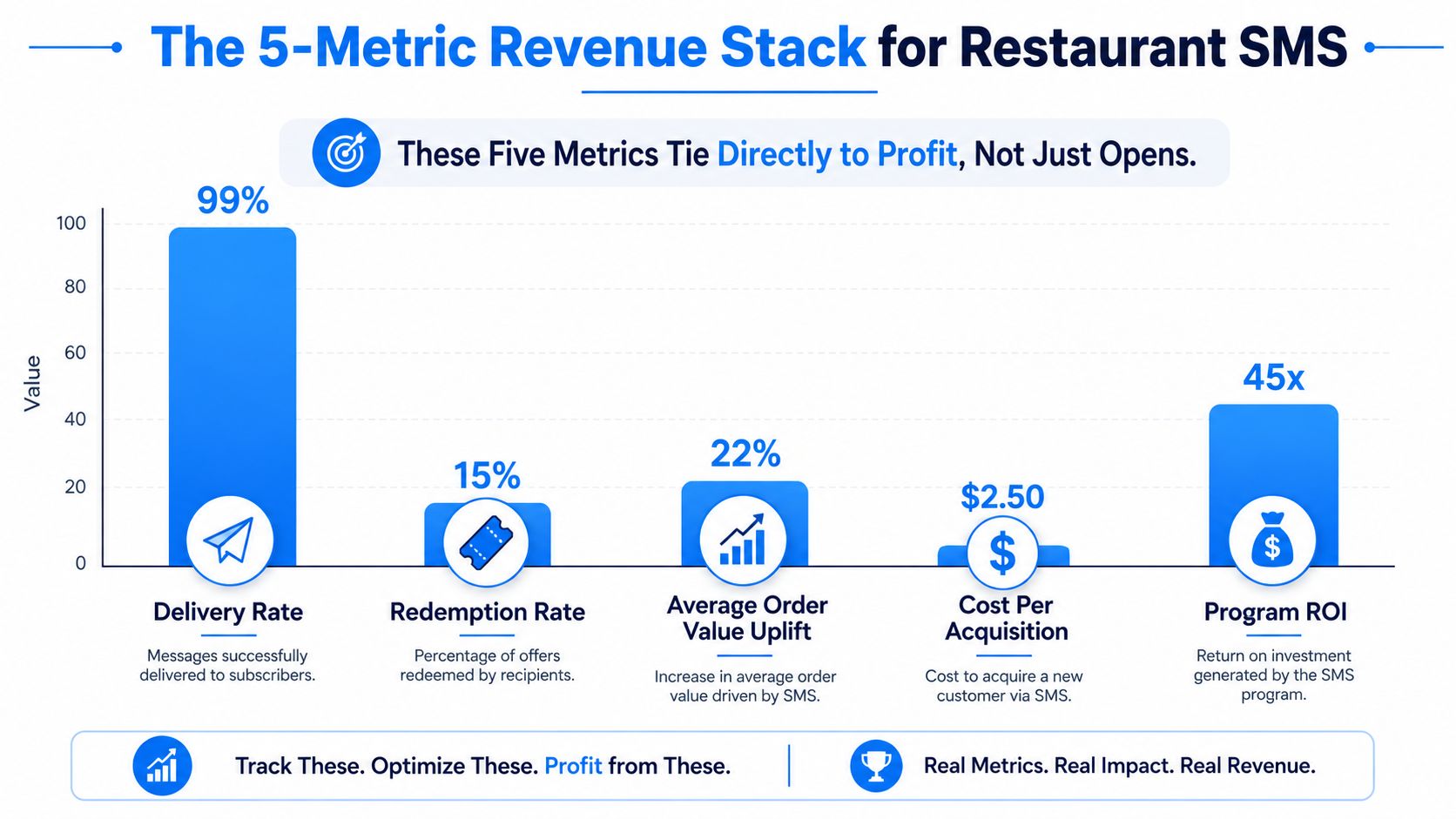
Open rate is a vanity metric if you can't connect it to sales. Restaurant operators need a stack that shows whether a send delivered, got clicked, got redeemed, and created net new revenue.
The metrics that actually answer the question
Track delivery rate first, aiming for 95% or higher. Track CTR next. Redemption rate matters even more when the offer uses a unique promo code, and opt-out rate should stay low on a per-campaign basis. There isn't a universal restaurant benchmark for redemption rate, so track your own baseline for a few campaigns and improve from there rather than chasing an outside number.
Unique promo codes are the single most important change most restaurants can make. They let you attribute revenue to a specific send instead of guessing from foot traffic alone. Once you have that, compare a campaign cohort against a matched control group in POS data.
Read lift, not just redemption
A high redemption rate with flat net new visits usually means the campaign pulled forward demand that would have happened anyway. High opens with weak redemption usually means the timing or offer is off. Both are useful signals, because they show you where the bottleneck sits.
The better questions are whether the text created an incremental visit, what happened to average check, and whether the discount protected margin. That's the only way to separate a channel that looks active from one that adds profit.
Your 30-day SMS launch plan
The best launch plan is narrow. Pick one segment, one offer, and one measurement window, then run it hard enough to learn something useful. Trying to automate everything on day one usually creates noise instead of revenue.
A simple rollout that fits a real restaurant
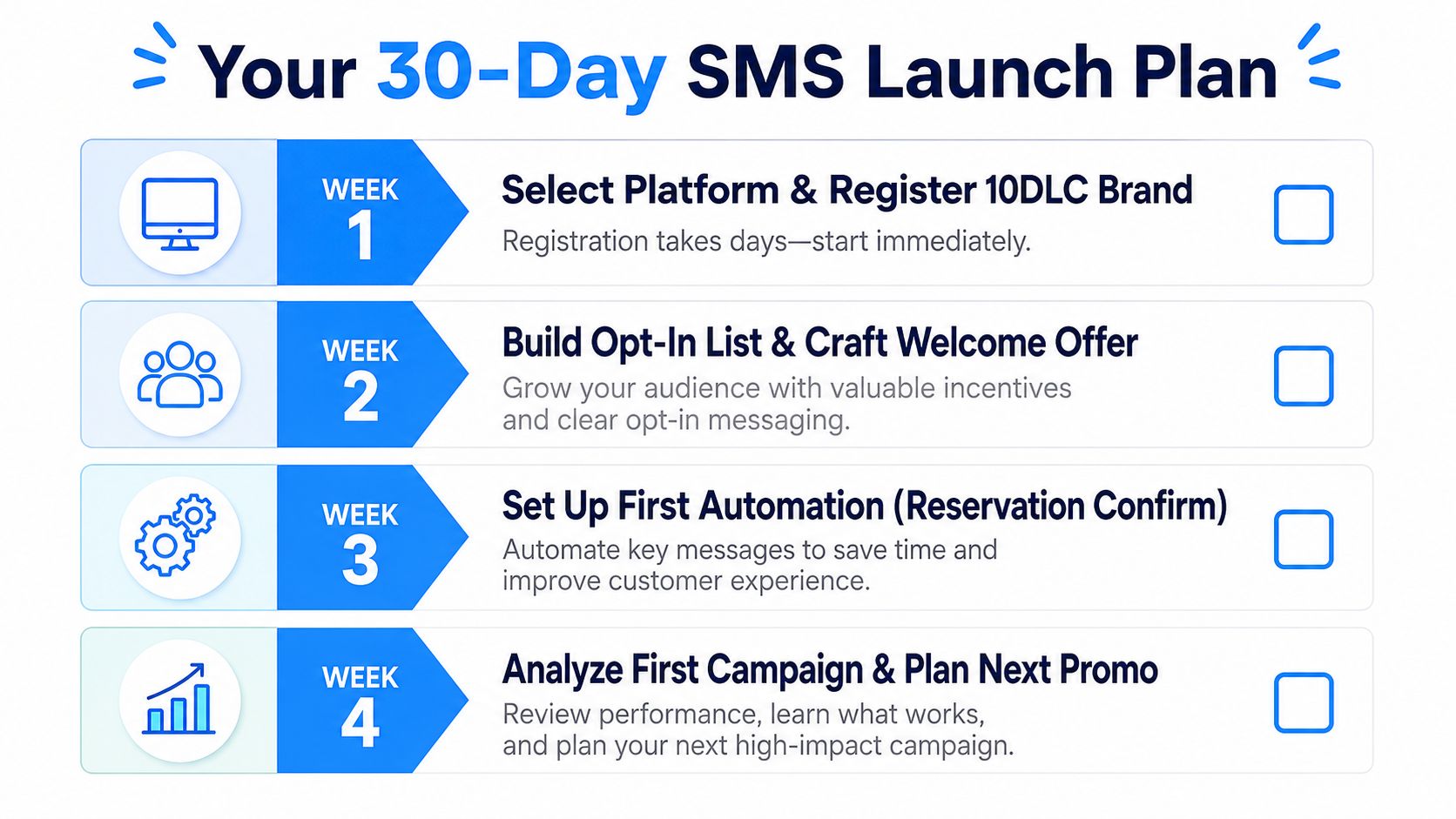
Week one is platform selection and 10DLC registration, because registration takes time and can't wait until the first promo is ready. Week two is list capture through receipts, QR codes, online ordering, and POS prompts. Week three is template setup and a pilot send to VIPs with a unique code.
Week four is where the system starts to look real. Turn on reservation confirmation and 24-hour reminder flows, then compare the first campaign against a baseline. If opt-ins are weak, move the QR code from the host stand to the check itself. If opt-outs climb, the issue is usually frequency or relevance. If redemption is weak, the offer probably doesn't match the daypart.
The cleanest next move is to launch one targeted message, track it against POS, and compare it to a control group. That's how SMS stops being a hunch and becomes a revenue line you can defend.
Salesmsg gives restaurants a way to handle two-way business texting, automated follow-ups, and CRM-linked workflows from one platform. If you want to build SMS around reservations, reminders, and segmented guest outreach without losing track of replies, visit Salesmsg and see how it fits into your restaurant workflow.